


Powerful ideas from top nonfiction
Try Blinkist to get the key ideas from 7,500+ bestselling nonfiction titles and podcasts. Listen or read in just 15 minutes.
Get started for free
Blink 3 of 8 - The 5 AM Club
by Robin Sharma
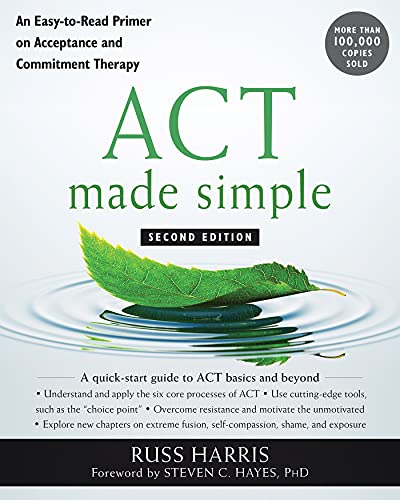
ACT Made Simple by Steven C. Hayes and Russ Harris is a practical guide that introduces the principles of Acceptance and Commitment Therapy (ACT). It offers valuable strategies for overcoming psychological struggles and living a meaningful life.
In ACT Made Simple, Steven C. Hayes and Russ Harris introduce Acceptance and Commitment Therapy (ACT) as a powerful approach to psychological well-being. They begin by explaining the six core processes of ACT: acceptance, cognitive defusion, being present, self-as-context, values, and committed action. These processes, they argue, can help individuals live a rich, full, and meaningful life, even in the presence of pain and suffering.
The authors emphasize the importance of acceptance, which involves embracing our thoughts and feelings without trying to change or control them. They also introduce the concept of cognitive defusion, which involves distancing ourselves from our thoughts and seeing them for what they are – just words and images, not necessarily reality.
Hayes and Harris then delve into the idea of being present, which involves fully engaging with the here and now. They argue that by doing so, we can better appreciate life's experiences and respond more effectively to the challenges we face. They also introduce the concept of self-as-context, which involves seeing ourselves as the unchanging observer of our experiences, rather than being defined by them.
Furthermore, the authors discuss the importance of values, which represent what is truly important to us. They argue that living in accordance with our values can provide a sense of purpose and fulfillment. They also introduce the concept of committed action, which involves taking effective and meaningful steps towards our values, even in the presence of discomfort and fear.
As the book progresses, ACT Made Simple provides practical techniques and exercises to help readers apply the core processes of ACT in their lives. These include mindfulness exercises, metaphors, and experiential exercises designed to help individuals develop psychological flexibility and resilience.
For example, the authors introduce the concept of the 'struggle switch' – the idea that we can choose to either struggle against our thoughts and feelings or accept them. They also discuss the importance of defusing from our thoughts, such as by repeating a troubling thought over and over until it loses its power.
Hayes and Harris then explore how ACT can be applied in therapy settings. They provide detailed guidance on how to use the core processes of ACT to help clients overcome a wide range of psychological issues, including anxiety, depression, and trauma. They also discuss how ACT can be used to enhance the well-being of individuals in non-clinical settings.
Throughout ACT Made Simple, the authors emphasize the importance of practicing the core processes of ACT in everyday life. They argue that by doing so, individuals can develop greater psychological flexibility, resilience, and well-being. They also stress that ACT is not about eliminating pain and suffering, but rather about learning to live a rich, full, and meaningful life, even in their presence.
In conclusion, ACT Made Simple offers a comprehensive introduction to Acceptance and Commitment Therapy. It provides a clear understanding of the core processes of ACT and practical techniques for applying them in therapy and everyday life. By embracing acceptance, defusing from our thoughts, being present, connecting with our values, and taking committed action, the authors argue that we can live a more fulfilling and meaningful life, regardless of the challenges we face.


ACT Made Simple by Steven C. Hayes and Russ Harris provides a clear and practical guide to Acceptance and Commitment Therapy (ACT). It offers valuable insights and techniques to help readers understand their thoughts and emotions, overcome challenges, and live a more fulfilling life. With real-life examples and exercises, this book makes ACT easy to understand and apply in everyday life.
ACT Made Simple (2009) is a comprehensive guide to Acceptance and Commitment Therapy, an evidence-based approach to psychological well-being and behavior change. Here's why this book is worth reading:
It's highly addictive to get core insights on personally relevant topics without repetition or triviality. Added to that the apps ability to suggest kindred interests opens up a foundation of knowledge.
Great app. Good selection of book summaries you can read or listen to while commuting. Instead of scrolling through your social media news feed, this is a much better way to spend your spare time in my opinion.
Life changing. The concept of being able to grasp a book's main point in such a short time truly opens multiple opportunities to grow every area of your life at a faster rate.
Great app. Addicting. Perfect for wait times, morning coffee, evening before bed. Extremely well written, thorough, easy to use.
Try Blinkist to get the key ideas from 7,500+ bestselling nonfiction titles and podcasts. Listen or read in just 15 minutes.
Get started for freeBlink 3 of 8 - The 5 AM Club
by Robin Sharma
What is the main message of ACT Made Simple?
The main message of ACT Made Simple is to overcome psychological barriers and live a more meaningful life.
How long does it take to read ACT Made Simple?
The estimated reading time for ACT Made Simple is several hours. The Blinkist summary can be read in just 15 minutes.
Is ACT Made Simple a good book? Is it worth reading?
ACT Made Simple is worth reading because it provides practical strategies to improve psychological well-being and live a more fulfilling life.
Who is the author of ACT Made Simple?
The authors of ACT Made Simple are Steven C. Hayes and Russ Harris.