


Powerful ideas from top nonfiction
Try Blinkist to get the key ideas from 7,500+ bestselling nonfiction titles and podcasts. Listen or read in just 15 minutes.
Get started for free
Blink 3 of 8 - The 5 AM Club
by Robin Sharma
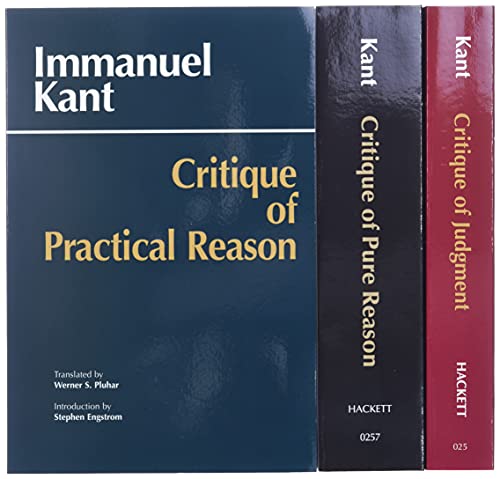
Three Critiques by Immanuel Kant is a philosophical work that includes Critique of Pure Reason, Critique of Practical Reason, and Critique of Judgment. Kant examines the nature of human knowledge, morality, and aesthetic experience.
In Three Critiques, Immanuel Kant, a German philosopher of the late 18th century, presents his three major works of critical philosophy: The Critique of Pure Reason, The Critique of Practical Reason, and The Critique of Judgment. In The Critique of Pure Reason, Kant explores the nature of human knowledge, arguing that our understanding of the world is shaped by both our sensory experiences and our innate mental structures.
Kant begins by distinguishing between two types of knowledge: a posteriori, which is based on experience, and a priori, which is independent of experience. He contends that while empirical knowledge is derived from sensory data, a priori knowledge is grounded in universal concepts and principles that are inherent to the human mind. Kant calls these innate mental structures 'categories' and argues that they are necessary for organizing and making sense of our sensory experiences.
In The Critique of Practical Reason, Kant shifts his focus from the nature of human knowledge to the nature of human action. Here, he explores the concept of morality and the role of reason in guiding our ethical decisions. Kant argues that the moral law, which he calls the 'categorical imperative', is a universal principle that commands us to act according to duty, independent of our desires or inclinations.
According to Kant, our ability to recognize and follow the moral law is evidence of our rational nature. He asserts that it is through our capacity for reason that we can understand and adhere to our moral duties. Kant also introduces the concept of the 'summum bonum', or the highest good, which he argues is the harmonious combination of moral virtue and happiness.
In the final work, The Critique of Judgment, Kant explores the role of aesthetic and teleological judgments in human cognition. Aesthetic judgments, concerning the beautiful and the sublime, are subjective and based on individual experiences, while teleological judgments, concerning the purpose and design of natural objects, are objective and based on reason.
One of the key concepts introduced by Kant in this work is the idea of 'purposiveness without purpose', which refers to the apparent design and organization found in nature. Kant argues that while we cannot prove the existence of a divine creator, we are justified in assuming a teleological perspective in our understanding of the natural world.
In Three Critiques, Kant presents a comprehensive framework for understanding the nature of human knowledge, morality, and aesthetic appreciation. His critical philosophy has had a profound impact on the development of modern philosophy, influencing thinkers across various disciplines. While Kant's ideas have been the subject of intense debate and criticism, his works continue to be studied and revered for their depth, complexity, and enduring relevance.


Three Critiques is a seminal work by Immanuel Kant that delves into the realms of metaphysics, epistemology, and ethics. Through his critiques of pure reason, practical reason, and judgment, Kant challenges traditional philosophical thought and lays the groundwork for his categorical imperative. This thought-provoking book continues to influence and shape philosophical discourse.
Philosophy enthusiasts seeking a deep understanding of Kant's critical philosophy
Students and scholars of metaphysics, epistemology, and ethics
Readers interested in exploring the nature of human knowledge and reason
It's highly addictive to get core insights on personally relevant topics without repetition or triviality. Added to that the apps ability to suggest kindred interests opens up a foundation of knowledge.
Great app. Good selection of book summaries you can read or listen to while commuting. Instead of scrolling through your social media news feed, this is a much better way to spend your spare time in my opinion.
Life changing. The concept of being able to grasp a book's main point in such a short time truly opens multiple opportunities to grow every area of your life at a faster rate.
Great app. Addicting. Perfect for wait times, morning coffee, evening before bed. Extremely well written, thorough, easy to use.
Try Blinkist to get the key ideas from 7,500+ bestselling nonfiction titles and podcasts. Listen or read in just 15 minutes.
Get started for freeBlink 3 of 8 - The 5 AM Club
by Robin Sharma