Immanuel Kant Books
Immanuel Kant was an eighteenth-century German philosopher who was one of the main thinkers of the Enlightenment. He was the central figure behind the philosophical movement that became known as German Idealism, which transformed Western philosophy and set in motion developments in the discipline that continue to this day. His main works are his three Critiques: the Critique of Pure Reason, the Critique of Practical Reason, and the Critique of Judgment.

What's Critique of Pure Reason about?
The Critique of Pure Reason (1781) is one of the most groundbreaking, revolutionary, and influential books in the history of Western philosophy. Pointing out the limits of human reason, it argues that we can have knowledge about the world as we experience it, but we can never know anything about the ultimate nature of reality.
Who should read Critique of Pure Reason?
- Skeptics
- Students of philosophy
- Adherents of both science and religion

Critique of Judgement
What's Critique of Judgement about?
Critique of Judgement is a philosophical work by Immanuel Kant that delves into the realm of aesthetics and teleology. It examines the nature of beauty, the sublime, and our ability to make judgments about art and nature. Kant explores the idea of a universal sense of taste and discusses the concept of purposiveness in nature. This influential book challenges our understanding of aesthetic experience and the principles that govern it.
Who should read Critique of Judgement?
Individuals interested in understanding the nature of beauty and aesthetic judgement
Philosophy enthusiasts seeking to explore Immanuel Kant's influential ideas
Artists and art critics looking to deepen their understanding of artistic creation and appreciation

Prolegomena to Any Future Metaphysics
What's Prolegomena to Any Future Metaphysics about?
Prolegomena to Any Future Metaphysics is a philosophical work by Immanuel Kant that serves as a preface or introduction to his groundbreaking Critique of Pure Reason. In this book, Kant discusses the nature and scope of metaphysics, the limitations of human knowledge, and the possibility of a priori knowledge. It is a thought-provoking exploration of the fundamental questions of philosophy and the basis for Kant's later critical philosophy.
Who should read Prolegomena to Any Future Metaphysics?
Individuals with a strong interest in philosophy and metaphysics
Students and scholars looking to deepen their understanding of Immanuel Kant's philosophical ideas
Readers who enjoy challenging and thought-provoking intellectual explorations
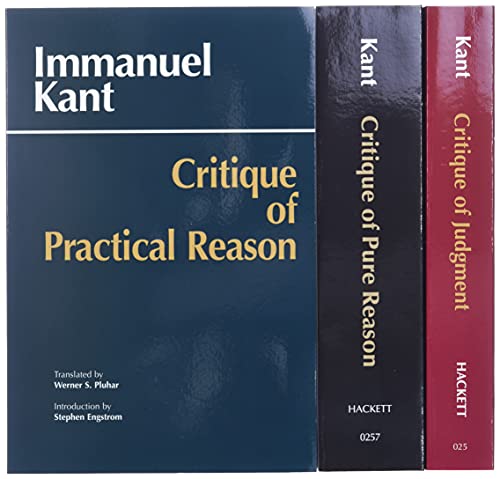
Three Critiques
What's Three Critiques about?
Three Critiques is a seminal work by Immanuel Kant that delves into the realms of metaphysics, epistemology, and ethics. Through his critiques of pure reason, practical reason, and judgment, Kant challenges traditional philosophical thought and lays the groundwork for his categorical imperative. This thought-provoking book continues to influence and shape philosophical discourse.
Who should read Three Critiques?
Philosophy enthusiasts seeking a deep understanding of Kant's critical philosophy
Students and scholars of metaphysics, epistemology, and ethics
Readers interested in exploring the nature of human knowledge and reason