


Powerful ideas from top nonfiction
Try Blinkist to get the key ideas from 7,500+ bestselling nonfiction titles and podcasts. Listen or read in just 15 minutes.
Get started for free
Blink 3 of 8 - The 5 AM Club
by Robin Sharma
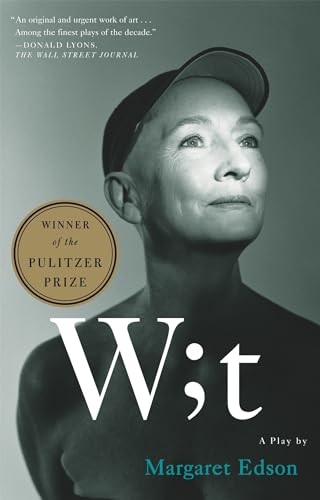
Wit by Margaret Edson is a powerful play that delves into the themes of life, death, and human connection. It follows the journey of a brilliant professor as she confronts her own mortality and discovers the true meaning of compassion.
In Wit by Margaret Edson, we are introduced to Vivian Bearing, a professor of English literature who is diagnosed with advanced ovarian cancer. The story takes us through her journey, exploring the human experience in the face of mortality. Vivian's life, once dedicated to the pursuit of knowledge and academic excellence, is now consumed by the harsh realities of her illness.
As the treatments begin, Vivian finds herself in the care of Dr. Kelekian, a clinical oncologist, and his young, ambitious assistant, Dr. Posner. She is subjected to a brutal experimental chemotherapy regimen. Vivian's life, once defined by her intellectual pursuits and academic achievements, is now reduced to a series of invasive medical procedures and the relentless struggle against the ravages of her disease.
As the story progresses, Vivian reflects on her life and work, particularly her deep connection with the poetry of John Donne. She finds parallels between her own experience and the themes of mortality, spirituality, and human suffering in Donne's Holy Sonnets. Vivian's scholarly understanding of these themes now takes on a deeply personal significance as she grapples with her own mortality.
Throughout her treatment, Vivian's intellectual rigour and stoic resolve are tested to their limits. She is forced to confront the harsh realities of her illness, including the dehumanizing nature of medical care, the isolation of her condition, and the emotional toll it takes on her. Her relationship with her doctors, particularly Dr. Kelekian and Dr. Posner, further highlights the stark contrast between the clinical detachment of the medical profession and the deeply personal nature of her experience.
As Vivian's condition worsens, she is moved to a more compassionate nurse, Susie Monahan, who provides her with the care and empathy she desperately needs. Vivian's interactions with Susie and her mentor, Professor E.M. Ashford, provide moments of respite and human connection in the midst of her suffering. These relationships offer Vivian a new perspective on life and death, one that transcends intellectual pursuits and embraces the simple yet profound aspects of human connection and compassion.
Ultimately, Wit is a poignant exploration of the human experience in the face of mortality. Vivian's journey is marked by struggle, pain, and moments of profound isolation. However, it is also marked by resilience, self-discovery, and a growing acceptance of her own mortality. In the end, Vivian's story is not just about her battle with cancer, but also about her struggle to find meaning and dignity in the face of inevitable death.
As Vivian approaches the end of her life, she comes to a profound realization about the nature of her existence. She understands that the pursuit of knowledge and intellectual achievement, while important, is ultimately secondary to the simple yet profound aspects of human connection and compassion. In her final moments, Vivian recites Donne's Holy Sonnet X, "Death, be not proud," affirming her defiance in the face of death and her acceptance of life's ultimate truth.
In conclusion, Wit is a deeply moving and thought-provoking exploration of life, death, and the human experience. Through Vivian's journey, Margaret Edson invites us to confront our own mortality and consider what truly gives our lives meaning and value. In the end, Wit is a powerful reminder of the resilience of the human spirit and the transformative power of compassion and human connection.


Wit by Margaret Edson is a thought-provoking play that delves into the themes of life, death, and the human experience. Through the story of a brilliant professor diagnosed with terminal cancer, the book challenges the audience to contemplate the true meaning of existence and the importance of compassion and connection in our lives.
Individuals looking for a thought-provoking exploration of life, death, and the human experience
Readers who appreciate complex and nuanced characters
Those interested in the intersection of literature, philosophy, and medicine
It's highly addictive to get core insights on personally relevant topics without repetition or triviality. Added to that the apps ability to suggest kindred interests opens up a foundation of knowledge.
Great app. Good selection of book summaries you can read or listen to while commuting. Instead of scrolling through your social media news feed, this is a much better way to spend your spare time in my opinion.
Life changing. The concept of being able to grasp a book's main point in such a short time truly opens multiple opportunities to grow every area of your life at a faster rate.
Great app. Addicting. Perfect for wait times, morning coffee, evening before bed. Extremely well written, thorough, easy to use.
Try Blinkist to get the key ideas from 7,500+ bestselling nonfiction titles and podcasts. Listen or read in just 15 minutes.
Get started for freeBlink 3 of 8 - The 5 AM Club
by Robin Sharma