


Powerful ideas from top nonfiction
Try Blinkist to get the key ideas from 7,500+ bestselling nonfiction titles and podcasts. Listen or read in just 15 minutes.
Get started for free
Blink 3 of 8 - The 5 AM Club
by Robin Sharma
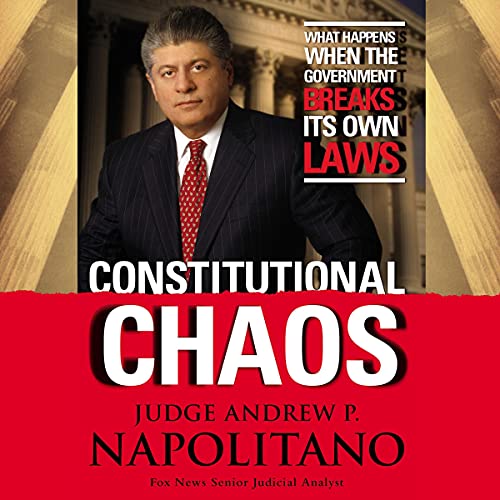
Constitutional Chaos by Andrew P. Napolitano sheds light on how government officials often violate the constitution in the name of law and order, and explores the dangers this poses to individual freedoms.
In Constitutional Chaos, authored by Andrew P. Napolitano, the former New Jersey Superior Court Judge, we are taken on a journey through the constitutional challenges that have emerged in the wake of the 9/11 attacks. Napolitano begins by examining the historical context of the Constitution, the Bill of Rights, and the ways in which these documents are supposed to protect individual liberties.
Napolitano then delves into the post-9/11 era, where he argues that the government, in its efforts to combat terrorism, has violated several constitutional rights. He discusses how the Bush administration authorized the National Security Agency (NSA) to conduct warrantless wiretapping on American citizens, which Napolitano argues was a clear violation of the Fourth Amendment, protecting against unreasonable searches and seizures.
Continuing his exploration, Napolitano scrutinizes the USA Patriot Act, a law passed shortly after 9/11, which expanded the government's surveillance powers. Napolitano asserts that the Act infringes upon the First Amendment by allowing the government to conduct secret searches and seizures of personal property without notifying the owner. He also criticizes the broad definition of "domestic terrorism" in the Act, arguing that it could be used to suppress legitimate dissent.
The book further examines the treatment of detainees at Guantanamo Bay and the use of "enhanced interrogation techniques," such as waterboarding, which Napolitano labels as torture, a violation of the Eighth Amendment. He also argues that the indefinite detention of suspects without trial, a practice allowed under the National Defense Authorization Act, is a violation of the Fifth Amendment's guarantee of due process.
Napolitano goes even further in his critique, arguing that the government's use of drone strikes to kill suspected terrorists, including American citizens abroad, without due process, violates their Fifth Amendment rights. He also questions the constitutionality of the "kill lists" used by the government to target individuals for assassination.
In his book, Napolitano raises not only legal but also moral concerns. He argues that the government's disregard for constitutional protections erodes the very foundations of American democracy and that sacrificing liberty for security is a dangerous trade-off. He also emphasizes the importance of holding the government accountable for its actions, especially in times of crisis.
Throughout Constitutional Chaos, Napolitano emphasizes the importance of an independent judiciary in safeguarding individual rights. He criticizes the deference shown by many judges to the government's national security justifications, arguing that it is the judiciary's role to protect the Constitution, even in times of crisis.
In conclusion, Constitutional Chaos serves as a powerful critique of the erosion of civil liberties in the name of national security. Napolitano warns that if the government continues to act outside the bounds of the Constitution, it sets a dangerous precedent for future violations of individual rights. He calls for a recommitment to the principles of the Constitution and the rule of law, even in the face of the most serious threats.


Constitutional Chaos by Andrew P. Napolitano delves into the ways in which the government and legal system have strayed from the principles of the U.S. Constitution. Through real-life examples and legal analysis, Napolitano exposes the erosion of individual liberties and the rule of law, sparking important conversations about the state of our constitutional rights.
Individuals interested in understanding the erosion of constitutional rights in the United States
People who want to educate themselves on the legal and ethical implications of government actions
Readers who enjoy thought-provoking analysis and alternative perspectives on law and justice
It's highly addictive to get core insights on personally relevant topics without repetition or triviality. Added to that the apps ability to suggest kindred interests opens up a foundation of knowledge.
Great app. Good selection of book summaries you can read or listen to while commuting. Instead of scrolling through your social media news feed, this is a much better way to spend your spare time in my opinion.
Life changing. The concept of being able to grasp a book's main point in such a short time truly opens multiple opportunities to grow every area of your life at a faster rate.
Great app. Addicting. Perfect for wait times, morning coffee, evening before bed. Extremely well written, thorough, easy to use.
Try Blinkist to get the key ideas from 7,500+ bestselling nonfiction titles and podcasts. Listen or read in just 15 minutes.
Get started for freeBlink 3 of 8 - The 5 AM Club
by Robin Sharma