


Powerful ideas from top nonfiction
Try Blinkist to get the key ideas from 7,500+ bestselling nonfiction titles and podcasts. Listen or read in just 15 minutes.
Get started for free
Blink 3 of 8 - The 5 AM Club
by Robin Sharma
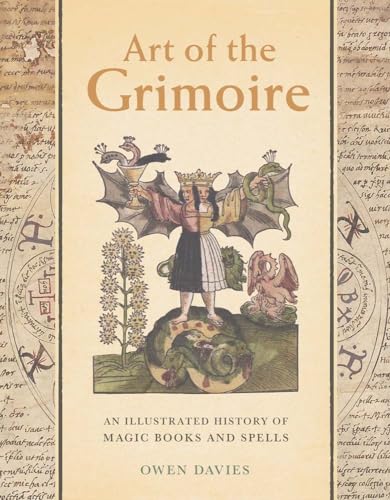
Grimoires by Owen Davies delves into the history of magical books, exploring their role in the practice of occult and supernatural arts. It offers a captivating insight into the world of spellbooks and their enduring allure.
In 'Grimoires' by Owen Davies, we embark on a journey to explore the history and significance of these mysterious books. Our journey begins with the ancient civilizations of Mesopotamia, where the earliest known forms of magical texts were created. These early grimoires, inscribed on clay tablets, served as instructional manuals, guiding their readers on how to invoke deities and perform rituals to achieve desired outcomes.
As we move through time, we encounter the magical papyri of Egypt, the Jewish tradition of Kabbalah, and the medieval European grimoires. Each culture and era brought its unique interpretations and practices to the art of magic, resulting in a diverse array of grimoires. These books were not only repositories of spells and incantations but also contained astrological charts, alchemical recipes, and other esoteric knowledge.
In the middle ages, grimoires fell under scrutiny from the Church, who considered them heretical and a threat to Christian orthodoxy. This led to a period of suppression and persecution of those who practiced magic, resulting in the destruction of many grimoires. However, despite these efforts, interest in the occult persisted, and grimoires continued to be produced and circulated, albeit in a more clandestine manner.
During the Renaissance, a revival of interest in the ancient arts brought about a renewed fascination with grimoires. Scholars and magicians sought to uncover the secrets of these ancient texts, leading to the translation and dissemination of grimoires across Europe. The most famous of these translations is perhaps the 'Key of Solomon', a book attributed to the biblical king that purportedly contains instructions for summoning and commanding spirits.
As we enter the Age of Enlightenment, we witness a shift in the perception of grimoires. While the Church continued to condemn them, the intellectual elite began to view them as curious relics of the past, worthy of scholarly study. This period saw the publication of several influential grimoires, such as the 'Lesser Key of Solomon' and the 'Grimorium Verum', both of which detailed elaborate systems for summoning and controlling demons.
Simultaneously, the concept of magic began to be redefined. No longer seen as a literal force, magic was increasingly regarded as a psychological or metaphorical tool. This shift in perspective gave rise to a new genre of grimoires, which focused on self-improvement, personal empowerment, and the development of the individual's potential.
As we approach the modern era, we observe the enduring appeal of grimoires. Despite advances in science and technology, the allure of the mystical and the unknown remains strong. The internet has facilitated the sharing and dissemination of grimoires, allowing individuals from across the globe to access and experiment with magical techniques.
In conclusion, 'Grimoires' by Owen Davies provides a comprehensive exploration of these enigmatic books, tracing their origins, evolution, and enduring legacy. Whether viewed as historical artifacts, literary curiosities, or genuine repositories of magical knowledge, grimoires continue to captivate our imagination and offer a fascinating window into humanity's enduring fascination with the occult.


Grimoires by Owen Davies delves into the fascinating history of magical books and spells. From ancient times to the present day, this book explores the role of grimoires in various cultures and their impact on the practice of magic. It offers a captivating journey through the world of occult knowledge and the enduring allure of these mystical texts.
Individuals with an interest in the history and evolution of magical texts
Occult practitioners looking to deepen their understanding of grimoires
Academic researchers exploring the intersection of magic and literature
It's highly addictive to get core insights on personally relevant topics without repetition or triviality. Added to that the apps ability to suggest kindred interests opens up a foundation of knowledge.
Great app. Good selection of book summaries you can read or listen to while commuting. Instead of scrolling through your social media news feed, this is a much better way to spend your spare time in my opinion.
Life changing. The concept of being able to grasp a book's main point in such a short time truly opens multiple opportunities to grow every area of your life at a faster rate.
Great app. Addicting. Perfect for wait times, morning coffee, evening before bed. Extremely well written, thorough, easy to use.
Try Blinkist to get the key ideas from 7,500+ bestselling nonfiction titles and podcasts. Listen or read in just 15 minutes.
Get started for freeBlink 3 of 8 - The 5 AM Club
by Robin Sharma