


Powerful ideas from top nonfiction
Try Blinkist to get the key ideas from 7,500+ bestselling nonfiction titles and podcasts. Listen or read in just 15 minutes.
Get started for free
Blink 3 of 8 - The 5 AM Club
by Robin Sharma
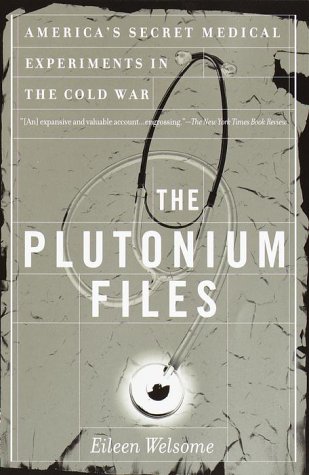
The Plutonium Files by Eileen Welsome is a gripping account of the secret human radiation experiments conducted by the U.S. government during the Cold War. It sheds light on this dark chapter in history and the ethical questions it raises.
In The Plutonium Files by Eileen Welsome, we are thrown into the heart of the Manhattan Project during World War II. This top-secret mission aimed to develop the atomic bomb, and Welsome takes us into the lives of the scientists and workers involved. Here, we learn of a disturbing experiment; eighteen unsuspecting patients were secretly injected with plutonium, a deadly radioactive substance.
Welsome's narrative then shifts to the aftermath of the war. The Manhattan Project's medical team, led by Dr. Joseph Hamilton, begins to monitor the injected patients, all the while keeping their plutonium exposure a secret. As the patients fall ill and die, the team continues to study them, collecting tissues and bones for further analysis. The patients were never informed about the nature of their treatment, nor were they given the chance to refuse it.
As the Manhattan Project evolves into the Atomic Energy Commission (AEC), the plutonium injections are kept under wraps. The AEC's priority is to promote the peaceful use of atomic energy, and the plutonium experiments run counter to this image. The AEC's secrecy is so effective that even the injected patients' families never know the truth behind their loved ones' mysterious deaths.
Welsome then introduces us to journalist Eileen Welsome, who, in 1987, stumbles upon a government document that hints at the plutonium injections. This discovery sets Welsome on a decade-long investigation, leading her to uncover the truth behind the experiments. She unearths shocking evidence, including the names of the injected patients and the extent of their suffering.
Welsome's findings spark public outrage, leading to a congressional investigation. In 1993, the Department of Energy releases the records of the plutonium experiments, confirming Welsome's discoveries. The injected patients' families are finally informed of the truth, and the government offers them financial compensation. Yet, no amount of money can erase the decades of deceit and suffering.
Welsome's work also reignites the debate on medical ethics. The plutonium experiments were conducted without the patients' informed consent, violating a fundamental principle of medical research. Welsome's revelations prompt a reevaluation of medical research protocols, ensuring that such unethical experiments are never repeated.
In The Plutonium Files, Welsome vividly illustrates the human cost of scientific progress. The injected patients were unwitting participants in a dangerous experiment, and their suffering was compounded by the government's silence. Welsome's meticulous research and compelling storytelling bring their stories to light, honoring their memory and demanding justice.
Welsome's book is a haunting reminder of the ethical responsibilities that come with scientific advancement. The plutonium files are a dark chapter in American history, yet their exposure serves as a crucial lesson, reminding us of the need for transparency, accountability, and, above all, respect for human dignity in scientific research.


The Plutonium Files by Eileen Welsome delves into the secret human radiation experiments conducted by the U.S. government during the Cold War. Through meticulous research and compelling storytelling, Welsome uncovers the shocking truth behind these unethical and dangerous tests, shedding light on a dark chapter in history.
Individuals interested in the history of unethical human experimentation
Readers who want to learn about the dark side of the Manhattan Project
Those who appreciate investigative journalism and in-depth research
It's highly addictive to get core insights on personally relevant topics without repetition or triviality. Added to that the apps ability to suggest kindred interests opens up a foundation of knowledge.
Great app. Good selection of book summaries you can read or listen to while commuting. Instead of scrolling through your social media news feed, this is a much better way to spend your spare time in my opinion.
Life changing. The concept of being able to grasp a book's main point in such a short time truly opens multiple opportunities to grow every area of your life at a faster rate.
Great app. Addicting. Perfect for wait times, morning coffee, evening before bed. Extremely well written, thorough, easy to use.
Try Blinkist to get the key ideas from 7,500+ bestselling nonfiction titles and podcasts. Listen or read in just 15 minutes.
Get started for freeBlink 3 of 8 - The 5 AM Club
by Robin Sharma