


Powerful ideas from top nonfiction
Try Blinkist to get the key ideas from 7,500+ bestselling nonfiction titles and podcasts. Listen or read in just 15 minutes.
Get started for free
Blink 3 of 8 - The 5 AM Club
by Robin Sharma
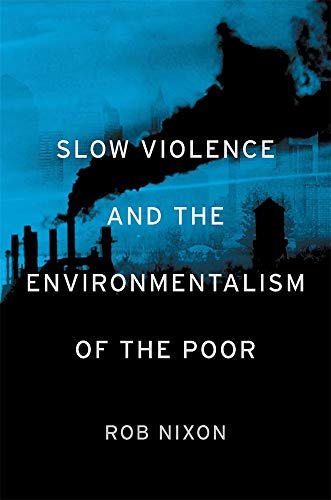
Slow Violence and the Environmentalism of the Poor by Rob Nixon sheds light on the often overlooked forms of environmental violence that disproportionately affect marginalized communities. It calls for a more inclusive and comprehensive environmentalism.
In Slow Violence and the Environmentalism of the Poor, Rob Nixon introduces the concept of 'slow violence' - a form of violence that is neither spectacular nor instantaneous, but rather incremental and accretive. He argues that this type of violence is often overlooked due to its undetectable nature and its adverse effects on the environment and the lives of the poor, marginalized, and dispossessed.
Nixon draws attention to environmental disasters such as deforestation, toxic contamination, and climate change, which unfold gradually and often in remote locations. He emphasizes that these disasters have a long-term, slow erosion effect on ecosystems and human health, especially in impoverished areas where the poor and marginalized are disproportionately affected.
In the second part of the book, Nixon examines how slow violence exacerbates social inequalities. He provides a detailed account of the Ogoni people in Nigeria, who suffered from the environmental degradation caused by oil extraction. The Ogoni case serves as an illustration of how the poor and marginalized are forced to bear the brunt of environmental violence, often at the hands of multinational corporations and complicit governments.
Nixon further explores the disproportionate impact of slow violence on indigenous communities, who are often forced to relocate due to environmental degradation caused by large-scale development projects. He argues that these communities, despite being the least responsible for environmental degradation, are the most affected due to their reliance on local ecosystems for survival.
In the latter part of Slow Violence, Nixon presents the concept of the 'environmentalism of the poor'. He highlights the resilience and resistance of marginalized communities in the face of slow violence, discussing how they mobilize to protect their environment and livelihoods. These grassroots movements, Nixon argues, represent a form of environmentalism that challenges traditional, mainstream environmental movements and policies.
Nixon concludes by emphasizing the importance of recognizing and addressing slow violence. He calls for a more inclusive and empathetic environmentalism that acknowledges the interconnectedness of social and ecological systems. He also advocates for a shift in our perception of time, urging us to consider the long-term, intergenerational impacts of environmental degradation.
In sum, Slow Violence and the Environmentalism of the Poor challenges us to rethink our understanding of environmental violence and justice. By shedding light on the often-invisible, slow violence inflicted on marginalized communities and ecosystems, Nixon urges us to broaden our scope of environmental activism and policy-making. He encourages us to listen to the voices of the poor and marginalized, acknowledging their unique experiences and perspectives in our collective efforts towards a more just and sustainable future.


Slow Violence and the Environmentalism of the Poor by Rob Nixon explores the often overlooked forms of environmental destruction and their impact on marginalized communities. Through in-depth analysis and compelling storytelling, Nixon sheds light on the concept of 'slow violence' and advocates for a more inclusive and proactive approach to environmental activism.
Environmental activists and scholars seeking a deeper understanding of ecological justice
Policy makers and advocates looking to address the systemic and long-term impacts of environmental degradation
Readers interested in the intersection of environmental issues with social inequality and global politics
It's highly addictive to get core insights on personally relevant topics without repetition or triviality. Added to that the apps ability to suggest kindred interests opens up a foundation of knowledge.
Great app. Good selection of book summaries you can read or listen to while commuting. Instead of scrolling through your social media news feed, this is a much better way to spend your spare time in my opinion.
Life changing. The concept of being able to grasp a book's main point in such a short time truly opens multiple opportunities to grow every area of your life at a faster rate.
Great app. Addicting. Perfect for wait times, morning coffee, evening before bed. Extremely well written, thorough, easy to use.
Try Blinkist to get the key ideas from 7,500+ bestselling nonfiction titles and podcasts. Listen or read in just 15 minutes.
Get started for freeBlink 3 of 8 - The 5 AM Club
by Robin Sharma