


Powerful ideas from top nonfiction
Try Blinkist to get the key ideas from 7,500+ bestselling nonfiction titles and podcasts. Listen or read in just 15 minutes.
Get started for free
Blink 3 of 8 - The 5 AM Club
by Robin Sharma
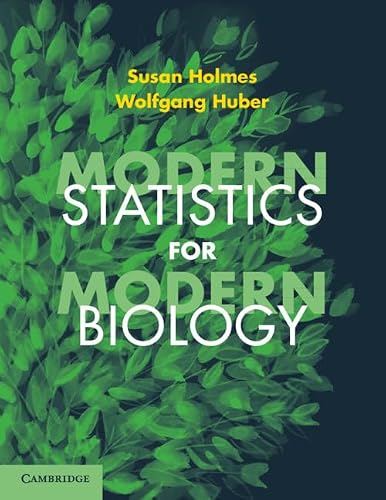
Modern Statistics for Modern Biology by Wolfgang Huber and Susan Holmes is an essential guide for biologists looking to understand and apply statistical methods to their research. It covers key concepts and practical tools for analyzing biological data.
In Modern Statistics for Modern Biology, Wolfgang Huber and Susan Holmes provide a comprehensive guide to the application of modern statistical methods in biological research. The book begins by introducing the fundamental concepts of statistics, such as probability, hypothesis testing, and estimation, and their relevance to biological data analysis.
The authors emphasize the importance of understanding the assumptions underlying statistical methods and the potential pitfalls of misapplication. They introduce the R programming language and its Bioconductor package, which are widely used in biological research for statistical analysis and visualization.
Huber and Holmes then delve into the visualization of biological data, emphasizing the importance of exploratory data analysis (EDA) in understanding the structure and patterns within datasets. They introduce various graphical techniques, such as scatterplots, boxplots, and heatmaps, and demonstrate their application in biological research using R.
The authors also discuss the concept of dimension reduction, which involves summarizing complex datasets into simpler forms. They introduce techniques like principal component analysis (PCA) and multidimensional scaling (MDS) and illustrate their use in visualizing high-dimensional biological data.
Next, Modern Statistics for Modern Biology explores unsupervised learning methods, which aim to identify patterns and structures within data without prior knowledge of the outcome. The authors introduce clustering techniques, such as hierarchical clustering and k-means clustering, and demonstrate their application in grouping biological samples based on their molecular profiles.
They also discuss the concept of distance and similarity measures, which are crucial in clustering and other unsupervised learning methods. The authors emphasize the importance of choosing appropriate distance metrics based on the nature of the biological data being analyzed.
Huber and Holmes then transition to supervised learning methods, which involve predicting an outcome variable based on input features. They introduce techniques like linear regression, logistic regression, and machine learning algorithms, and demonstrate their application in biological research, such as predicting patient outcomes based on gene expression profiles.
The authors also discuss hypothesis testing in the context of biological research, emphasizing the importance of controlling for multiple comparisons and the potential for false discoveries. They introduce methods like the false discovery rate (FDR) and permutation testing and demonstrate their application in identifying statistically significant findings.
In the latter part of the book, Huber and Holmes cover advanced topics in statistical analysis relevant to modern biology. They discuss the analysis of high-throughput sequencing data, the integration of multiple datasets, and the analysis of spatial and network data in biological research.
They also emphasize the importance of reproducibility and transparency in statistical analysis, introducing concepts like literate programming and the creation of reproducible research reports using R Markdown. The book concludes with a discussion on the future of statistics in biology, highlighting the increasing role of computational and data-driven approaches in addressing complex biological questions.
In summary, Modern Statistics for Modern Biology provides a comprehensive and accessible introduction to the application of modern statistical methods in biological research. By combining theoretical concepts with practical examples using the R programming language, the book equips biologists with the necessary tools to analyze and interpret complex biological datasets, ultimately advancing our understanding of the living world.


Modern Statistics for Modern Biology by Wolfgang Huber and Susan Holmes offers a comprehensive guide to statistical analysis in the field of biology. The book covers a wide range of topics including experimental design, hypothesis testing, regression analysis, and statistical programming in R. It provides practical examples and exercises to help biologists apply statistical methods to their own research.
Modern Statistics for Modern Biology (2019) is an essential read for anyone interested in applying statistical methods to biological research. Here's why this book stands out:
It's highly addictive to get core insights on personally relevant topics without repetition or triviality. Added to that the apps ability to suggest kindred interests opens up a foundation of knowledge.
Great app. Good selection of book summaries you can read or listen to while commuting. Instead of scrolling through your social media news feed, this is a much better way to spend your spare time in my opinion.
Life changing. The concept of being able to grasp a book's main point in such a short time truly opens multiple opportunities to grow every area of your life at a faster rate.
Great app. Addicting. Perfect for wait times, morning coffee, evening before bed. Extremely well written, thorough, easy to use.
Try Blinkist to get the key ideas from 7,500+ bestselling nonfiction titles and podcasts. Listen or read in just 15 minutes.
Get started for freeBlink 3 of 8 - The 5 AM Club
by Robin Sharma
What is the main message of Modern Statistics for Modern Biology?
The main message of Modern Statistics for Modern Biology is to apply statistical methods in biological research effectively.
How long does it take to read Modern Statistics for Modern Biology?
The estimated reading time for Modern Statistics for Modern Biology is several hours. The Blinkist summary can be read in just a few minutes.
Is Modern Statistics for Modern Biology a good book? Is it worth reading?
Modern Statistics for Modern Biology is worth reading as it provides valuable insights and practical advice for applying statistical analysis in biology.
Who is the author of Modern Statistics for Modern Biology?
The authors of Modern Statistics for Modern Biology are Wolfgang Huber and Susan Holmes.