


Powerful ideas from top nonfiction
Try Blinkist to get the key ideas from 7,500+ bestselling nonfiction titles and podcasts. Listen or read in just 15 minutes.
Get started for free
Blink 3 of 8 - The 5 AM Club
by Robin Sharma
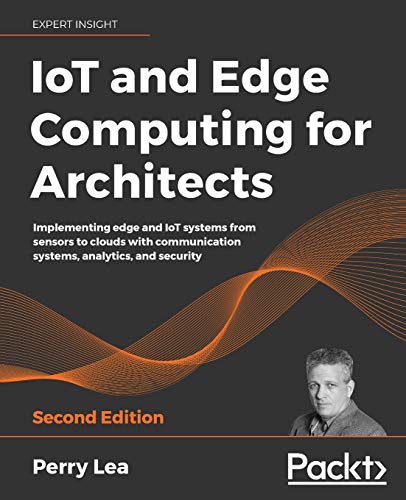
IoT and Edge Computing for Architects by Perry Lea is a comprehensive guide that explores the principles, technologies, and best practices for designing and implementing IoT and edge computing solutions. It provides valuable insights for architects and developers in this rapidly evolving field.
In IoT and Edge Computing for Architects, Perry Lea offers an in-depth understanding of the Internet of Things (IoT) and edge computing. The book starts by defining IoT and edge computing, and then delves into the use cases and the role of an IoT architect. It provides an overview of the IoT architecture, including the core IoT modules, sensors, endpoints, and power systems.
Lea then discusses the communication theory, explaining the non-IP based Wireless Personal Area Network (WPAN) and the IP-based WPAN and Wireless Local Area Network (WLAN). He also explores long-range communication systems and protocols (WAN) and their role in IoT architecture. The book focuses on edge computing, edge routing, and networking, emphasizing the importance of edge to cloud protocols for efficient data management.
Continuing with the implementation of IoT infrastructure, Lea discusses cloud and fog topologies, emphasizing their role in IoT data analytics and machine learning. He provides an insightful discussion on the different types of analytics and machine learning models used in the cloud and at the edge. The book then delves into IoT and edge security, addressing the critical aspects of securing IoT infrastructure, including cryptography, shell security, and software-defined perimeters.
Lea also emphasizes the role of consortiums and communities in the IoT landscape, discussing the importance of collaboration and standardization in the development of IoT technologies. He provides an overview of various IoT consortiums and communities, highlighting their contributions to the advancement of IoT and edge computing.
Throughout the book, Lea ensures that readers gain a holistic view of IoT architecture, covering a wide range of topics from the fundamentals of IoT to advanced edge computing and security. He emphasizes the role of an IoT architect in making critical decisions about IoT infrastructure, including the choice of protocols, communications, and security measures. The book also provides practical insights and best practices to ensure reliability, scalability, and security in IoT infrastructure.
In conclusion, IoT and Edge Computing for Architects offers a comprehensive guide for architects, system designers, technologists, and technology managers who are involved in the development and implementation of IoT solutions. The book equips readers with the knowledge and skills necessary to navigate the complex IoT and edge computing landscape, make informed architectural decisions, and ensure the success of IoT deployments.


IoT and Edge Computing for Architects by Perry Lea provides a comprehensive guide to designing and implementing IoT solutions with a focus on edge computing. It covers key concepts, architectures, and technologies, offering practical insights and best practices for architects and developers. Whether you are new to IoT or looking to enhance your knowledge, this book is a valuable resource for understanding the complexities of IoT and edge computing.
Architects and system designers looking to understand IoT and edge computing
Technology managers and decision-makers seeking to implement IoT solutions
Professionals who want to expand their knowledge of IoT architecture and implementation
It's highly addictive to get core insights on personally relevant topics without repetition or triviality. Added to that the apps ability to suggest kindred interests opens up a foundation of knowledge.
Great app. Good selection of book summaries you can read or listen to while commuting. Instead of scrolling through your social media news feed, this is a much better way to spend your spare time in my opinion.
Life changing. The concept of being able to grasp a book's main point in such a short time truly opens multiple opportunities to grow every area of your life at a faster rate.
Great app. Addicting. Perfect for wait times, morning coffee, evening before bed. Extremely well written, thorough, easy to use.
Try Blinkist to get the key ideas from 7,500+ bestselling nonfiction titles and podcasts. Listen or read in just 15 minutes.
Get started for freeBlink 3 of 8 - The 5 AM Club
by Robin Sharma