


Powerful ideas from top nonfiction
Try Blinkist to get the key ideas from 7,500+ bestselling nonfiction titles and podcasts. Listen or read in just 15 minutes.
Get started for free
Blink 3 of 8 - The 5 AM Club
by Robin Sharma
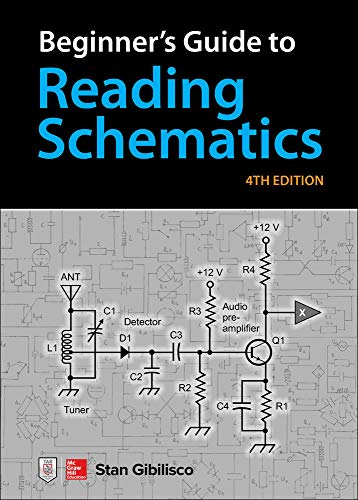
Beginner's Guide to Reading Schematics by Stan Gibilisco is a comprehensive book that teaches you how to understand and interpret electrical schematics. It covers symbols, component identification, and circuit analysis, making it perfect for beginners in electronics.
In Beginner's Guide to Reading Schematics by Stan Gibilisco, we start with the basics. The author introduces us to the concept of schematics and their importance in the field of electronics. We learn that schematics are visual representations of electronic circuits, conveying vital information such as the connections between components, their values, and how they function together to accomplish specific tasks.
Gibilisco explains that schematics use standardized symbols to represent different electronic components, making it easier for engineers and technicians to understand and work with them. He then introduces us to these symbols, emphasizing that a solid understanding of these symbols is crucial for interpreting schematics accurately.
With the foundational knowledge in place, Gibilisco moves on to the process of reading and interpreting schematics. He explains that the flow of reading schematics is typically from left to right and top to bottom, following the direction of the current flow. The author walks us through several examples, breaking down complex schematics into smaller, more manageable sections, and explaining the role and function of each component.
He also introduces us to the concept of net names, which are labels that represent the connections between different parts of a circuit. Understanding net names is essential for comprehending the interrelation between various components in a schematic.
Gibilisco then delves into more complex topics, such as the reading of block diagrams and pictorial diagrams. Block diagrams provide a higher-level view of a system, showing the relationship between its different functional blocks. Pictorial diagrams, on the other hand, offer a more visual representation of the components and their physical layout within a system.
The author emphasizes the importance of mastering these advanced techniques, as they are commonly used in more intricate electronic systems. He provides detailed explanations and examples to ensure that the readers understand these concepts thoroughly.
After establishing a strong foundation in reading schematics, Gibilisco encourages the readers to apply their knowledge by designing their own circuits. He provides step-by-step instructions on how to create a schematic for a simple electronic circuit, starting from identifying the components needed, to drawing the schematic, and finally, to building the actual circuit.
Throughout this process, the author reinforces the importance of accuracy and attention to detail, as even a small error in the schematic can lead to significant issues in the final circuit. He also discusses best practices for organizing and documenting schematics to ensure they are easily understandable and replicable by others.
In the later sections of the book, Gibilisco covers topics such as troubleshooting techniques using schematics, understanding more advanced electronic components, and introduces the readers to digital electronics. He provides practical advice on how to use schematics as a tool for diagnosing and fixing problems in electronic systems.
In conclusion, Beginner's Guide to Reading Schematics by Stan Gibilisco serves as an excellent primer for anyone looking to understand and work with electronic schematics. The author's clear explanations, coupled with numerous examples and exercises, ensure that the readers develop a strong foundation in this essential skill for electronics enthusiasts and professionals alike.


Beginner's Guide to Reading Schematics by Stan Gibilisco is a comprehensive book that teaches the fundamentals of reading and understanding electrical schematics. It covers topics such as symbols, diagrams, and circuit analysis, making it an essential resource for beginners in the field of electronics.
Electronics hobbyists who want to understand and create electronic circuits
Students studying electrical engineering or related fields
Professionals looking to enhance their skills in interpreting and designing schematics
It's highly addictive to get core insights on personally relevant topics without repetition or triviality. Added to that the apps ability to suggest kindred interests opens up a foundation of knowledge.
Great app. Good selection of book summaries you can read or listen to while commuting. Instead of scrolling through your social media news feed, this is a much better way to spend your spare time in my opinion.
Life changing. The concept of being able to grasp a book's main point in such a short time truly opens multiple opportunities to grow every area of your life at a faster rate.
Great app. Addicting. Perfect for wait times, morning coffee, evening before bed. Extremely well written, thorough, easy to use.
Try Blinkist to get the key ideas from 7,500+ bestselling nonfiction titles and podcasts. Listen or read in just 15 minutes.
Get started for freeBlink 3 of 8 - The 5 AM Club
by Robin Sharma