


Powerful ideas from top nonfiction
Try Blinkist to get the key ideas from 7,500+ bestselling nonfiction titles and podcasts. Listen or read in just 15 minutes.
Get started for free
Blink 3 of 8 - The 5 AM Club
by Robin Sharma
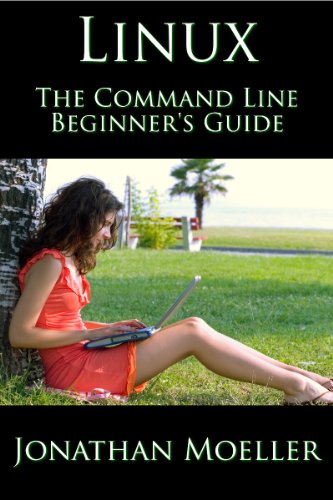
The Linux Command Line Beginner's Guide by Jonathan Moeller is a comprehensive introduction to the Linux command line. It covers basic to advanced commands, file navigation, text editing, and more, making it a valuable resource for beginners.
In The Linux Command Line Beginner's Guide by Jonathan Moeller, we are introduced to the basics of the Linux command line. The book begins with a brief history of Linux and its command line interface, followed by a detailed explanation of the terminal environment and how to navigate the file system using commands such as ls, cd, and pwd.
Moeller then delves into file and directory management, teaching us how to create, copy, move, and delete files and directories. He also explains how to manipulate file permissions and ownership using commands like chmod and chown.
The second part of the book focuses on text editing, where Moeller introduces vi and nano, two popular text editors used in the Linux command line. He explains the basic commands for editing text files and creating new ones, essential skills for any Linux user.
Moeller then moves on to processes, detailing how to view and manage running processes using commands like ps, top, and kill. He also discusses how to schedule tasks using crontab and at, two utilities for automating processes in Linux.
The third section of the book covers user and group management. Moeller explains how to create and delete user accounts, assign users to groups, and manage group memberships. He also discusses user privileges and how to use the sudo command to execute administrative tasks.
Furthermore, Moeller provides an in-depth explanation of Linux file permissions, including how to read, set, and modify file permissions using symbolic and octal notation. He also explains the concept of the umask and its role in default file permissions.
In the fourth part of The Linux Command Line Beginner's Guide, Moeller covers networking and system information. He discusses basic network commands like ping, ifconfig, and netstat, which are used to troubleshoot network connectivity issues and gather information about network interfaces and connections.
Moeller also explains how to retrieve system information using commands like uname, hostname, and df, which provide details about the system kernel, hardware, and disk space, respectively.
In the final section of the book, Moeller introduces shell scripting, a powerful feature of the Linux command line. He explains the basics of shell scripting, including variable assignment, conditional statements, loops, and functions, and provides several practical examples to illustrate their usage.
In conclusion, The Linux Command Line Beginner's Guide by Jonathan Moeller serves as an excellent primer for anyone new to the Linux command line. It provides a comprehensive overview of essential commands and concepts, empowering readers to navigate and manage their Linux systems effectively.


The Linux Command Line Beginner's Guide by Jonathan Moeller is a comprehensive introduction to the Linux command line. It covers everything from basic commands to file manipulation, text editing, and shell scripting. Whether you're a beginner or looking to deepen your understanding of Linux, this book is a valuable resource for mastering the command line interface.
Aspiring Linux users who want to learn the command line interface
Those who want to improve their efficiency and productivity in using Linux
People who are curious about the inner workings of the Linux operating system
It's highly addictive to get core insights on personally relevant topics without repetition or triviality. Added to that the apps ability to suggest kindred interests opens up a foundation of knowledge.
Great app. Good selection of book summaries you can read or listen to while commuting. Instead of scrolling through your social media news feed, this is a much better way to spend your spare time in my opinion.
Life changing. The concept of being able to grasp a book's main point in such a short time truly opens multiple opportunities to grow every area of your life at a faster rate.
Great app. Addicting. Perfect for wait times, morning coffee, evening before bed. Extremely well written, thorough, easy to use.
Try Blinkist to get the key ideas from 7,500+ bestselling nonfiction titles and podcasts. Listen or read in just 15 minutes.
Get started for freeBlink 3 of 8 - The 5 AM Club
by Robin Sharma