


Powerful ideas from top nonfiction
Try Blinkist to get the key ideas from 7,500+ bestselling nonfiction titles and podcasts. Listen or read in just 15 minutes.
Get started for free
Blink 3 of 8 - The 5 AM Club
by Robin Sharma
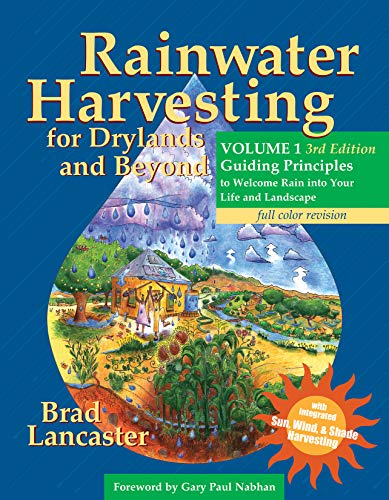
Rainwater Harvesting for Drylands and Beyond, Volume 1 by Brad Lancaster is a comprehensive guide that offers practical techniques for capturing and utilizing rainwater to create sustainable and drought-resistant landscapes. It provides valuable insights and step-by-step instructions for implementing effective rainwater harvesting systems.
In Rainwater Harvesting for Drylands and Beyond, Volume 1 by Brad Lancaster, the author begins by introducing the reader to the concept of rainwater harvesting. He explains the importance of capturing and using rainwater, especially in arid regions where water is scarce. Lancaster emphasizes the need for a shift in our approach to water management, moving away from centralized systems to decentralized, site-specific solutions that mimic natural processes.
The author then delves into the fundamentals of water-harvesting, discussing key elements such as soil, vegetation, and topography. He highlights the role of these components in capturing, storing, and using rainwater effectively. Lancaster stresses the importance of understanding your local environment and site-specific conditions to implement the most suitable water-harvesting strategies.
Lancaster then proceeds to explore various water-harvesting techniques, starting with earthworks. He explains how simple modifications to the landscape, such as swales and berms, can significantly enhance rainwater infiltration and retention. The author also introduces the concept of planting water, advocating for the use of native, water-efficient vegetation to further improve water retention and soil health.
Continuing this exploration, Lancaster discusses the role of passive water-harvesting systems, such as roof catchment, in capturing rainwater. He provides practical advice on designing and implementing these systems, stressing the importance of integrating them with other water-harvesting techniques. Lancaster emphasizes the need for a comprehensive, holistic approach to water-harvesting, considering both the built and natural environment.
Next, the author moves on to the practical application of water-harvesting techniques. He provides detailed guidance on assessing your site, designing a water-harvesting plan, and selecting appropriate techniques. Lancaster encourages the reader to start small, experiment, and learn from their experiences, gradually expanding their water-harvesting efforts.
Throughout the book, Lancaster supplements his teachings with real-life examples and case studies. He introduces us to individuals and communities who have successfully implemented water-harvesting projects, demonstrating the practicality and effectiveness of these techniques. These stories serve as inspiration and highlight the transformative impact of water-harvesting on people's lives and the environment.
In conclusion, Rainwater Harvesting for Drylands and Beyond, Volume 1 provides a comprehensive introduction to the principles and practices of water-harvesting. Lancaster emphasizes the potential of these techniques to address water scarcity, improve soil health, and create sustainable, resilient landscapes. He encourages readers to embrace a new perspective on water, viewing it not as a problem to be managed but as a valuable resource to be harvested and utilized wisely.
Overall, this volume sets the stage for a deeper exploration of water-harvesting in subsequent volumes, offering a solid foundation of knowledge and principles. It leaves readers with a sense of optimism and empowerment, knowing that they have the tools and understanding to make a positive impact on their local water cycle and contribute to a more sustainable future.


Rainwater Harvesting for Drylands and Beyond, Volume 1 by Brad Lancaster is a comprehensive guide to capturing and utilizing rainwater in arid and semi-arid regions. The book offers practical techniques and innovative strategies for harvesting rainwater, making it an invaluable resource for anyone looking to conserve water and create sustainable landscapes.
Individuals living in dryland regions who want to maximize their water resources
Gardeners and landscapers looking to create sustainable and water-efficient outdoor spaces
Environmental enthusiasts interested in reducing water waste and promoting conservation
It's highly addictive to get core insights on personally relevant topics without repetition or triviality. Added to that the apps ability to suggest kindred interests opens up a foundation of knowledge.
Great app. Good selection of book summaries you can read or listen to while commuting. Instead of scrolling through your social media news feed, this is a much better way to spend your spare time in my opinion.
Life changing. The concept of being able to grasp a book's main point in such a short time truly opens multiple opportunities to grow every area of your life at a faster rate.
Great app. Addicting. Perfect for wait times, morning coffee, evening before bed. Extremely well written, thorough, easy to use.
Try Blinkist to get the key ideas from 7,500+ bestselling nonfiction titles and podcasts. Listen or read in just 15 minutes.
Get started for freeBlink 3 of 8 - The 5 AM Club
by Robin Sharma