


Powerful ideas from top nonfiction
Try Blinkist to get the key ideas from 7,500+ bestselling nonfiction titles and podcasts. Listen or read in just 15 minutes.
Get started for free
Blink 3 of 8 - The 5 AM Club
by Robin Sharma
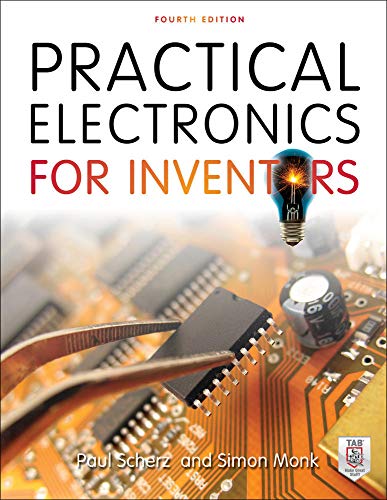
Practical Electronics for Inventors is a comprehensive guide that helps beginners understand the fundamental concepts of electronics and provides practical knowledge for creating their own electronic inventions. It covers topics such as components, circuits, microcontrollers, and much more.
In Practical Electronics for Inventors by Paul Scherz, we embark on a comprehensive journey through the realm of electronics. Beginning with the fundamental concepts, the book introduces us to the basic components of electronics, including resistors, capacitors, inductors, transformers, and their respective symbols and units. It then delves into the laws of electricity and magnetism, Ohm's law, Kirchhoff's laws, and the concept of electrical power.
We are then introduced to the various types of electronic circuits, such as series and parallel circuits, and the methods used to analyze and solve them. We also explore the concept of electrical safety, learning about the dangers of electric shock and the ways to protect ourselves from these hazards.
The book then provides an in-depth understanding of passive and active electronic components, such as diodes, transistors, and integrated circuits. It explains their working principles, characteristics, and applications. We learn about semiconductor materials, P-N junctions, diode types, and their uses in rectifiers and voltage regulators.
Next, we move on to transistors, exploring their various types, configurations, and applications in amplifiers, switches, and oscillators. The book also covers operational amplifiers (op-amps) and their applications in signal processing, amplification, and filtering. We then delve into digital electronics, learning about logic gates, flip-flops, counters, and their applications in digital systems.
At this point in Practical Electronics for Inventors, we are equipped with the knowledge to design and analyze simple electronic circuits. We learn about various circuit analysis techniques, such as nodal and mesh analysis, Thevenin's and Norton's theorems, and their applications in solving complex circuits.
The book then guides us through the process of designing electronic circuits, starting from the initial concept to the final prototype. We learn about circuit simulation using software tools, PCB (printed circuit board) design, and the selection of electronic components based on their specifications and application requirements.
As we progress, Practical Electronics for Inventors introduces us to advanced topics in electronics. We learn about power supplies and voltage regulators, exploring linear and switching power supply designs and their applications. The book also covers semiconductor devices like thyristors, triacs, and power MOSFETs, used in high-power applications.
We then move on to explore analog and digital communication systems, learning about modulation techniques, demodulation, and the basics of digital data transmission. The book also introduces us to microcontrollers and their applications in embedded systems, covering topics like programming, interfacing, and control systems.
In the latter part of the book, we are encouraged to apply our knowledge to practical projects. We learn about various sensors and transducers used in electronic systems, such as temperature sensors, pressure sensors, and proximity sensors. We also explore the basics of robotics, including DC motors, stepper motors, and motor control circuits.
In conclusion, Practical Electronics for Inventors by Paul Scherz is a comprehensive guide that equips us with a strong foundation in electronics. It not only explains the theoretical concepts but also provides practical insights and applications, encouraging us to become inventors in the fascinating world of electronics.


Practical Electronics for Inventors is a comprehensive guide that covers the fundamental concepts and practical applications of electronics. Written by Paul Scherz, this book provides a hands-on approach to learning electronics, making it suitable for both beginners and experienced hobbyists. It covers topics such as electronic components, circuits, digital electronics, microcontrollers, and much more, making it an essential resource for anyone interested in inventing and creating electronic devices.
Electronics enthusiasts looking to deepen their understanding of the subject
Students studying electrical engineering or related fields
Hobbyists interested in building and experimenting with electronic circuits
It's highly addictive to get core insights on personally relevant topics without repetition or triviality. Added to that the apps ability to suggest kindred interests opens up a foundation of knowledge.
Great app. Good selection of book summaries you can read or listen to while commuting. Instead of scrolling through your social media news feed, this is a much better way to spend your spare time in my opinion.
Life changing. The concept of being able to grasp a book's main point in such a short time truly opens multiple opportunities to grow every area of your life at a faster rate.
Great app. Addicting. Perfect for wait times, morning coffee, evening before bed. Extremely well written, thorough, easy to use.
Try Blinkist to get the key ideas from 7,500+ bestselling nonfiction titles and podcasts. Listen or read in just 15 minutes.
Get started for freeBlink 3 of 8 - The 5 AM Club
by Robin Sharma