


Powerful ideas from top nonfiction
Try Blinkist to get the key ideas from 7,500+ bestselling nonfiction titles and podcasts. Listen or read in just 15 minutes.
Get started for free
Blink 3 of 8 - The 5 AM Club
by Robin Sharma
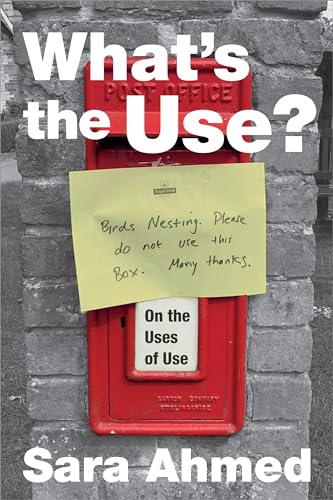
What's the Use? by Sara Ahmed delves into the concept of "use" and how it is linked to power dynamics. Ahmed prompts readers to question and challenge the ways in which "use" is employed to maintain societal norms and inequalities.
In What's the Use? by Sara Ahmed, we are taken on a thought-provoking journey through the concept of use. Ahmed begins by exploring how the notion of use is entwined with the idea of utility, which in turn is linked to the notion of what is valuable or worthwhile. This exploration leads us to consider how certain things, people, and spaces are deemed useful, while others are not, and the power dynamics that underlie these distinctions.
Ahmed delves into the historical roots of these associations, walking us through the ways in which use has been connected to life and strength, and how these connections have influenced social and biological thought. She shows us how the idea of use is not merely a neutral concept, but is laden with value judgments and power dynamics, often privileging certain bodies, spaces, and practices over others.
The author then turns her attention to the university setting, examining how the notion of use operates within these institutions. She discusses how certain bodies and practices are deemed useful within the university, while others are not, leading to the exclusion of marginalized groups and the reinforcement of existing power structures. Ahmed's analysis brings to light the ways in which the university can be a site of both inclusion and exclusion, depending on what is deemed useful within its walls.
She also explores how the university's focus on use can impact the mental health of its students and staff. The pressure to be useful, productive, and efficient can lead to burnout, anxiety, and depression, as individuals struggle to meet these demanding expectations. Ahmed's insights prompt us to question the value systems that underpin our educational institutions and the impact they have on the well-being of those within them.
Amidst this exploration of the restrictive nature of use, Ahmed introduces the concept of 'queer use'. She describes queer use as a form of resistance, a way of using things, spaces, and bodies in ways that were not intended or sanctioned by dominant power structures. This concept challenges the idea that use is fixed and predetermined, highlighting the potential for alternative, subversive forms of use that disrupt existing hierarchies.
Ahmed illustrates the concept of queer use through examples of resistance within the university setting, such as student protests and alternative forms of knowledge production. These acts of resistance, she argues, can serve as powerful tools for challenging the status quo and opening up new possibilities for inclusion and diversity within educational institutions.
In conclusion, What's the Use? urges us to critically examine our assumptions about use and utility. By revealing the ways in which the concept of use is entangled with power dynamics and exclusionary practices, Ahmed encourages us to rethink our understanding of what is considered useful, valuable, or worthwhile. She challenges us to consider how our attachment to certain notions of use might be limiting our ability to create more inclusive and equitable spaces.
Ultimately, Ahmed's work prompts us to question the status quo and imagine new, more expansive ways of using and being in the world. By embracing the concept of queer use and its potential for resistance and transformation, we can begin to challenge the restrictive nature of use and open up new possibilities for a more inclusive and just society.


What's the Use? by Sara Ahmed delves into the concept of "use" and its implications in various aspects of our lives. Through thought-provoking analysis, Ahmed challenges us to reconsider the ways in which we understand and value "usefulness," and how it shapes our interactions, identities, and societal structures. This book offers a critical examination of the power dynamics inherent in the notion of "use," inviting readers to reflect on its influence on our beliefs and behaviors.
Individuals interested in critical feminist theory and social justice
Academics and students studying gender studies, sociology, or cultural studies
Readers looking to challenge and expand their understanding of power dynamics and everyday life
It's highly addictive to get core insights on personally relevant topics without repetition or triviality. Added to that the apps ability to suggest kindred interests opens up a foundation of knowledge.
Great app. Good selection of book summaries you can read or listen to while commuting. Instead of scrolling through your social media news feed, this is a much better way to spend your spare time in my opinion.
Life changing. The concept of being able to grasp a book's main point in such a short time truly opens multiple opportunities to grow every area of your life at a faster rate.
Great app. Addicting. Perfect for wait times, morning coffee, evening before bed. Extremely well written, thorough, easy to use.
Try Blinkist to get the key ideas from 7,500+ bestselling nonfiction titles and podcasts. Listen or read in just 15 minutes.
Get started for freeBlink 3 of 8 - The 5 AM Club
by Robin Sharma