


Powerful ideas from top nonfiction
Try Blinkist to get the key ideas from 7,500+ bestselling nonfiction titles and podcasts. Listen or read in just 15 minutes.
Get started for free
Blink 3 of 8 - The 5 AM Club
by Robin Sharma
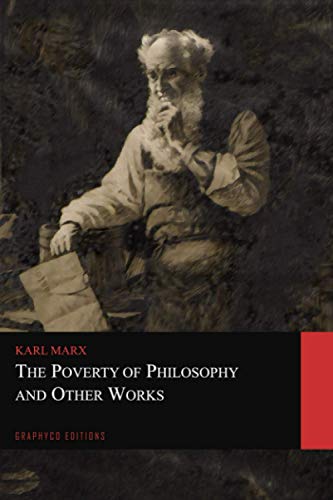
The Poverty of Philosophy by Karl Marx critiques the economic and philosophical ideas of Pierre-Joseph Proudhon. Marx argues for the importance of class struggle and the revolutionary role of the proletariat in achieving a communist society.
In The Poverty of Philosophy, Karl Marx presents a critique of Pierre-Joseph Proudhon's 'The Philosophy of Poverty'. Marx begins by acknowledging Proudhon's significant influence on the socialist movement in France. However, he quickly delves into a detailed criticism of Proudhon's ideas, highlighting what he sees as contradictions and inadequacies in Proudhon's philosophy.
Marx takes issue with Proudhon's assertion that property is theft, arguing instead that it is the exploitative nature of capitalism that leads to the alienation and impoverishment of the working class. He criticizes Proudhon's proposal of a 'people's bank' as a solution to economic inequality, asserting that it does not address the fundamental issues of private property and wage labor.
Marx then introduces his own economic materialist perspective, emphasizing the role of material conditions in shaping social relations and ideas. He argues that the economic base of society, which includes the means of production and the relations of production, fundamentally determines its superstructure, encompassing law, politics, religion, and philosophy.
Marx further criticizes Proudhon's attempt to reconcile the interests of the proletariat and the bourgeoisie, asserting that the two classes have irreconcilable interests due to their different positions within the capitalist mode of production. He contends that the working class must overthrow the capitalist system to achieve true emancipation.
Continuing his critique, Marx addresses Proudhon's misunderstanding of the role of class struggle. He argues that this struggle is not a result of the distribution of wealth, as Proudhon suggests, but rather a product of the capitalist mode of production itself. Marx contends that the capitalist system inherently generates class conflict due to the exploitation of labor by capital.
Marx also challenges Proudhon's belief in the possibility of a peaceful transition to socialism. He argues that the ruling class will never willingly relinquish its power and that the working class must engage in a revolutionary struggle to overthrow capitalism and establish a classless society.
In conclusion, The Poverty of Philosophy presents Marx's critique of Proudhon's idealist and reformist approach to socialism. Marx emphasizes the necessity of a proletarian revolution to overthrow the capitalist system and establish a socialist society based on common ownership of the means of production.
Despite its polemical nature, Marx's work serves as an important contribution to the development of Marxist theory. It lays the groundwork for his later, more comprehensive works, such as Capital, and helps to clarify the fundamental principles of historical materialism and the role of class struggle in the transition to socialism.


The Poverty of Philosophy is a critique of the economic and philosophical arguments put forth by Pierre-Joseph Proudhon. Written by Karl Marx, this book examines the flaws in Proudhon's theories and offers a defense of Marxist ideas. It delves into the concept of economic determinism and the role of class struggle in shaping society.
Readers interested in understanding Marx's critique of Proudhon and his analysis of political economy
Individuals seeking to deepen their knowledge of socialist and communist theory
Those looking for a critical examination of the limitations of capitalist economic systems
It's highly addictive to get core insights on personally relevant topics without repetition or triviality. Added to that the apps ability to suggest kindred interests opens up a foundation of knowledge.
Great app. Good selection of book summaries you can read or listen to while commuting. Instead of scrolling through your social media news feed, this is a much better way to spend your spare time in my opinion.
Life changing. The concept of being able to grasp a book's main point in such a short time truly opens multiple opportunities to grow every area of your life at a faster rate.
Great app. Addicting. Perfect for wait times, morning coffee, evening before bed. Extremely well written, thorough, easy to use.
Try Blinkist to get the key ideas from 7,500+ bestselling nonfiction titles and podcasts. Listen or read in just 15 minutes.
Get started for freeBlink 3 of 8 - The 5 AM Club
by Robin Sharma