


Powerful ideas from top nonfiction
Try Blinkist to get the key ideas from 7,500+ bestselling nonfiction titles and podcasts. Listen or read in just 15 minutes.
Get started for free
Blink 3 of 8 - The 5 AM Club
by Robin Sharma
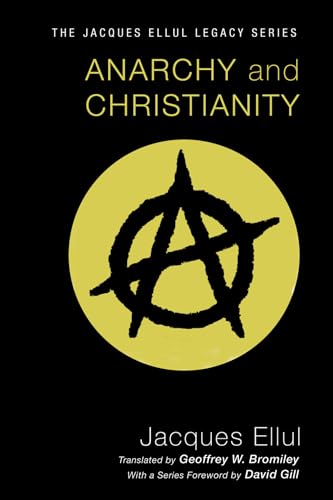
Anarchy and Christianity by Jacques Ellul explores the compatibility of Christian faith and anarchist philosophy. It delves into the teachings of Jesus and the early church to present a thought-provoking perspective on power, authority, and social order.
In Anarchy and Christianity, Jacques Ellul provides a thought-provoking exploration of the relationship between two seemingly disparate systems: anarchism and Christianity. Ellul, a French philosopher, sociologist, and theologian, begins by defining anarchy as the nonviolent repudiation of authority, and Christianity as the religion based on the teachings of Jesus Christ.
Ellul argues that the essence of anarchy, as a political philosophy, is rooted in the rejection of coercive authority. He then delves into the Old Testament, where he asserts that the Israelites' demand for a king was a rejection of the direct rule of God, and thus the beginning of a coercive authority. In contrast, Jesus, as Ellul interprets, came to bring the Kingdom of God, which is non-coercive and non-authoritarian.
Ellul emphasizes the importance of nonviolence in the teachings of Jesus, and how it is fundamentally linked to the idea of anarchy. He points out that Jesus' radical message of love, forgiveness, and non-resistance to evil is a direct challenge to the prevailing structures of power and authority. According to Ellul, this message is an embodiment of non-coercive power, which is central to both anarchism and Christianity.
Ellul then turns his attention to the early Christian church, arguing that its structure and practices were closer to anarchy than to any form of institutionalized authority. He highlights the early Christian communities' emphasis on equality, mutual aid, and non-hierarchical organization as a living expression of the anarchic spirit. He also contrasts this with the subsequent development of the institutional church, which he sees as a departure from the original anarchic vision.
Despite the historical divergence of the church from its early anarchic ideals, Ellul maintains that anarchism and Christianity are fundamentally compatible. He argues that the essence of Christianity is not found in the institutional church, but in the radical message of Jesus and the example of the early Christian communities. Similarly, the essence of anarchy, as Ellul sees it, is not in chaos and disorder, but in the rejection of coercive authority and the pursuit of nonviolent, egalitarian societies.
Ellul concludes Anarchy and Christianity by advocating for a return to the original anarchic and nonviolent spirit of Christianity. He proposes that Christians should embrace the principles of anarchy in their personal lives and work towards creating communities and societies based on these principles. He also suggests that anarchists should recognize the potential contribution of Christian ethics to their vision of a non-coercive, egalitarian world.
In summary, Anarchy and Christianity presents a compelling argument for the compatibility of anarchism and Christianity, rooted in their shared rejection of coercive authority and their emphasis on nonviolence and equality. Ellul's work challenges conventional understandings of both anarchism and Christianity, offering a thought-provoking vision of a nonviolent, non-authoritarian society inspired by the teachings of Jesus and the spirit of anarchy.


Anarchy and Christianity by Jacques Ellul explores the intersection of these two seemingly contradictory ideologies. Through a thought-provoking analysis, the book challenges conventional beliefs and delves into the possibility of a harmonious coexistence between anarchy and Christianity. It offers a unique perspective on social order, freedom, and the role of religion in shaping our world.
Individuals interested in exploring the intersection of Christianity and anarchist political theory
Readers seeking a thought-provoking critique of modern society and its systems of power
Those open to challenging their preconceived notions and exploring alternative perspectives on faith and politics
It's highly addictive to get core insights on personally relevant topics without repetition or triviality. Added to that the apps ability to suggest kindred interests opens up a foundation of knowledge.
Great app. Good selection of book summaries you can read or listen to while commuting. Instead of scrolling through your social media news feed, this is a much better way to spend your spare time in my opinion.
Life changing. The concept of being able to grasp a book's main point in such a short time truly opens multiple opportunities to grow every area of your life at a faster rate.
Great app. Addicting. Perfect for wait times, morning coffee, evening before bed. Extremely well written, thorough, easy to use.
Try Blinkist to get the key ideas from 7,500+ bestselling nonfiction titles and podcasts. Listen or read in just 15 minutes.
Get started for freeBlink 3 of 8 - The 5 AM Club
by Robin Sharma