


Powerful ideas from top nonfiction
Try Blinkist to get the key ideas from 7,500+ bestselling nonfiction titles and podcasts. Listen or read in just 15 minutes.
Get started for free
Blink 3 of 8 - The 5 AM Club
by Robin Sharma
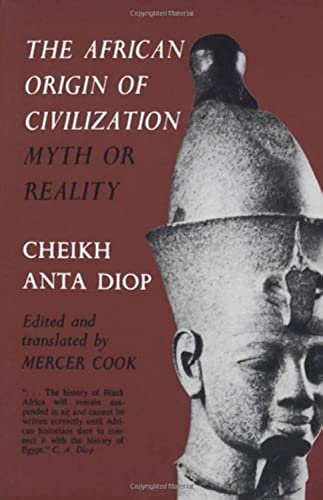
The African Origin of Civilization by Cheikh Anta Diop explores the cultural and historical achievements of ancient Africa, challenging Eurocentric views and highlighting the continent's significant contributions to world civilization.
In The African Origin of Civilization by Cheikh Anta Diop, we embark on a journey through the annals of history, back to the birth of civilization. Diop argues that the cradle of civilization was Africa, specifically the Nile Valley, and that ancient Egypt was an African civilization. He provides evidence from various fields such as anthropology, linguistics, and archaeology to support his claims.
Diop begins by challenging the Eurocentric view of history and civilization, which has traditionally placed the origins of civilization in Mesopotamia and the Middle East. He argues that this view was shaped by racial prejudice and colonial interests and that it has led to the marginalization of Africa's contributions to human development.
In the following sections of The African Origin of Civilization, Diop delves into the history, culture, and achievements of ancient Egypt. He presents linguistic evidence to show that the ancient Egyptian language was related to African languages, particularly those spoken in the Sudanese region. He also highlights the physical characteristics of the ancient Egyptians, as depicted in their art, to argue for their African identity.
Diop further emphasizes the role of ancient Egypt as a cultural and intellectual center, influencing neighboring regions and even civilizations such as Greece. He presents evidence of the exchange of knowledge and ideas between Egypt and other African societies and challenges the notion of Egypt as an isolated, non-African entity.
In the middle part of The African Origin of Civilization, Diop explores the scientific and philosophical achievements of ancient Egypt. He discusses the Egyptian contributions to mathematics, astronomy, medicine, and architecture, highlighting the advanced knowledge and skills of the ancient Egyptians in these fields.
Diop also argues that the philosophical concepts and religious beliefs of ancient Egypt had their roots in African thought systems. He emphasizes the unity of the African cultural and intellectual heritage, challenging the notion of a fundamental divide between 'black Africa' and the Mediterranean world.
As we near the end of the book, Diop discusses the decline of ancient Egyptian civilization and the impact of foreign invasions and domination. He emphasizes the continuity of African civilization, highlighting the survival and adaptation of African cultural and social systems despite external pressures.
Diop concludes The African Origin of Civilization by calling for a reevaluation of African history and a recognition of the continent's significant contributions to human civilization. He argues that acknowledging Africa as the birthplace of civilization is crucial for understanding the history of humanity as a whole and for promoting a more inclusive and accurate view of world history.
In summary, The African Origin of Civilization by Cheikh Anta Diop presents a compelling argument for the African origins of civilization, particularly focusing on ancient Egypt. Through a multidisciplinary approach, Diop challenges Eurocentric views of history and presents evidence to support the African identity of ancient Egypt and its significant contributions to human development. The book serves as a powerful call to reexamine and appreciate Africa's rich and complex history.


The African Origin of Civilization by Cheikh Anta Diop explores the contributions of African civilizations to the development of human history. Diop challenges the Eurocentric view of history and presents evidence to support the idea that ancient Egypt was an African civilization. Through meticulous research and analysis, the book sheds light on the rich and often overlooked history of Africa.
Readers who are interested in African history and civilizations
Those who want to challenge Eurocentric views of history and learn about the contributions of African cultures
People who enjoy scholarly works that offer a new perspective on well-known historical topics
It's highly addictive to get core insights on personally relevant topics without repetition or triviality. Added to that the apps ability to suggest kindred interests opens up a foundation of knowledge.
Great app. Good selection of book summaries you can read or listen to while commuting. Instead of scrolling through your social media news feed, this is a much better way to spend your spare time in my opinion.
Life changing. The concept of being able to grasp a book's main point in such a short time truly opens multiple opportunities to grow every area of your life at a faster rate.
Great app. Addicting. Perfect for wait times, morning coffee, evening before bed. Extremely well written, thorough, easy to use.
Try Blinkist to get the key ideas from 7,500+ bestselling nonfiction titles and podcasts. Listen or read in just 15 minutes.
Get started for freeBlink 3 of 8 - The 5 AM Club
by Robin Sharma