


Powerful ideas from top nonfiction
Try Blinkist to get the key ideas from 7,500+ bestselling nonfiction titles and podcasts. Listen or read in just 15 minutes.
Get started for free
Blink 3 of 8 - The 5 AM Club
by Robin Sharma
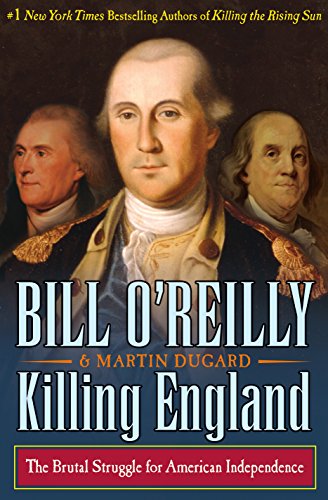
Killing England by Bill O'Reilly explores the events leading up to the American Revolution and the brave individuals who fought for independence. It offers a gripping account of this pivotal period in history.
In Killing England by Bill O'Reilly, we are taken back to the 18th century, where the seeds of the American Revolution are sown. The book begins with the French and Indian War, a conflict that left Britain in a financial crisis. To recoup their losses, the British Parliament imposed a series of taxes on the American colonies, leading to widespread discontent. The stage is set for a revolution.
As the tension between the colonies and Britain escalates, we are introduced to key figures such as George Washington, a wealthy Virginian landowner who would become the leader of the Continental Army, and King George III, the monarch who was determined to keep the colonies under British rule. The authors provide a detailed account of the events leading up to the outbreak of the Revolutionary War, including the Boston Tea Party and the battles of Lexington and Concord.
With the outbreak of the Revolutionary War, Killing England delves into the military strategies and battles that shaped the conflict. We witness the early setbacks of the Continental Army, including the disastrous New York campaign, and the pivotal victories at Trenton and Princeton that bolstered American morale. The book also highlights the role of foreign powers, such as France, in supporting the American cause.
Throughout the war, George Washington's leadership and resilience are emphasized. Despite facing numerous challenges, including a lack of resources and a demoralized army, Washington's determination and strategic acumen keep the American cause alive. The authors also provide insights into the personal lives of the key figures, shedding light on their fears, ambitions, and sacrifices.
In the middle of Killing England, we reach the turning point of the war: the Battle of Saratoga. This crucial American victory convinces the French to openly support the colonies, marking a significant shift in the balance of power. The authors vividly describe the brutal realities of war, including the harsh winter at Valley Forge, where the Continental Army endured extreme hardships.
As the war progresses, we witness the increasing disillusionment of the British public and the strains it places on the British government. Meanwhile, the American forces, buoyed by their alliance with France, continue to fight for their independence. The book captures the ebb and flow of the conflict, from the American triumphs at Saratoga and Yorktown to the British victories in the southern colonies.
In the final chapters of Killing England, we witness the culmination of the American Revolution. The decisive victory at Yorktown, where the combined American and French forces defeat the British, effectively ends the war. The authors provide a detailed account of the surrender of General Cornwallis, a moment that marks the beginning of the end for British rule in America.
The book concludes with the signing of the Treaty of Paris in 1783, formally recognizing the independence of the United States. The authors emphasize the significance of this moment, marking the birth of a new nation founded on the principles of liberty and self-governance. In Killing England, O'Reilly and Dugard offer a gripping narrative of the American Revolution, highlighting the courage, sacrifice, and determination that shaped the birth of the United States.


Killing England by Bill O'Reilly offers a gripping account of the American Revolution, delving into the key events and figures that shaped the birth of the United States. Through meticulous research and compelling storytelling, the book sheds light on the sacrifices and struggles that ultimately led to the country's independence.
Killing England (2017) by Bill O'Reilly is a captivating exploration of the American Revolution and the events leading up to it. Here's why this book is worth reading:
It's highly addictive to get core insights on personally relevant topics without repetition or triviality. Added to that the apps ability to suggest kindred interests opens up a foundation of knowledge.
Great app. Good selection of book summaries you can read or listen to while commuting. Instead of scrolling through your social media news feed, this is a much better way to spend your spare time in my opinion.
Life changing. The concept of being able to grasp a book's main point in such a short time truly opens multiple opportunities to grow every area of your life at a faster rate.
Great app. Addicting. Perfect for wait times, morning coffee, evening before bed. Extremely well written, thorough, easy to use.
Try Blinkist to get the key ideas from 7,500+ bestselling nonfiction titles and podcasts. Listen or read in just 15 minutes.
Get started for freeBlink 3 of 8 - The 5 AM Club
by Robin Sharma
What is the main message of Killing England?
Killing England provides a captivating account of the American Revolution.
How long does it take to read Killing England?
The reading time for Killing England varies depending on the reader's speed. However, the Blinkist summary can be read in just 15 minutes.
Is Killing England a good book? Is it worth reading?
Killing England is a compelling read that sheds light on a pivotal moment in history.
Who is the author of Killing England?
Killing England is written by Bill O'Reilly.