










Powerful ideas from top nonfiction
Try Blinkist to get the key ideas from 7,500+ bestselling nonfiction titles and podcasts. Listen or read in just 15 minutes.
Get started for free
Blink 3 of 8 - The 5 AM Club
by Robin Sharma
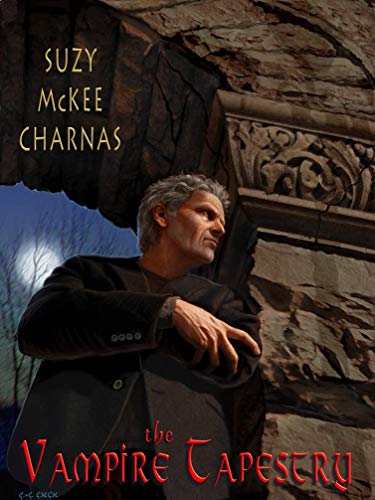
The Vampire Tapestry by Suzy McKee Charnas is a captivating novel that delves into the psychology and biology of vampirism. It offers a unique and thought-provoking take on the classic vampire myth.
In The Vampire Tapestry by Suzy McKee Charnas, we meet Dr. Edward Weyland, an enigmatic figure who is more than just a vampire. He is an anthropologist, a scholar, and a creature of the night. Weyland is not a supernatural vampire; his condition is a genetic quirk, a biological mutation that compels him to consume blood to survive. Despite his monstrous nature, Weyland is a man of science, constantly seeking to understand his own condition.
Charnas' narrative is a compelling exploration of Weyland's dual existence. We see him as a respected academic, a man of culture and intellect, and also as a predator, an ancient being who has lived for centuries. Weyland's life is a carefully balanced act, one that requires him to navigate the modern world while concealing his true nature.
As the story unfolds, we are taken back in time to Weyland's early years, where his vampiric nature first manifested. His transformation is not a dramatic one, but a gradual realization of his need for blood. This need, however, doesn't define him entirely. Weyland is a complex character, struggling to reconcile his predatory instincts with his intellectual pursuits.
Charnas masterfully portrays Weyland's internal conflict, his constant battle to suppress his violent urges. The vampire becomes a metaphor for the darker aspects of human nature, and Weyland's struggle mirrors our own internal conflicts. He is a monster, yes, but he is also a man, and the line between the two is often blurred.
What sets The Vampire Tapestry apart from other vampire tales is its unique perspective. Charnas delves deep into Weyland's psyche, presenting us with a character who is both terrifying and sympathetic. We see his loneliness, his longing for connection, and his profound sense of alienation. As he moves through the centuries, Weyland encounters numerous individuals, but his true nature always keeps him at a distance.
Throughout the novel, Charnas raises thought-provoking questions about identity, morality, and the nature of evil. Weyland's existence challenges our traditional notions of good and evil, forcing us to confront the complexities of human nature. In a way, Weyland is a mirror, reflecting back to us our own fears and desires.
As we reach the climax of The Vampire Tapestry, Weyland's carefully constructed facade begins to crack. His dual existence, once so carefully managed, threatens to unravel. The novel's conclusion is both tragic and inevitable, a reminder of the inescapable nature of Weyland's condition.
In the end, The Vampire Tapestry is more than a vampire story. It is a profound exploration of the human condition, a meditation on the nature of identity and the struggle to reconcile our darker impulses with our better selves. Charnas' portrayal of Weyland is haunting and unforgettable, leaving us with a deeper understanding of what it means to be human.


The Vampire Tapestry by Suzy McKee Charnas is a gripping and thought-provoking novel that reimagines the vampire myth. It tells the story of Dr. Edward Lewis Weyland, a vampire who is not driven by bloodlust, but by a deep curiosity about human nature. Through a series of interconnected stories, the book delves into themes of identity, morality, and the nature of evil, challenging our preconceptions about vampires and the human condition.
Readers who enjoy thought-provoking and complex characters
Those interested in exploring the darker aspects of human nature
People who appreciate a unique and unconventional take on vampire mythology
It's highly addictive to get core insights on personally relevant topics without repetition or triviality. Added to that the apps ability to suggest kindred interests opens up a foundation of knowledge.
Great app. Good selection of book summaries you can read or listen to while commuting. Instead of scrolling through your social media news feed, this is a much better way to spend your spare time in my opinion.
Life changing. The concept of being able to grasp a book's main point in such a short time truly opens multiple opportunities to grow every area of your life at a faster rate.
Great app. Addicting. Perfect for wait times, morning coffee, evening before bed. Extremely well written, thorough, easy to use.
Try Blinkist to get the key ideas from 7,500+ bestselling nonfiction titles and podcasts. Listen or read in just 15 minutes.
Get started for freeBlink 3 of 8 - The 5 AM Club
by Robin Sharma