Better than a summary
White Rage summary
Carol Anderson
No credit card required · Cancel anytime
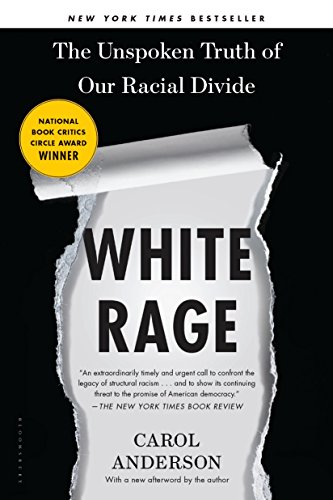
White Rage by Carol Anderson is a groundbreaking book that explores the history of systemic racism in the United States. It offers a powerful analysis of the persistent efforts to deny African Americans their rights and hinder their progress.
White Rage
Summary of key ideas
Understanding the Roots of White Rage
In White Rage, Carol Anderson delves into the history of the United States, exploring the systematic suppression of African American progress. She begins with the end of the Civil War and the Reconstruction era, highlighting the efforts of the Southern states to maintain white supremacy through the implementation of Black Codes and Jim Crow laws. Anderson argues that these were manifestations of 'white rage' in response to the abolition of slavery and the granting of civil rights to African Americans.
Anderson then moves on to the Great Migration, a period when millions of African Americans moved from the rural South to the urban North. She describes how this mass exodus led to increased racial tensions and further instances of white rage, such as the Red Summer of 1919, a series of race riots across the United States.
The Civil Rights Movement and Its Backlash
Next, White Rage examines the Civil Rights Movement of the 1950s and 1960s. Anderson acknowledges the significant legislative victories during this period, including the Brown v. Board of Education decision and the Civil Rights Act of 1964. However, she argues that these advancements were met with intense opposition, exemplifying white rage in the form of violent resistance, voter suppression, and the rise of the 'law and order' rhetoric.
Anderson also discusses the economic disenfranchisement of African Americans, particularly through discriminatory housing policies and the war on drugs. She contends that these measures were designed to maintain racial inequality and were, in essence, expressions of white rage against black progress.
The Obama Era and the Resurgence of White Rage
As the book progresses, Anderson examines the election of Barack Obama as the first African American president. While this historic event was celebrated as a sign of racial progress, Anderson argues that it also triggered a resurgence of white rage. She points to the rise of the Tea Party, the birther movement, and the obstructionist tactics employed by the Republican Party as evidence of this backlash.
Furthermore, Anderson discusses the Supreme Court's decision to gut the Voting Rights Act in 2013, which she sees as another example of white rage in response to the increasing political power of minority communities. She also highlights the numerous instances of police brutality against African Americans, such as the killing of Michael Brown in Ferguson, Missouri, as further evidence of the persistence of white rage.
Confronting White Rage and Moving Forward
In the final sections of White Rage, Anderson calls for a reckoning with the history and ongoing impact of white rage. She argues that acknowledging and understanding this phenomenon is crucial for addressing racial inequality in the United States. Anderson also emphasizes the importance of collective action and policy changes to combat white rage and its damaging effects.
In conclusion, White Rage provides a comprehensive analysis of the ways in which white rage has shaped American history and continues to influence contemporary society. By shedding light on this often overlooked aspect of racial dynamics, Anderson challenges readers to confront uncomfortable truths and work towards a more equitable future.
More knowledge in less time

Read or listen
Get the key ideas from nonfiction bestsellers in minutes, not hours.

Find your next read
Get book lists curated by experts and personalized recommendations.

Shortcasts
We've teamed up with podcast creators to bring you key insights from podcasts.
What is White Rage about?
White Rage by Carol Anderson explores the history of systematic oppression and resistance against African Americans in the United States. From the Reconstruction era to the present day, the book examines how policies and actions have been used to maintain white supremacy and hinder black progress. It offers a thought-provoking analysis of the deep-rooted racial inequality in America.
White Rage Review
White Rage (2016) by Carol Anderson is a powerful analysis of the persistent and insidious ways in which white anger and resistance have shaped American history. Here's why you should definitely read this book:
- It exposes the systemic racism and discrimination that have hindered progress and fueled divisions throughout American history.
- This book unpacks historical events and policies with meticulous research and insightful analysis, making it an essential resource for anyone seeking a deeper understanding of racial inequality.
- By shedding light on the ongoing struggle for racial justice, it challenges readers to confront uncomfortable truths and to actively engage in dismantling the structures that perpetuate white rage.
Who should read White Rage?
- Readers who want to understand the historical and contemporary manifestations of racism in the United States
- Individuals who are open to challenging their own perspectives and confronting uncomfortable truths
- People who are interested in social justice and systemic inequality
Categories with White Rage
Book summaries like White Rage
 Coaching for PerformanceSir John WhitmoreThe Principles and Practice of Coaching and Leadership4.4
 The Portfolio LifeChristina WallaceFuture-Proof Your Career and Craft a Life Worthy of You4.1
 The Power of LessLeo BabautaThe Fine Art of Limiting Yourself to the Essential ... in Business and in Life4.4
 Start-up of YouReid Hoffman and Ben CasnochaAdapt to the Future, Invest in Yourself, and Transform Your Career4.3
 Getting to YesFisher & UryNegotiating Agreement Without Giving In4.3
 Think and Grow RichNapoleon HillThe secrets of 40 millionaires' wealth, revealed4.4
 Secrets of Dynamic CommunicationKen DavisPrepare with focus, deliver with clarity, speak with power4.0
 Defining DecadeMeg JayWhy Your Twenties Matter–And How to Make the Most of Them Now3.9
 The Psychology of Winning Denis WaitleyTen Qualities of a Total Winner4.3
 FocusAl RiesThe Future of Your Company Depends on It4.1
 Making It All WorkDavid AllenWinning at the Game of Work and the Business of Life4.1
 Crucial ConversationsKerry Patterson, Joseph Grenny, Ron McMillan, Al SwitzlerTools for Talking When Stakes Are High4.1
 Nice Girls Don’t Get the Corner OfficeLois P. FrankelUnconscious Mistakes Women Make That Sabotage Their Careers3.7
 The Confidence CodeKatty Kay and Claire ShipmanThe Science and Art of Self-Assurance: What Women Should Know3.9
 Living in Your Top 1%Alissa FinermanNine Essential Rituals to Achieve Your Ultimate Life Goals4.1
 EnchantmentGuy KawasakiThe Art of Changing Hearts, Minds, and Actions4.3
 Coffee Lunch CoffeeAlana MullerA Practical Field Guide for Master Networking3.9
 Six Thinking HatsEdward de BonoA revolutionary approach to get the most out of working in a group4.5
 How to Become a Straight-A StudentCal NewportThe Unconventional Strategies Real College Students Use to Score High While Studying Less 4.3
 First Things FirstStephen Covey, Roger Merrill, Rebecca MerrillTo Live, to Love, to Learn, to Leave a Legacy4.6
 The Five Elements of Effective ThinkingEdward B. Burger and Michael StarbirdFive ways to make better decisions.4.2
 The Success PrinciplesJack CanfieldHow to Get from Where You Are to Where You Want to Be 4.4
 Art, Inc.Lisa Congdon and Meg Mateo IlascoThe Essential Guide for Building Your Career as an Artist3.9
 ThriveArianna HuffingtonThe Third Metric to Redefining Success and Creating a Life of Well-Being, Wisdom and Wonder4.4
 #GIRLBOSSSophia Amoruso Sophia Amoruso‘s story of transformation, from high school dropout to CEO of a multimillion-dollar fashion empire4.2
 Great workDavid SturtHow to Make a Difference People Love 4.2
 Dream YearBen ArmentMake the Leap from a Job You Hate to a Life You Love4.0
 What Got You Here, Won’t Get You ThereMarshall GoldsmithHow Successful People Become Even More Successful! 4.2
 Work the SystemSam CarpenterThe Simple Mechanics of Making More and Working Less4.1
 The Politics of PromotionBonnie MarcusHow High-Achieving Women Get Ahead and Stay Ahead4.2
 Fast Food NationEric SchlosserThe Dark Side of the All-American Meal 4.2
 Eating AnimalsJonathan Safran FoerThe (a)morality of our eating habits and traditions4.3
 HappinessRichard LayardLessons from a New Science4.0
 The Wisdom of CrowdsJames SurowieckiWhy the Many Are Smarter Than the Few4.4
 The Omnivore's DilemmaMichael PollanA Natural History of Four Meals4.4
 Trust Me, I’m LyingRyan HolidayConfessions of a Media Manipulator4.0
 The World Without Us Alan WeismanIf humankind were to vanish, what would be left?4.2
 The Paradox of ChoiceBarry SchwartzWhy More Is Less4.5
 Behind the Beautiful ForeversKatherine BooLife, Death, and Hope in a Mumbai Undercity4.3
 AffluenzaJohn de Graaf, David WannHow Overconsumption is Killing Us – and How to Fight Back4.5
 Alone togetherSherry TurkleWhy We Expect More from Technology and Less from Each Other3.7
 Future CrimesMarc GoodmanEverything Is Connected, Everyone Is Vulnerable and What We Can Do About It4.0
 So You’ve Been Publicly ShamedJon RonsonHow Our Mistakes Are Costlier And More Public Than Ever3.8
 Rational RitualMichael Suk-Young ChweCulture, Coordination, and Common Knowledge3.9
 Cradle to CradleWilliam McDonough, Michael BraungartRe-making the way we make things4.3
 The Social AnimalDavid BrooksThe Hidden Sources of Love, Character, and Achievement4.3
 The Road to Character David BrooksLearn how to make yourself whole3.8
 Should We Eat Meat? Vaclav SmilEvolution and Consequences of Modern Carnivory3.3
 The Power of Myth Joseph Campbell, Bill MoyersTeaser: From ancient myths to Han Solo4.2
 Consider the ForkBee WilsonHow Technology Transforms the Way We Cook and Eat3.8
People ❤️ Blinkist
Become a member of our community of 44 million people

96k ratings

177k ratings
Sven O.
It's highly addictive to get core insights on personally relevant topics without repetition or triviality. Added to that the apps ability to suggest kindred interests opens up a foundation of knowledge.
Guillem B.
Life changing. The concept of being able to grasp a book's main point in such a short time truly opens multiple opportunities to grow every area of your life at a faster rate.
Laura H.
When I saw Blinkist had produced an infographic style Blink for the Rich Dad, Poor Dad book, it was a good reminder of the concepts I loved.
People also liked these summaries
 Stuffocation James WallmanWhy We've Had Enough of Stuff and Need Experience More Than Ever4.2
 Unfair Adam BenforadoThe New Science of Criminal Injustice4.1
 Ghettoside Jill LeovyA True Story of Murder in America3.6
 Just MercyBryan StevensonA Story of Justice and RedemPDion4.1
 The True BelieverEric HofferThoughts on the Nature of Mass Movements3.9
 How Music Got FreeStephen WittWhat happens when an entire generation commits the same crime?4.7
 One Of UsAsne Seierstad, Sarah DeathThe Story of Anders Breivik and the Massacre in Norway 4.5
 Present ShockDouglas RushkoffWhen Everything Happens Now Reprint3.6
 Why Information GrowsCesar Hidalgo The Evolution of Order, from Atoms to Economies4.1
 I Am MalalaMalala YousafzaiThe Girl Who Stood Up for Education and Was Shot by the Taliban 4.5
 The MonopolistsMary PilonObsession, Fury and the Scandal Behind the World's Favorite Board Game4.0
 SapiensYuval Noah HarariA Brief History of Humankind4.3
 Doubt: A HistoryJennifer Michael HechtThe Great Doubters and Their Legacy of Innovation from Socrates and Jesus to Thomas Jefferson and Emily Dickinson3.6
 The Better Angels of Our Nature Steven PinkerWhy Violence has Declined4.5
 Bourbon EmpireReid MitenbulerThe Past and Future of America's Whiskey4.4
 The Story of SushiTrevor CorsonAn Unlikely Saga of Raw Fish and Rice4.0
 Genghis Khan and the Making of the Modern WorldJack WeatherfordThe fascinating story behind the Mongol Empire4.3
 Black FlagsJoby WarrickThe Rise of ISIS4.2
 Ta-Ra-Ra-Boom-De-AySimon Napier-BellThe (Dodgy) Business of Popular Music4.0
 How To Be Like WaltPat WilliamsCapturing the Disney Magic Every Day of Your Life4.1
 The Geography of BlissEric WeinerOne Grump’s Search for the Happiest Places in the World4.2
 A People’s History of the United StatesHoward ZinnA brilliant and moving history of the American people3.9
 CannibalismBill SchuttA Perfectly Natural History 3.8
 Women and PowerMary BeardA Manifesto4.1
 21 Lessons for the 21st CenturyYuval Noah HarariTeaser: Future proof yourself against the 21st Century4.4
 A History of GodKaren ArmstrongThe 4,000-Year Quest of Judaism, Christianity and Islam4.2
 CivilizationsMary BeardHow Do We Look / The Eye of Faith4.1
 The Spy and the TraitorBen MacintyreThe Greatest Espionage Story of the Cold War4.6
 The Origins of TotalitarianismHannah ArendtHannah Arendt's landmark work about Europe's anti-Semitic and imperialist roots4.6
 DreamlandSam QuinonesThe True Tale of America’s Opiate Epidemic4.5
 The Happiness FantasyCarl CederströmTeaser: A history of happiness3.8
 Why The West Rules – For NowIan MorrisThe Patterns of History, and What They Reveal About the Future4.3
 The New Silk RoadsPeter FrankopanThe Present and Future of the World3.9
 The Golden ThreadKassia St ClairHow Fabric Changed History4.1
 The Square and the TowerNiall FergusonNetworks and Power, from the Freemasons to Facebook4.4
 IslamKaren ArmstrongA Short History4.2
 Revolutionary IranMichael AxworthyA History of the Islamic Republic4.0
 China in Ten WordsYu HuaTeaser: The ten key concePDs underlying China’s transformation4.1
 The Congo from Leopold to KabilaGeorges Nzongola-NtalajaA People's History4.3
 The Audacity of HopeBarack ObamaThoughts on Reclaiming the American Dream4.5
 The Road to SerfdomF.H. HayekTeaser: Van Hayek's classic text on Freedom4.4
 No LogoNaomi KleinTaking Aim at the Brand Bullies4.2
 Man, the State and WarKenneth N. WaltzA Theoretical Analysis4.4
 The Origin of WealthEric D. BeinhockerThe Radical Remaking of Economics and What It Means for Business And Society3.9
 The Communist ManifestoKarl Marx, Friedrich EngelsWorkers of the world unite!4.2
 The SleepwalkersChristopher ClarkHow Europe Went to War in 19144.5
 The PrinceNiccolò MachiavelliMachiavelli’s classic text on leadership and politics4.5
 Second Treatise of the GovernmentJohn LockeAn Essay Concerning the True Origin, Extent and End of Civil Government4.2
 ImmigrantsPhillippe LegrainYour Country Needs Them4.0
 The End of PowerMoisés NaímFrom Boardrooms to Battlefields and Churches to States, Why Being in Charge Isn’t What It Used To Be4.4
Trusted by the world's leading brands

Powerful ideas from top nonfiction
Try Blinkist to get the key ideas from 7,500+ bestselling nonfiction titles and podcasts. Listen or read in just 15 minutes.
Get started
Blink 3 of 8 - The 5 AM Club
by Robin Sharma
White Rage FAQs
What is the main message of White Rage?
White Rage exposes the systematic suppression of Black progress in the United States.
How long does it take to read White Rage?
The reading time for White Rage varies depending on the reader's pace. However, the Blinkist summary can be read in just 15 minutes.
Is White Rage a good book? Is it worth reading?
White Rage is a powerful book that sheds light on the destructive forces hindering racial progress. It's definitely worth reading.
Who is the author of White Rage?
The author of White Rage is Carol Anderson.