Better than a summary
Positive Imaging summary
Norman Vincent Peale
No credit card required · Cancel anytime
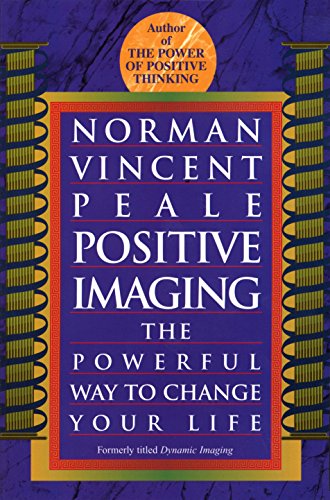
Positive Imaging by Norman Vincent Peale is a guide to harnessing the power of positive thinking and visualization. It offers practical techniques to reprogram your mind for success and happiness.
Topics
Positive Imaging
Summary of key ideas
Visualizing a Positive Future
In Positive Imaging, Norman Vincent Peale introduces the concept of positive imaging, a mental technique that involves creating and focusing on positive mental images. He explains that by visualizing a positive future, we can influence our subconscious mind to work towards achieving our goals.
Peale emphasizes the importance of having a clear, specific, and detailed mental image of what we want to achieve. He suggests that we should use all our senses to make the image as vivid as possible, and then hold onto it, believing that it will come true. This, he argues, will help us to overcome obstacles and achieve our desired outcomes.
Overcoming Negative Thoughts
Peale acknowledges that it's natural for negative thoughts to arise, but he advises us to counteract them with positive imaging. He suggests that we should replace negative thoughts with positive mental images, and by doing so, we can reprogram our minds to focus on success rather than failure.
He also discusses the power of affirmations, encouraging us to repeat positive statements about ourselves and our goals. He believes that these affirmations, when combined with positive imaging, can help us to overcome self-doubt and build self-confidence.
Applying Positive Imaging in Daily Life
Peale provides numerous examples of how positive imaging can be applied in various aspects of life. He discusses how it can be used to improve health, relationships, and even financial situations. He also shares stories of individuals who have successfully used positive imaging to overcome challenges and achieve their goals.
He emphasizes the importance of persistence and patience, stating that positive imaging is not a quick fix, but a long-term strategy for success. He also advises us to take practical steps towards our goals, while maintaining a positive mental attitude.
Dealing with Setbacks
Peale acknowledges that setbacks are a part of life, but he encourages us not to dwell on them. Instead, he advises us to use positive imaging to visualize a successful outcome despite the setback. He believes that by doing so, we can maintain our motivation and continue working towards our goals.
In conclusion, Positive Imaging by Norman Vincent Peale is a guide to harnessing the power of our minds to create a positive future. He believes that by consistently visualizing success and maintaining a positive mental attitude, we can overcome obstacles and achieve our goals. The book serves as a reminder that our thoughts have the power to shape our reality, and by focusing on the positive, we can create a more fulfilling life.
More knowledge in less time

Read or listen
Get the key ideas from nonfiction bestsellers in minutes, not hours.

Find your next read
Get book lists curated by experts and personalized recommendations.

Shortcasts
We've teamed up with podcast creators to bring you key insights from podcasts.
What is Positive Imaging about?
Positive Imaging by Norman Vincent Peale explores the power of positive thinking and visualization. It offers practical techniques and inspiring stories to help readers harness the potential of their minds and create a more fulfilling life. Through the practice of positive imaging, Peale shows how we can overcome challenges, achieve our goals, and cultivate a positive mindset.
Positive Imaging Review
Positive Imaging (1982) by Norman Vincent Peale is a book that explores the power of visualizing positive outcomes and how it can shape our lives in remarkable ways. Here's why this book is worth reading:
- It presents a practical methodology for harnessing the power of positive thinking and visualization to bring about desired results.
- The book offers real-life examples of individuals who have used positive imaging to overcome challenges and achieve success, inspiring readers to do the same.
- With its down-to-earth approach and relatable stories, the book captivates readers, keeping them engaged and motivated throughout.
Who should read Positive Imaging?
- Anyone looking to improve their mindset and outlook on life
- Individuals struggling with negative thinking and self-doubt
- People who want to achieve their goals and fulfill their potential
Categories with Positive Imaging
Book summaries like Positive Imaging
 HappinessRichard LayardLessons from a New Science4.0
 The Art of HappinessDalai LamaA Handbook for Living4.5
 PositivityBarbara L. FredricksonTop-Notch Research Reveals the 3 to 1 Ratio That Will Change Your Life4.4
 The Happiness ProjectGretchen RubinOr, Why I Spent a Year Trying to Sing in the Morning, Clean My Closets, Fight Right, Read Aristotle, and Generally Have More Fun4.3
 The Happiness HypothesisJonathan HaidtPutting Ancient Wisdom and Philosophy to the Test of Modern Science4.5
 FlowMihaly CsikszentmihalyiThe Psychology of Optimal Experience4.3
 Buddha’s BrainRick HansonHappiness, Love and Wisdom4.3
 Happiness By DesignPaul DolanChange What You Do, Not How You Think / Finding Pleasure And Purpose In Everyday Life4.2
 RewireRichard O'ConnorChange Your Brain to Break Bad Habits, Overcome Addictions, Conquer Self-Destructive Behavior4.1
 ResilienceEric GreitensHard-Won Wisdom for Living a Better Life4.3
 The Fifth AgreementMiguel Ruiz, José Luis RuizA Practical Guide to Self-Mastery4.3
 The Wisdom of InsecurityAlan WattsA Message for an Age of Anxiety4.4
 Get Some HeadspaceAndy Puddicombe10 Minutes Can Make All the Difference4.4
 Shop Class as SoulcraftMatthew B. CrawfordAn Inquiry into the Value of Work 4.3
 Wherever You Go, There You AreJon Kabat-ZinnMindfulness Meditation In Everyday Life4.4
People ❤️ Blinkist
Become a member of our community of 44 million people

96k ratings

73k ratings
Jonathan A.
Clearly communicates the value proposition of the most popular book summaries and offers a relatable, tangible template that I can use immediately.
Sven O.
It's highly addictive to get core insights on personally relevant topics without repetition or triviality. Added to that the apps ability to suggest kindred interests opens up a foundation of knowledge.
Laura H.
When I saw Blinkist had produced an infographic style Blink for the Rich Dad, Poor Dad book, it was a good reminder of the concepts I loved.
People also liked these summaries
 HappinessDarrin M. McMahonA History4.0
 Scaling DownJudi Culbertson, Marj DeckerLiving Large in a Smaller Place4.2
 HappinessMatthieu RicardA Guide to Developing Life’s Most Important Skill4.4
 The Little Book of HyggeMeik WikingThe Danish Way to Live Well
4.3
The Little Book of HyggeMeik WikingThe Danish Way to Live Well
4.3 When Things Fall ApartPema ChodronHeart Advice for Difficult Times4.3
 HappierTal Ben-ShaharLearn the Secrets to Daily Joy and Lasting Fulfillment4.3
 The Happiness EquationNeil PasrichaWant Nothing + Do Anything = Have Everything 4.4
 The Mind at NightAndrea RockThe New Science of How and Why We Dream4.3
 If You’re So Smart, Why Aren’t you Happy?Raj RaghunathanHow to Turn Career Success into Life Success4.5
 Thoughts Without A ThinkerMark EpsteinPsychotherapy from a Buddhist Perspective4.4
 UnplugSuze Yalof SchwartzA Simple Guide to Meditation for Busy SkePDics and Modern Soul Seekers4.3
 Hallelujah AnywayAnne LamottRediscovering Mercy4.4
 Joy on DemandChade-Meng TanThe Art of Discovering the Happiness Within4.3
 Zen Mind, Beginner’s MindShunryu SuzukiInformal Talks on Zen Meditation and Practice4.4
 Stick with ItSean D. YoungA Scientifically Proven Process for Changing Your Life-for Good4.3
Trusted by the world's leading brands

Powerful ideas from top nonfiction
Try Blinkist to get the key ideas from 7,500+ bestselling nonfiction titles and podcasts. Listen or read in just 15 minutes.
Get started
Blink 3 of 8 - The 5 AM Club
by Robin Sharma
Positive Imaging FAQs
What is the main message of Positive Imaging?
The main message of Positive Imaging is the power of visualization and positive thinking.
How long does it take to read Positive Imaging?
The reading time for Positive Imaging varies, but it typically takes a few hours. The Blinkist summary can be read in just 15 minutes.
Is Positive Imaging a good book? Is it worth reading?
Positive Imaging is definitely worth reading. It offers practical techniques to harness the power of your mind and improve your life.
Who is the author of Positive Imaging?
Norman Vincent Peale is the author of Positive Imaging.