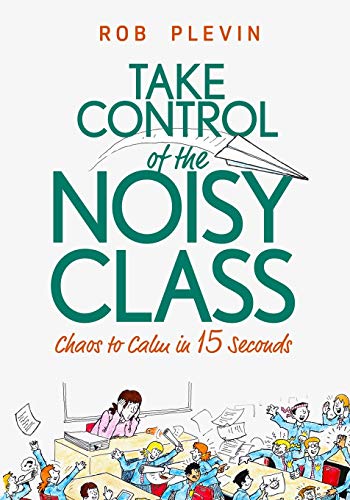
Better than a summary
Take Control of the Noisy Class summary
Rob Plevin
No credit card required · Cancel anytime
Take Control of the Noisy Class by Rob Plevin offers practical strategies and tips for managing disruptive behavior and creating a positive learning environment. It provides effective techniques for engaging students and maintaining classroom discipline.
Table of Contents
- Take Control of the Noisy Class: summary of key ideas
- What is Take Control of the Noisy Class about?
- Take Control of the Noisy Class Review
- Who should read Take Control of the Noisy Class?
- About the author
- Book summaries like Take Control of the Noisy Class
- People also liked these summaries
- Take Control of the Noisy Class FAQs
Take Control of the Noisy Class
Summary of key ideas
Understanding the Dynamics of the Noisy Class
In Take Control of the Noisy Class by Rob Plevin, we delve into the dynamics of a noisy classroom. Plevin, an experienced educator, begins by explaining that noise in class is not just about decibels, but about the lack of control and respect. He emphasizes the importance of setting clear expectations and boundaries from the very first day of school and consistently reinforcing these throughout the year.
Plevin also discusses the reasons behind disruptive behavior, such as seeking attention, avoiding work, or expressing dissatisfaction. He argues that understanding these motivations can help teachers address the underlying issues causing the noise. He also emphasizes the significance of positive teacher-student relationships in managing a noisy class.
Implementing Proactive Classroom Management Strategies
Next, Plevin introduces proactive strategies for managing a noisy class. He advocates for a positive, assertive, and respectful approach that prioritizes prevention over reaction. The strategies include creating engaging lessons, using non-verbal cues, and establishing a clear set of classroom rules and routines. Plevin also discusses the importance of using praise and rewards to reinforce positive behavior.
Furthermore, the author introduces the concept of proximity, where teachers position themselves strategically to monitor and manage student behavior. He also advocates for the use of 'teacher look' and 'teacher pause' techniques to regain control in challenging situations. Additionally, he suggests using 'time out' as a non-confrontational way to manage disruptive students.
Responding to Disruptive Behavior
In the latter part of Take Control of the Noisy Class, Plevin addresses the inevitable reality of disruptive behavior. He advises teachers to respond to misbehavior calmly, consistently, and privately whenever possible. He introduces a step-by-step approach for addressing disruptive behavior, known as the 'assertive discipline' technique, which involves clear warnings and logical consequences.
Plevin also emphasizes the importance of documenting disruptive incidents and involving parents when necessary. He suggests using a behavior diary to track and communicate students' behavior patterns. Additionally, the author discusses the role of school-wide behavior policies and the importance of collaborating with colleagues and school administration to maintain a consistent approach to managing disruptive behavior.
Conclusion: Creating a Positive Learning Environment
In conclusion, Take Control of the Noisy Class offers a comprehensive guide to managing disruptive behavior in the classroom. Plevin emphasizes that creating a positive learning environment is a shared responsibility between the teacher and the students. He encourages teachers to remain patient, adaptable, and open-minded in their approach to managing classroom behavior.
The book concludes with a reminder that, while managing a noisy class can be challenging, it is also immensely rewarding. By implementing proactive strategies, responding to disruptive behavior assertively, and maintaining positive teacher-student relationships, teachers can create a classroom environment where learning can thrive, and noise becomes a thing of the past.
More knowledge in less time

Read or listen
Get the key ideas from nonfiction bestsellers in minutes, not hours.

Find your next read
Get book lists curated by experts and personalized recommendations.

Shortcasts
We've teamed up with podcast creators to bring you key insights from podcasts.
What is Take Control of the Noisy Class about?
Take Control of the Noisy Class by Rob Plevin offers practical strategies and techniques for managing disruptive behavior in the classroom. With real-life examples and step-by-step instructions, this book empowers teachers to regain control, create a positive learning environment, and ultimately improve student outcomes.
Take Control of the Noisy Class Review
- Offers effective strategies to regain order and create a conducive learning environment, empowering teachers to reclaim their classrooms.
- Provides real-world scenarios and actionable tips for handling challenging behaviors, making it a valuable resource for educators of all levels.
- The book's engaging approach and emphasis on practical solutions ensure that readers stay focused and motivated throughout, ensuring a stimulating read.
Who should read Take Control of the Noisy Class?
Teachers looking to improve classroom management and create a positive learning environment
New and experienced educators seeking practical strategies to handle disruptive behavior
Educators working with challenging students or in high-needs schools
Categories with Take Control of the Noisy Class
Book summaries like Take Control of the Noisy Class
 The Now HabitNeil FioreA Strategic Program for Overcoming Procrastination and Enjoying Guilt-Free Play4.4
 BlinkMalcolm GladwellThe Power of Thinking Without Thinking4.0
 IncognitoDavid EaglemanThe Secret Lives of the Brain3.8
 OutliersMalcolm GladwellThe Story of Success 4.2
 HappinessRichard LayardLessons from a New Science4.0
 InfluenceRobert B. CialdiniThe Psychology of Persuasion4.5
 MindsetCarol DweckThe New Psychology of Success4.4
 AttachedAmir Levine, Rachel HellerThe New Science of Adult Attachment and How It Can Help You Find -- and Keep -- Love4.2
 On intelligence Jeff Hawkins, Sandra BlakesleeHow a New Understanding of the Brain Will Lead to the Creation of Truly Intelligent Machines3.9
 The Power of HabitCharles DuhiggWhy We Do What We Do in Life and Business4.3
 The (Honest) Truth About DishonestyDan ArielyHow We Lie to Everyone – Especially Ourselves4.1
 The Happiness HypothesisJonathan HaidtPutting Ancient Wisdom and Philosophy to the Test of Modern Science4.5
 The Paradox of ChoiceBarry SchwartzWhy More Is Less4.5
 FlowMihaly CsikszentmihalyiThe Psychology of Optimal Experience4.3
 Think Like a FreakStephen Dubner, Steven LevittThe Authors of Freakonomics Offer to Retrain Your Brain4.3
 Why We Make MistakesJoseph T. HallinanHow We Look Without Seeing, Forget Things in Seconds, and Are All Pretty Sure We Are Way Above Average4.3
 Why We LoveHelen FisherThe Nature and Chemistry of Romantic Love4.4
 Crucial ConversationsKerry Patterson, Joseph Grenny, Ron McMillan, Al SwitzlerTools for Talking When Stakes Are High4.1
 Moonwalking with EinsteinJoshua FoerThe Art and Science of Remembering Everything4.2
 The Twenty-Four Hour MindRosalind D. CartwrightThe Role of Sleep and Dreaming in Our Emotional Lives3.8
 My Age of AnxietyScott StosselFear, Hope, Dread and the Search for Peace of Mind3.4
 Buddha’s BrainRick HansonHappiness, Love and Wisdom4.3
 Risk SavvyGerd GigerenzerHow to Make Good Decisions3.7
 PersonalityDaniel NettleWhat Makes You the Way You Are4.2
 Drunk Tank PinkAdam AlterAnd Other Unexpected Forces that Shape How We Think, Feel, and Behave4.2
 Becoming AttachedRobert KarenFirst Relationships and How They Shape Our Capacity to Love3.8
 You Are Now Less DumbDavid McRaneyHow to Conquer Mob Mentality, How to Buy Happiness, and All the Other Ways to Outsmart Yourself4.0
 The Marshmallow TestWalter MischelMastering Self-Control4.4
 The ADHD AdvantageDale ArcherWhat You Thought Was a Diagnosis May Be Your Greatest Strength3.2
 You are not your brainJeffrey Schwartz, Rebecca GladdingThe 4-Step Solution for Changing Bad Habits, Ending Unhealthy Thinking, and Taking Control of Your Life4.5
People ❤️ Blinkist
Become a member of our community of 44 million people

96k ratings

73k ratings
Thi Viet Quynh N.
Great app. Good selection of book summaries you can read or listen to while commuting. Instead of scrolling through your social media news feed, this is a much better way to spend your spare time in my opinion.
Jonathan A.
Clearly communicates the value proposition of the most popular book summaries and offers a relatable, tangible template that I can use immediately.
Renee D.
I'm absolutely thrilled that Blinkist now offers infographics! I can't get enough of them—they're such a fun and effective way to grasp and remember key points.
People also liked these summaries
 The Wisdom of CrowdsJames SurowieckiWhy the Many Are Smarter Than the Few4.4
 MasteryRobert GreeneMyths about genius and what it really means to be great4.3
 BounceMatthew SyedThe myth of talent and the power of practice 4.5
 Don’t Go Back to SchoolKio StarkA Handbook for Learning Anything3.7
 I Am MalalaMalala YousafzaiThe Girl Who Stood Up for Education and Was Shot by the Taliban 4.5
 The Education of a Value InvestorGuy SpierMy Transformative Quest for Wealth, Wisdom and Enlightenment4.3
 Ungifted: Intelligence RedefinedScott Barry KaufmanThe Truth About Talent, Practice, Creativity and the Many Paths to Greatness4.3
 The Master AlgorithmPedro DomingosHow The Quest For The Ultimate Learning Machine Will Remake Our World4.4
 Seven Brief Lessons on PhysicsCarlo RovelliTeaser: A mind-bending introduction to modern physics4.4
 Creative SuperpowersLaura Jordan Bambach, Mark Earls, Daniele Fiandaca, Scott Morrison (Ed.)Equip Yourself for the Age of Creativity4.4
 Bloody Brilliant WomenCathy NewmanThe Pioneers, Revolutionaries and Geniuses Your History Teacher Forgot to Mention4.2
 What They Don’t Teach You at Harvard Business SchoolMark H. McCormackNotes From a Street-Smart Executive3.9
 Why Don’t Students Like School?Daniel T. WillinghamA Cognitive Scientist Answers Questions About How the Mind Works and What It Means for the Classroom4.3
 The Personality BrokersMerve EmreThe Strange History of Myers-Briggs and the Birth of Personality Testing3.9
 MicromasteryRobert TwiggerLearn Small, Learn Fast, and Unlock Your Potential to Achieve Anything3.2
 #NeverAgainDavid Hogg, Lauren HoggA New Generation Draws the Line3.4
 Where You Go Is Not Who You'll BeFrank BruniAn Antidote to the College Admissions Mania4.3
 MythologyEdith HamiltonTimeless Tales of Gods and Heroes4.5
 RangeDavid EpsteinWhy Generalists Triumph in a Specialized World4.3
 The Call of the Wild and FreeAinsley ArmentReclaiming Wonder in Your Child's Education4.5
 OnwardElena AguilarCultivating Emotional Resilience in Educators4.4
 The PolymathWaqas AhmedUnlocking the Power of Human Versatility4.4
 Reader, Come HomeMaryanne WolfThe Reading Brain in a Digital World4.6
 UltralearningScott H. YoungMaster Hard Skills, Outsmart the Competition, and Accelerate Your Career4.5
 Why “A” Students Work For “C” Students And “B” Students Work For The GovernmentRobert T. KiyosakiRich Dad's Guide to Financial Education for Parents4.3
 Better TogetherTom Vander Ark, Lydia DobynsHow to Leverage School Networks For Smarter Personalized and Project Based Learning4.4
 The Coddling of the American MindGreg Lukianoff and Jonathan HaidtHow Good Intentions and Bad Ideas Are Setting Up a Generation for Failure4.4
 The Case Against EducationBryan CaplanWhy the Education System Is a Waste of Time and Money3.8
 Why Are All the Black Kids Sitting Together in the Cafeteria?Beverly Daniel TatumAnd Other Conversations About Race4.4
 The Little Book of TalentDaniel Coyle52 Tips for Improving Your Skills4.4
Trusted by the world's leading brands

Powerful ideas from top nonfiction
Try Blinkist to get the key ideas from 7,500+ bestselling nonfiction titles and podcasts. Listen or read in just 15 minutes.
Get started
Blink 3 of 8 - The 5 AM Club
by Robin Sharma