Better than a summary
The Poverty of Philosophy summary
No credit card required · Cancel anytime
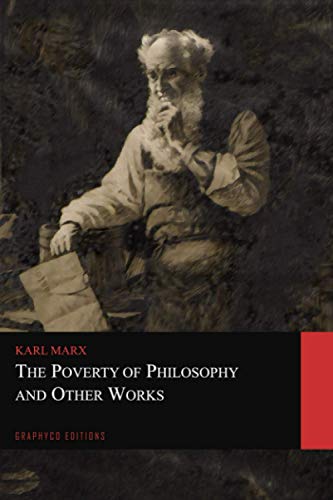
The Poverty of Philosophy by Karl Marx critiques the economic and philosophical ideas of Pierre-Joseph Proudhon. Marx argues for the importance of class struggle and the revolutionary role of the proletariat in achieving a communist society.
Topics
Table of Contents
The Poverty of Philosophy
Summary of key ideas
Engaging with Proudhon
In The Poverty of Philosophy, Karl Marx presents a critique of Pierre-Joseph Proudhon's 'The Philosophy of Poverty'. Marx begins by acknowledging Proudhon's significant influence on the socialist movement in France. However, he quickly delves into a detailed criticism of Proudhon's ideas, highlighting what he sees as contradictions and inadequacies in Proudhon's philosophy.
Marx takes issue with Proudhon's assertion that property is theft, arguing instead that it is the exploitative nature of capitalism that leads to the alienation and impoverishment of the working class. He criticizes Proudhon's proposal of a 'people's bank' as a solution to economic inequality, asserting that it does not address the fundamental issues of private property and wage labor.
Exploring Economic Materialism
Marx then introduces his own economic materialist perspective, emphasizing the role of material conditions in shaping social relations and ideas. He argues that the economic base of society, which includes the means of production and the relations of production, fundamentally determines its superstructure, encompassing law, politics, religion, and philosophy.
Marx further criticizes Proudhon's attempt to reconcile the interests of the proletariat and the bourgeoisie, asserting that the two classes have irreconcilable interests due to their different positions within the capitalist mode of production. He contends that the working class must overthrow the capitalist system to achieve true emancipation.
The Role of Class Struggle
Continuing his critique, Marx addresses Proudhon's misunderstanding of the role of class struggle. He argues that this struggle is not a result of the distribution of wealth, as Proudhon suggests, but rather a product of the capitalist mode of production itself. Marx contends that the capitalist system inherently generates class conflict due to the exploitation of labor by capital.
Marx also challenges Proudhon's belief in the possibility of a peaceful transition to socialism. He argues that the ruling class will never willingly relinquish its power and that the working class must engage in a revolutionary struggle to overthrow capitalism and establish a classless society.
Conclusion: The Necessity of a Proletarian Revolution
In conclusion, The Poverty of Philosophy presents Marx's critique of Proudhon's idealist and reformist approach to socialism. Marx emphasizes the necessity of a proletarian revolution to overthrow the capitalist system and establish a socialist society based on common ownership of the means of production.
Despite its polemical nature, Marx's work serves as an important contribution to the development of Marxist theory. It lays the groundwork for his later, more comprehensive works, such as Capital, and helps to clarify the fundamental principles of historical materialism and the role of class struggle in the transition to socialism.
More knowledge in less time

Read or listen
Get the key ideas from nonfiction bestsellers in minutes, not hours.

Find your next read
Get book lists curated by experts and personalized recommendations.

Shortcasts
We've teamed up with podcast creators to bring you key insights from podcasts.
What is The Poverty of Philosophy about?
The Poverty of Philosophy is a critique of the economic and philosophical arguments put forth by Pierre-Joseph Proudhon. Written by Karl Marx, this book examines the flaws in Proudhon's theories and offers a defense of Marxist ideas. It delves into the concept of economic determinism and the role of class struggle in shaping society.
The Poverty of Philosophy Review
- Offers profound insights into the contradictions inherent in the capitalist system, shedding light on the exploitation of the proletariat.
- Provides a rigorous analysis of political economy, challenging prevailing ideas and offering a fresh perspective on economic relations.
- Engages readers with thought-provoking arguments that spark critical thinking and deepen understanding of social structures and class struggles.
Who should read The Poverty of Philosophy?
Readers interested in understanding Marx's critique of Proudhon and his analysis of political economy
Individuals seeking to deepen their knowledge of socialist and communist theory
Those looking for a critical examination of the limitations of capitalist economic systems
Categories with The Poverty of Philosophy
Book summaries like The Poverty of Philosophy
 The Audacity of HopeBarack ObamaThoughts on Reclaiming the American Dream4.5
 The Road to SerfdomF.H. HayekTeaser: Van Hayek's classic text on Freedom4.4
 No LogoNaomi KleinTaking Aim at the Brand Bullies4.2
 Man, the State and WarKenneth N. WaltzA Theoretical Analysis4.4
 The Origin of WealthEric D. BeinhockerThe Radical Remaking of Economics and What It Means for Business And Society3.9
 The Communist ManifestoKarl Marx, Friedrich EngelsWorkers of the world unite!4.2
 The SleepwalkersChristopher ClarkHow Europe Went to War in 19144.5
 The PrinceNiccolò MachiavelliMachiavelli’s classic text on leadership and politics4.5
 Second Treatise of the GovernmentJohn LockeAn Essay Concerning the True Origin, Extent and End of Civil Government4.2
 ImmigrantsPhillippe LegrainYour Country Needs Them4.0
 The End of PowerMoisés NaímFrom Boardrooms to Battlefields and Churches to States, Why Being in Charge Isn’t What It Used To Be4.4
 Energy Myths and RealitiesVaclav SmilBringing Science to the Energy Policy Debate3.8
 The RepublicPlatoTEASER: One of the most important philosophical texts ever written4.5
 The Wealth of NationsAdam SmithThe most influential economic book of all time4.3
 Gang Leader For A DaySudhir VenkateshA Rogue Sociologist Crosses The Line3.8
People ❤️ Blinkist
Become a member of our community of 44 million people

96k ratings

73k ratings
Sven O.
It's highly addictive to get core insights on personally relevant topics without repetition or triviality. Added to that the apps ability to suggest kindred interests opens up a foundation of knowledge.
Renee D.
I'm absolutely thrilled that Blinkist now offers infographics! I can't get enough of them—they're such a fun and effective way to grasp and remember key points.
Thi Viet Quynh N.
Great app. Good selection of book summaries you can read or listen to while commuting. Instead of scrolling through your social media news feed, this is a much better way to spend your spare time in my opinion.
People also liked these summaries
 LeviathanThomas HobbesTeaser: Thomas Hobbes' classic4.5
 Guantánamo DiaryMohamedou Ould Slahi, edited by Larry SiemsGuantanamo from the Inside4.6
 The Innovator's PrescriptionClayton Christensen, Jerome H. Grossman and Jason D. HwangA Disruptive Solution for Health Care3.5
 Outsider in the White HouseBernie Sanders with Huck GutmanThe political autobiography of the insurgent presidential candidate4.3
 Engines of LibertyDavid ColeThe Power of Citizen Activists to Make Constitutional Law3.6
 You Can’t Read This BookNick CohenCensorship in an Age of Freedom3.9
 MeltdownThomas E. Woods, Jr.A Free-Market Look at Why the Stock Market Collapsed, the Economy Tanked, and Government Bailouts Will Make Things Worse3.9
 The WikiLeaks FilesJulian Assange (introduction)The World According to US Empire4.3
 The Making of Donald TrumpDavid Cay JohnstonHow Donald Trump rose to the pinnacle of power3.0
 Black FlagsJoby WarrickThe Rise of ISIS4.2
 Why The West Rules – For NowIan MorrisThe Patterns of History, and What They Reveal About the Future4.3
 The Gulag Archipelago 1918-1956Aleksandr SolzhenitsynAn Experiment in Literary Investigation4.6
 The Death of TruthMichiko KakutaniNotes on Falsehood in the Age of Trump3.5
 The Road to UnfreedomTimothy SnyderRussia, Europe, America4.2
 Liars, Leakers, and LiberalsJeanine PirroThe Case Against the Anti-Trump Conspiracy2.8
Trusted by the world's leading brands

Powerful ideas from top nonfiction
Try Blinkist to get the key ideas from 7,500+ bestselling nonfiction titles and podcasts. Listen or read in just 15 minutes.
Get started
Blink 3 of 8 - The 5 AM Club
by Robin Sharma