Better than a summary
Mao's Great Famine summary
No credit card required · Cancel anytime
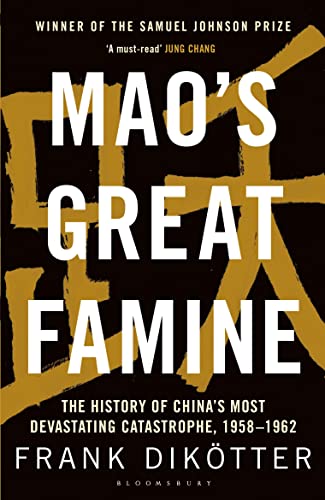
Mao's Great Famine is a historical book by Frank Dikötter that explores the devastating consequences of China's Great Leap Forward. It delves into the policies and leadership decisions that led to the deadliest famine in history.
Mao's Great Famine
Summary of key ideas
Understanding the Great Famine
In Mao's Great Famine by Frank Dikötter, we are taken on a harrowing journey through one of the darkest periods in Chinese history. The book begins by setting the stage, detailing the early years of Mao Zedong's rule and his vision for a communist China. Mao's Great Leap Forward, a radical social and economic campaign launched in 1958, aimed to transform China into a socialist society through rapid industrialization and collectivization. However, as Dikötter reveals, the campaign led to catastrophic consequences.
The author meticulously describes the implementation of the Great Leap Forward, which involved the forced collectivization of agriculture and the establishment of backyard furnaces to produce steel. These policies, driven by unrealistic production targets and propaganda, resulted in widespread famine and economic collapse. Dikötter paints a grim picture of the human cost, with millions dying from starvation, overwork, and brutal repression.
Unveiling the Human Tragedy
As Mao's Great Famine progresses, Dikötter delves deeper into the human tragedy unfolding across China. He draws on a wealth of archival material, including local government records and personal testimonies, to provide a detailed account of the suffering endured by ordinary Chinese citizens. The author vividly portrays the desperation and resilience of the people as they struggled to survive in the face of food shortages, harsh labor conditions, and political persecution.
One of the most poignant aspects of the book is the portrayal of the psychological impact of the famine. Dikötter describes how the relentless propaganda machine, coupled with the fear of being labeled a counter-revolutionary, led many to deny the reality of the famine, even as they and their loved ones were starving. The book also highlights the breakdown of social norms and the erosion of trust within communities, as people turned against each other in their fight for survival.
Revealing the Role of the State
In Mao's Great Famine, Dikötter does not shy away from attributing responsibility for the disaster to the Chinese Communist Party and, in particular, Mao Zedong. He argues that the party's authoritarian structure, coupled with Mao's autocratic leadership and refusal to acknowledge the scale of the crisis, exacerbated the famine. The book also exposes the role of local officials, who, driven by political pressure and personal ambition, often resorted to extreme measures to meet unrealistic production targets, further worsening the situation.
Furthermore, Dikötter highlights the international context of the Great Famine, emphasizing how the Cold War rivalry and China's desire to project an image of strength and unity led to the suppression of information about the famine. The author argues that the lack of international scrutiny allowed the Chinese government to continue its disastrous policies without significant external pressure to change course.
Concluding Thoughts
In conclusion, Mao's Great Famine is a powerful and sobering account of a tragic chapter in Chinese history. Through meticulous research and compelling storytelling, Dikötter sheds light on the human suffering and political failures that characterized the Great Leap Forward. The book serves as a stark reminder of the devastating consequences of unchecked state power and the importance of preserving individual freedoms and human rights.
More knowledge in less time

Read or listen
Get the key ideas from nonfiction bestsellers in minutes, not hours.

Find your next read
Get book lists curated by experts and personalized recommendations.

Shortcasts
We've teamed up with podcast creators to bring you key insights from podcasts.
What is Mao's Great Famine about?
Mao's Great Famine by Frank Dikötter is a comprehensive account of the devastating famine that occurred in China between 1958 and 1962. Through meticulous research and analysis, the book uncovers the political, economic, and social factors that led to this tragedy, ultimately challenging the official narrative of the time.
Mao's Great Famine Review
Mao's Great Famine (2010) delves into the devastating consequences of China's Great Leap Forward, shedding light on one of the most tragic events in history. Here's why this book is a must-read:
- Unveiling untold truths about the famine's causes and impact, it provides a comprehensive understanding of this dark period in Chinese history.
- Through riveting narratives and extensive research, the book offers a compelling account of the human suffering and political failures during that time.
- With its eye-opening revelations and compelling storytelling, the book grips readers with a poignant exploration of this catastrophic chapter in modern China.
Who should read Mao's Great Famine?
- Readers interested in understanding the impact of Mao Zedong's policies on China
- Individuals who want to learn about the history of famines and their causes
- Those who enjoy in-depth and well-researched non-fiction books
Categories with Mao's Great Famine
Book summaries like Mao's Great Famine
 The Audacity of HopeBarack ObamaThoughts on Reclaiming the American Dream4.5
 The Road to SerfdomF.H. HayekTeaser: Van Hayek's classic text on Freedom4.4
 No LogoNaomi KleinTaking Aim at the Brand Bullies4.2
 Man, the State and WarKenneth N. WaltzA Theoretical Analysis4.4
 The Origin of WealthEric D. BeinhockerThe Radical Remaking of Economics and What It Means for Business And Society3.9
 The Communist ManifestoKarl Marx, Friedrich EngelsWorkers of the world unite!4.2
 The SleepwalkersChristopher ClarkHow Europe Went to War in 19144.5
 The PrinceNiccolò MachiavelliMachiavelli’s classic text on leadership and politics4.5
 Second Treatise of the GovernmentJohn LockeAn Essay Concerning the True Origin, Extent and End of Civil Government4.2
 ImmigrantsPhillippe LegrainYour Country Needs Them4.0
 The End of PowerMoisés NaímFrom Boardrooms to Battlefields and Churches to States, Why Being in Charge Isn’t What It Used To Be4.4
 Energy Myths and RealitiesVaclav SmilBringing Science to the Energy Policy Debate3.8
 The RepublicPlatoTEASER: One of the most important philosophical texts ever written4.5
 The Wealth of NationsAdam SmithThe most influential economic book of all time4.3
 Gang Leader For A DaySudhir VenkateshA Rogue Sociologist Crosses The Line3.8
 LeviathanThomas HobbesTeaser: Thomas Hobbes' classic4.5
 Guantánamo DiaryMohamedou Ould Slahi, edited by Larry SiemsGuantanamo from the Inside4.6
 The Innovator's PrescriptionClayton Christensen, Jerome H. Grossman and Jason D. HwangA Disruptive Solution for Health Care3.5
 Outsider in the White HouseBernie Sanders with Huck GutmanThe political autobiography of the insurgent presidential candidate4.3
 Engines of LibertyDavid ColeThe Power of Citizen Activists to Make Constitutional Law3.6
 You Can’t Read This BookNick CohenCensorship in an Age of Freedom3.9
 MeltdownThomas E. Woods, Jr.A Free-Market Look at Why the Stock Market Collapsed, the Economy Tanked, and Government Bailouts Will Make Things Worse3.9
 The WikiLeaks FilesJulian Assange (introduction)The World According to US Empire4.3
 The Making of Donald TrumpDavid Cay JohnstonHow Donald Trump rose to the pinnacle of power3.0
 Black FlagsJoby WarrickThe Rise of ISIS4.2
 Why The West Rules – For NowIan MorrisThe Patterns of History, and What They Reveal About the Future4.3
 The Gulag Archipelago 1918-1956Aleksandr SolzhenitsynAn Experiment in Literary Investigation4.6
 The Death of TruthMichiko KakutaniNotes on Falsehood in the Age of Trump3.5
 The Road to UnfreedomTimothy SnyderRussia, Europe, America4.2
 Liars, Leakers, and LiberalsJeanine PirroThe Case Against the Anti-Trump Conspiracy2.8
People ❤️ Blinkist
Become a member of our community of 44 million people

96k ratings

73k ratings
Laura H.
When I saw Blinkist had produced an infographic style Blink for the Rich Dad, Poor Dad book, it was a good reminder of the concepts I loved.
Renee D.
I'm absolutely thrilled that Blinkist now offers infographics! I can't get enough of them—they're such a fun and effective way to grasp and remember key points.
Jonathan A.
Clearly communicates the value proposition of the most popular book summaries and offers a relatable, tangible template that I can use immediately.
People also liked these summaries
 Fast Food NationEric SchlosserThe Dark Side of the All-American Meal 4.2
 Eating AnimalsJonathan Safran FoerThe (a)morality of our eating habits and traditions4.3
 HappinessRichard LayardLessons from a New Science4.0
 The Wisdom of CrowdsJames SurowieckiWhy the Many Are Smarter Than the Few4.4
 The Omnivore's DilemmaMichael PollanA Natural History of Four Meals4.4
 Trust Me, I’m LyingRyan HolidayConfessions of a Media Manipulator4.0
 The World Without Us Alan WeismanIf humankind were to vanish, what would be left?4.2
 The Paradox of ChoiceBarry SchwartzWhy More Is Less4.5
 The Confidence CodeKatty Kay and Claire ShipmanThe Science and Art of Self-Assurance: What Women Should Know3.9
 Behind the Beautiful ForeversKatherine BooLife, Death, and Hope in a Mumbai Undercity4.3
 AffluenzaJohn de Graaf, David WannHow Overconsumption is Killing Us – and How to Fight Back4.5
 Alone togetherSherry TurkleWhy We Expect More from Technology and Less from Each Other3.7
 Future CrimesMarc GoodmanEverything Is Connected, Everyone Is Vulnerable and What We Can Do About It4.0
 So You’ve Been Publicly ShamedJon RonsonHow Our Mistakes Are Costlier And More Public Than Ever3.8
 Rational RitualMichael Suk-Young ChweCulture, Coordination, and Common Knowledge3.9
 Cradle to CradleWilliam McDonough, Michael BraungartRe-making the way we make things4.3
 The Social AnimalDavid BrooksThe Hidden Sources of Love, Character, and Achievement4.3
 The Road to Character David BrooksLearn how to make yourself whole3.8
 Should We Eat Meat? Vaclav SmilEvolution and Consequences of Modern Carnivory3.3
 The Power of Myth Joseph Campbell, Bill MoyersTeaser: From ancient myths to Han Solo4.2
 Consider the ForkBee WilsonHow Technology Transforms the Way We Cook and Eat3.8
 Stuffocation James WallmanWhy We've Had Enough of Stuff and Need Experience More Than Ever4.2
 Unfair Adam BenforadoThe New Science of Criminal Injustice4.1
 Ghettoside Jill LeovyA True Story of Murder in America3.6
 Just MercyBryan StevensonA Story of Justice and RedemPDion4.1
 The True BelieverEric HofferThoughts on the Nature of Mass Movements3.9
 How Music Got FreeStephen WittWhat happens when an entire generation commits the same crime?4.7
 One Of UsAsne Seierstad, Sarah DeathThe Story of Anders Breivik and the Massacre in Norway 4.5
 Present ShockDouglas RushkoffWhen Everything Happens Now Reprint3.6
 Why Information GrowsCesar Hidalgo The Evolution of Order, from Atoms to Economies4.1
Trusted by the world's leading brands

Powerful ideas from top nonfiction
Try Blinkist to get the key ideas from 7,500+ bestselling nonfiction titles and podcasts. Listen or read in just 15 minutes.
Get started
Blink 3 of 8 - The 5 AM Club
by Robin Sharma
Mao's Great Famine FAQs
What is the main message of Mao's Great Famine?
The main message of Mao's Great Famine explores the devastating consequences of China's Great Leap Forward policies.
How long does it take to read Mao's Great Famine?
Reading time for Mao's Great Famine varies but typically takes a few hours. The Blinkist summary can be read in a fraction of that time.
Is Mao's Great Famine a good book? Is it worth reading?
Mao's Great Famine is a compelling read diving into historical events with insightful analysis, making it a valuable book to explore.
Who is the author of Mao's Great Famine?
The author of Mao's Great Famine is Frank Dikötter.