Better than a summary
Persepolis summary
No credit card required · Cancel anytime
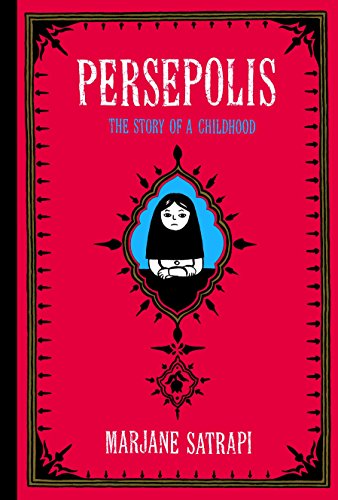
Persepolis by Marjane Satrapi is a powerful graphic memoir that depicts the author's childhood in Iran during the Islamic Revolution. It offers a unique perspective on the political and social upheaval of the time.
Topics
Persepolis
Summary of key ideas
Understanding the Iranian Revolution
In Persepolis by Marjane Satrapi, we are introduced to the author's childhood in Iran during the Islamic Revolution. The story begins with a young Marjane, who is deeply influenced by her family's progressive and politically active background. Her parents, especially her mother, instill in her a strong sense of social justice and individual freedom, which shapes her perspective on the world.
As the revolution unfolds, Marjane witnesses the fall of the Shah and the rise of the Islamic Republic. The once liberal society becomes increasingly conservative, and the new regime imposes strict rules on women, including mandatory veiling. Marjane, who is outspoken and rebellious, struggles to conform to these new societal norms.
Life Under the Islamic Republic
Marjane's parents, concerned for her safety and future, send her to study in Austria. Here, she experiences a different kind of culture shock, feeling isolated and misunderstood. She returns to Iran, but her time abroad has changed her, and she finds it difficult to readjust to life under the Islamic Republic.
Despite the oppressive environment, Marjane remains fiercely independent and continues to challenge the status quo. She secretly listens to Western music, wears punk clothing under her veil, and participates in underground parties. Her rebellious spirit, however, leads to trouble, and her parents decide to send her back to Europe for her safety.
Struggles and Self-Discovery
In Europe, Marjane faces new challenges. She grapples with loneliness, cultural differences, and the burden of representing her country. She also experiences the harsh realities of living as a refugee, including poverty and discrimination. Despite these hardships, she manages to complete her education and begins to explore her identity as an Iranian in exile.
Marjane's journey of self-discovery is further complicated by her personal relationships. She falls in and out of love, experiences heartbreak, and grapples with her own mental health. Throughout these struggles, she remains resilient, drawing strength from her family and her Iranian heritage.
Returning to Iran
After several years, Marjane decides to return to Iran. She is initially hopeful about the country's future, but her optimism is short-lived. She finds that the situation has worsened, with increased political repression and social inequality. The Iran she once knew is unrecognizable, and she feels like a stranger in her own homeland.
Despite her disillusionment, Marjane continues to speak out against injustice. She becomes a vocal critic of the regime, using her art and writing to shed light on the harsh realities faced by the Iranian people. Her activism, however, puts her at great personal risk, and she is eventually forced to leave Iran once again.
Reflections on Identity and Resilience
In the end, Persepolis is a poignant reflection on identity, resilience, and the human cost of political upheaval. Marjane's story offers a unique perspective on the Iranian Revolution and its aftermath, highlighting the impact of these events on ordinary citizens, particularly women.
Despite the challenges she faces, Marjane remains fiercely proud of her Iranian heritage. Her experiences, both in Iran and abroad, shape her into a strong, independent woman who refuses to be defined by others' perceptions of her. Through her story, she challenges stereotypes and offers a more nuanced understanding of life in Iran, one that is often overlooked in mainstream narratives.
More knowledge in less time

Read or listen
Get the key ideas from nonfiction bestsellers in minutes, not hours.

Find your next read
Get book lists curated by experts and personalized recommendations.

Shortcasts
We've teamed up with podcast creators to bring you key insights from podcasts.
What is Persepolis about?
Persepolis is a graphic memoir by Marjane Satrapi that offers a unique glimpse into life in Iran during and after the Islamic Revolution. Through beautiful black-and-white illustrations, Satrapi shares her coming-of-age story, highlighting the challenges, humor, and resilience she and her family displayed in the face of political and social upheaval.
Persepolis Review
Persepolis (2003) is an intimate and powerful graphic memoir that explores the author's experiences growing up in Iran during the Islamic Revolution and the Iran-Iraq war. Here's why this book is worth reading:
- It offers a unique and personal perspective, allowing readers to understand the impact of political turmoil on an individual's life.
- The book delves into universal themes of identity, family, and rebellion, making it relatable and thought-provoking.
- Through its simple yet expressive illustrations, Persepolis effectively captures the emotions and struggles of the protagonist, making it an engaging and emotionally resonant read.
Who should read Persepolis?
- Readers who are interested in personal narratives and coming-of-age stories
- Individuals who want to gain a deeper understanding of the cultural and political history of Iran
- People who appreciate graphic novels and unique storytelling formats
Categories with Persepolis
Book summaries like Persepolis
 Fast Food NationEric SchlosserThe Dark Side of the All-American Meal 4.2
 Eating AnimalsJonathan Safran FoerThe (a)morality of our eating habits and traditions4.3
 HappinessRichard LayardLessons from a New Science4.0
 The Wisdom of CrowdsJames SurowieckiWhy the Many Are Smarter Than the Few4.4
 The Omnivore's DilemmaMichael PollanA Natural History of Four Meals4.4
 Trust Me, I’m LyingRyan HolidayConfessions of a Media Manipulator4.0
 The World Without Us Alan WeismanIf humankind were to vanish, what would be left?4.2
 The Paradox of ChoiceBarry SchwartzWhy More Is Less4.5
 The Confidence CodeKatty Kay and Claire ShipmanThe Science and Art of Self-Assurance: What Women Should Know3.9
 Behind the Beautiful ForeversKatherine BooLife, Death, and Hope in a Mumbai Undercity4.3
 AffluenzaJohn de Graaf, David WannHow Overconsumption is Killing Us – and How to Fight Back4.5
 Alone togetherSherry TurkleWhy We Expect More from Technology and Less from Each Other3.7
 Future CrimesMarc GoodmanEverything Is Connected, Everyone Is Vulnerable and What We Can Do About It4.0
 So You’ve Been Publicly ShamedJon RonsonHow Our Mistakes Are Costlier And More Public Than Ever3.8
 Rational RitualMichael Suk-Young ChweCulture, Coordination, and Common Knowledge3.9
 Cradle to CradleWilliam McDonough, Michael BraungartRe-making the way we make things4.3
 The Social AnimalDavid BrooksThe Hidden Sources of Love, Character, and Achievement4.3
 The Road to Character David BrooksLearn how to make yourself whole3.8
 Should We Eat Meat? Vaclav SmilEvolution and Consequences of Modern Carnivory3.3
 The Power of Myth Joseph Campbell, Bill MoyersTeaser: From ancient myths to Han Solo4.2
 Consider the ForkBee WilsonHow Technology Transforms the Way We Cook and Eat3.8
 Stuffocation James WallmanWhy We've Had Enough of Stuff and Need Experience More Than Ever4.2
 Unfair Adam BenforadoThe New Science of Criminal Injustice4.1
 Ghettoside Jill LeovyA True Story of Murder in America3.6
 Just MercyBryan StevensonA Story of Justice and RedemPDion4.1
 The True BelieverEric HofferThoughts on the Nature of Mass Movements3.9
 How Music Got FreeStephen WittWhat happens when an entire generation commits the same crime?4.7
 One Of UsAsne Seierstad, Sarah DeathThe Story of Anders Breivik and the Massacre in Norway 4.5
 Present ShockDouglas RushkoffWhen Everything Happens Now Reprint3.6
 Why Information GrowsCesar Hidalgo The Evolution of Order, from Atoms to Economies4.1
People ❤️ Blinkist
Become a member of our community of 44 million people

96k ratings

177k ratings
Renee D.
I'm absolutely thrilled that Blinkist now offers infographics! I can't get enough of them—they're such a fun and effective way to grasp and remember key points.
Guillem B.
Life changing. The concept of being able to grasp a book's main point in such a short time truly opens multiple opportunities to grow every area of your life at a faster rate.
Thi Viet Quynh N.
Great app. Good selection of book summaries you can read or listen to while commuting. Instead of scrolling through your social media news feed, this is a much better way to spend your spare time in my opinion.
People also liked these summaries
 The Devil in the White CityErik LarsonMurder, Magic and Madness at the Fair that Changed America3.8
 Man’s Search for MeaningViktor FranklThe harrowing experiences of the author in a concentration camp4.3
 Losing My VirginityRichard BransonHow I Survived, Had Fun, and Made a Fortune Doing Business My Way4.4
 The Immortal Life of Henrietta Lacks Rebecca SklootHow one woman's cells changed scientific thinking forever.4.3
 I Am MalalaMalala YousafzaiThe Girl Who Stood Up for Education and Was Shot by the Taliban 4.5
 Gang Leader For A DaySudhir VenkateshA Rogue Sociologist Crosses The Line3.8
 Do No Harm Henry MarshStories of Life, Death, and Brain Surgery4.2
 The Man Without A FaceMasha GessenThe Unlikely Rise of Vladimir Putin4.2
 Long Walk to FreedomNelson MandelaThe Autobiography of Nelson Mandela4.5
 Moore’s LawArnold Thackray, David Brock and Rachel JonesThe Life of Gordon Moore, Silicon Valley’s Quiet Revolutionary4.3
 Elon MuskAshlee VanceTesla, SpaceX, and the Quest for a Fantastic Future4.3
 The Art of AskingAmanda PalmerHow I Learned to Stop Worrying and Let People Help3.3
 Guantánamo DiaryMohamedou Ould Slahi, edited by Larry SiemsGuantanamo from the Inside4.6
 The Intel TrinityMichael S. MaloneHow Robert Noyce, Gordon Moore and Andy Grove Built the World’s Most Important Company4.2
 A Life DecodedJ. Craig VenterMy Genome: My Life4.1
 Nothing to Envy Barbara DemickOrdinary Lives in North Korea4.3
 Between the World and MeTa-Nehisi CoatesThe 2015 National Book Award Winner is a deep look at being black in America today4.3
 Strength in What RemainsTracy KidderA Journey of Remembrance and Forgiveness4.0
 The Invention of NatureAndrea WulfAlexander von Humboldt's New World4.6
 And the Good News Is …Dana PerinoLessons and Advice from the Bright Side4.0
 On the Move Oliver SacksA Life4.5
 A Long Way GoneIshmael BeahMemoirs of a Boy Soldier4.4
 Charlie MungerTren GriffinThe Complete Investor4.2
 The House of RothschildNiall FergusonMoney’s Prophets 1798–18484.2
 Sam Walton: Made in AmericaSam Walton with John HueyMy Story4.4
 Lawrence in ArabiaScott AndersonWar, Deceit, Imperial Folly and the Making of the Modern Middle East4.7
 The Run of His LifeJeffrey ToobinThe People v. O.J. Simpson4.5
 DogfightFred VogelsteinHow Apple and Google Went to War and Started a Revolution4.4
 Hatching TwitterNick BiltonA True Story of Money, Power, Friendship, and Betrayal4.5
Trusted by the world's leading brands

Powerful ideas from top nonfiction
Try Blinkist to get the key ideas from 7,500+ bestselling nonfiction titles and podcasts. Listen or read in just 15 minutes.
Get started
Blink 3 of 8 - The 5 AM Club
by Robin Sharma
Persepolis FAQs
What is the main message of Persepolis?
The main message of Persepolis is the personal and political journey of the author as she grows up during the Islamic Revolution in Iran.
How long does it take to read Persepolis?
The reading time for Persepolis varies depending on the reader's speed, but it typically takes several hours. The Blinkist summary can be read in just 15 minutes.
Is Persepolis a good book? Is it worth reading?
Persepolis is a captivating and thought-provoking book. It offers a unique perspective on the Iranian Revolution and its impact on the lives of ordinary people.
Who is the author of Persepolis?
The author of Persepolis is Marjane Satrapi.