Better than a summary
Tombstone summary
Yang Jisheng
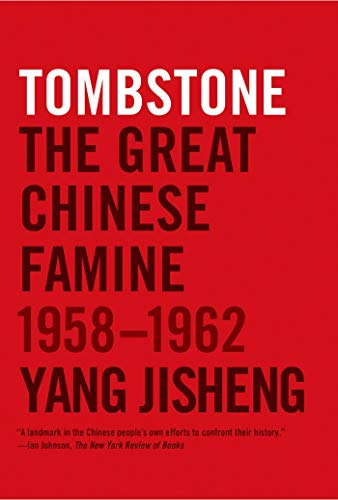
The Great Chinese Famine, 1958-1962
No credit card required · Cancel anytime
Tombstone by Yang Jisheng is a meticulously researched account of the devastating Great Chinese Famine, caused by Mao Zedong's policies. It illuminates the untold tragedy that impacted millions of lives.
Tombstone
Summary of key ideas
Unveiling the Famine
In Tombstone, Yang Jisheng begins by revealing the shocking truth about China's Great Famine of from 1958 to 1961. The catastrophe was the result of Mao Zedong’s disastrous policies, including forced collectivization and industrialization, which were blindly implemented. Encapsulating individual stories within the larger narrative, Jisheng offers an unprecedentedly detailed account of how the bureaucratic system failed its own people.
Across China, rural populations were left starving as food was requisitioned by the state. Ironically, grain silos were left full while the people were driven towards starvation by the poverty-stricken peasants. The fear of punishment, incentivized lying about grain production, leading to the creation of excessively ambitious state quotas that communities could not meet, further spiral down to exacerbating the situation.
Interrogating the Communist Party's Role
Jisheng questions the Chinese Communist Party's role in the famine, describing the systemic flaws and suppression of information that contributed to the magnitude of the catastrophe. Local officials falsely inflated grain production statistics to please their superiors, resulting in the government confiscating grain based on these inflated figures. This full-fledged totalitarianism led to millions of innocent deaths.
Furthermore, the Chinese regime harshly punished whistle-blowers or anyone who attempted to expose the truth about the famine. The systemic violence and mismanagement are vividly portrayed, making Tombstone a shocking yet crucial documentation of the struggle and suffering during this devastating period in Chinese history.
Victims Telling Their Stories
Jisheng narrates countless heart-wrenching stories acquired from his extensive research and interviews with survivors and victims’ relatives. Hunger became so prominent that cannibalism occurred, and in some areas, families exchanged children to eat to avoid the taboo of consuming one’s own kin. These accounts highlight the unimaginable hardship experienced by the population and provide a human context to the dire statistics of the famine.
The author also introduces various individuals who dared to confront the highly oppressive authorities, although almost all faced punishment. The stories serve as a testament to fearless individuals who chose to value truth over their lives. What stands out is the fact that few heroes or villains exist in this narrative—only victims of a circumstantially horrifying situation.
Exposing the Truth Amidst Political Retaliation
In the final part of Tombstone, Jisheng reflects on his own complicity as a CCP member and his transformation into a critic of the regime. The author admits his earlier ignorance, which is laid bare for readers: his father's death from starvation, his initial acceptance as a tragic necessity, and his later realisation of its cause being political mismanagement.
In conclusion, Tombstone, is a brave and searing indictment of the Great Famine and the Chinese Communist Party's role in the calamity. The book is not just a historical account, but a monument — a tombstone — for those who were lost and cannot be mourned openly due to political reasons. It is a lasting testament to the consequence of political fanaticism, a testament to the tens of millions of people who suffered needlessly in the name of an ideal."
More knowledge in less time

Read or listen
Get the key ideas from nonfiction bestsellers in minutes, not hours.

Find your next read
Get book lists curated by experts and personalized recommendations.

Shortcasts
We've teamed up with podcast creators to bring you key insights from podcasts.
What is Tombstone about?
Tombstone is a groundbreaking account of the devastating consequences of China's Great Famine, which took place from 1958 to 1962. Through meticulous research and firsthand accounts, Yang Jisheng reveals the true scale of the tragedy, with an estimated 36 million people dying from starvation. This powerful book sheds light on a dark chapter in Chinese history and serves as a poignant reminder of the human cost of political ideology.
Tombstone Review
Tombstone (2012) by Yang Jisheng is a compelling account of the Great Chinese Famine and its devastating impact on millions of people. Here's why this book is worth reading:
- With its detailed research and firsthand accounts, it provides a harrowing look into one of the darkest periods in Chinese history.
- The book explores the political and social factors that contributed to the famine, shedding light on the tragic consequences of government policies.
- Written with empathy and humanity, it brings to life the stories of ordinary people who suffered and died during this period, making it a powerful and moving read.
Who should read Tombstone?
- History enthusiasts interested in understanding the Chinese Cultural Revolution
- People passionate about social justice and human rights
- Readers curious about the impact of political ideologies on societies and individuals
Categories with Tombstone
Book summaries like Tombstone
 Fast Food NationEric SchlosserThe Dark Side of the All-American Meal 4.2
 Eating AnimalsJonathan Safran FoerThe (a)morality of our eating habits and traditions4.3
 HappinessRichard LayardLessons from a New Science4.0
 The Wisdom of CrowdsJames SurowieckiWhy the Many Are Smarter Than the Few4.4
 The Omnivore's DilemmaMichael PollanA Natural History of Four Meals4.4
 Trust Me, I’m LyingRyan HolidayConfessions of a Media Manipulator4.0
 The World Without Us Alan WeismanIf humankind were to vanish, what would be left?4.2
 The Paradox of ChoiceBarry SchwartzWhy More Is Less4.5
 The Confidence CodeKatty Kay and Claire ShipmanThe Science and Art of Self-Assurance: What Women Should Know3.9
 Behind the Beautiful ForeversKatherine BooLife, Death, and Hope in a Mumbai Undercity4.3
 AffluenzaJohn de Graaf, David WannHow Overconsumption is Killing Us – and How to Fight Back4.5
 Alone togetherSherry TurkleWhy We Expect More from Technology and Less from Each Other3.7
 Future CrimesMarc GoodmanEverything Is Connected, Everyone Is Vulnerable and What We Can Do About It4.0
 So You’ve Been Publicly ShamedJon RonsonHow Our Mistakes Are Costlier And More Public Than Ever3.8
 Rational RitualMichael Suk-Young ChweCulture, Coordination, and Common Knowledge3.9
 Cradle to CradleWilliam McDonough, Michael BraungartRe-making the way we make things4.3
 The Social AnimalDavid BrooksThe Hidden Sources of Love, Character, and Achievement4.3
 The Road to Character David BrooksLearn how to make yourself whole3.8
 Should We Eat Meat? Vaclav SmilEvolution and Consequences of Modern Carnivory3.3
 The Power of Myth Joseph Campbell, Bill MoyersTeaser: From ancient myths to Han Solo4.2
 Consider the ForkBee WilsonHow Technology Transforms the Way We Cook and Eat3.8
 Stuffocation James WallmanWhy We've Had Enough of Stuff and Need Experience More Than Ever4.2
 Unfair Adam BenforadoThe New Science of Criminal Injustice4.1
 Ghettoside Jill LeovyA True Story of Murder in America3.6
 Just MercyBryan StevensonA Story of Justice and RedemPDion4.1
 The True BelieverEric HofferThoughts on the Nature of Mass Movements3.9
 How Music Got FreeStephen WittWhat happens when an entire generation commits the same crime?4.7
 One Of UsAsne Seierstad, Sarah DeathThe Story of Anders Breivik and the Massacre in Norway 4.5
 Present ShockDouglas RushkoffWhen Everything Happens Now Reprint3.6
 Why Information GrowsCesar Hidalgo The Evolution of Order, from Atoms to Economies4.1
People ❤️ Blinkist
Become a member of our community of 44 million people

96k ratings

177k ratings
Sven O.
It's highly addictive to get core insights on personally relevant topics without repetition or triviality. Added to that the apps ability to suggest kindred interests opens up a foundation of knowledge.
Laura H.
When I saw Blinkist had produced an infographic style Blink for the Rich Dad, Poor Dad book, it was a good reminder of the concepts I loved.
Thi Viet Quynh N.
Great app. Good selection of book summaries you can read or listen to while commuting. Instead of scrolling through your social media news feed, this is a much better way to spend your spare time in my opinion.
People also liked these summaries
 I Am MalalaMalala YousafzaiThe Girl Who Stood Up for Education and Was Shot by the Taliban 4.5
 The MonopolistsMary PilonObsession, Fury and the Scandal Behind the World's Favorite Board Game4.0
 SapiensYuval Noah HarariA Brief History of Humankind4.3
 Doubt: A HistoryJennifer Michael HechtThe Great Doubters and Their Legacy of Innovation from Socrates and Jesus to Thomas Jefferson and Emily Dickinson3.6
 The Better Angels of Our Nature Steven PinkerWhy Violence has Declined4.5
 Bourbon EmpireReid MitenbulerThe Past and Future of America's Whiskey4.4
 The Story of SushiTrevor CorsonAn Unlikely Saga of Raw Fish and Rice4.0
 Genghis Khan and the Making of the Modern WorldJack WeatherfordThe fascinating story behind the Mongol Empire4.3
 Black FlagsJoby WarrickThe Rise of ISIS4.2
 Ta-Ra-Ra-Boom-De-AySimon Napier-BellThe (Dodgy) Business of Popular Music4.0
 How To Be Like WaltPat WilliamsCapturing the Disney Magic Every Day of Your Life4.1
 The Geography of BlissEric WeinerOne Grump’s Search for the Happiest Places in the World4.2
 A People’s History of the United StatesHoward ZinnA brilliant and moving history of the American people3.9
 CannibalismBill SchuttA Perfectly Natural History 3.8
 Women and PowerMary BeardA Manifesto4.1
 21 Lessons for the 21st CenturyYuval Noah HarariTeaser: Future proof yourself against the 21st Century4.4
 A History of GodKaren ArmstrongThe 4,000-Year Quest of Judaism, Christianity and Islam4.2
 CivilizationsMary BeardHow Do We Look / The Eye of Faith4.1
 The Spy and the TraitorBen MacintyreThe Greatest Espionage Story of the Cold War4.6
 The Origins of TotalitarianismHannah ArendtHannah Arendt's landmark work about Europe's anti-Semitic and imperialist roots4.6
 DreamlandSam QuinonesThe True Tale of America’s Opiate Epidemic4.5
 The Happiness FantasyCarl CederströmTeaser: A history of happiness3.8
 Why The West Rules – For NowIan MorrisThe Patterns of History, and What They Reveal About the Future4.3
 The New Silk RoadsPeter FrankopanThe Present and Future of the World3.9
 The Golden ThreadKassia St ClairHow Fabric Changed History4.1
 The Square and the TowerNiall FergusonNetworks and Power, from the Freemasons to Facebook4.4
 IslamKaren ArmstrongA Short History4.2
 Revolutionary IranMichael AxworthyA History of the Islamic Republic4.0
 China in Ten WordsYu HuaTeaser: The ten key concePDs underlying China’s transformation4.1
 The Congo from Leopold to KabilaGeorges Nzongola-NtalajaA People's History4.3
Trusted by the world's leading brands

Powerful ideas from top nonfiction
Try Blinkist to get the key ideas from 7,500+ bestselling nonfiction titles and podcasts. Listen or read in just 15 minutes.
Get started
Blink 3 of 8 - The 5 AM Club
by Robin Sharma
Tombstone FAQs
What is the main message of Tombstone?
The main message of Tombstone is a powerful exposé of the Great Chinese Famine, revealing the devastating consequences of government policies.
How long does it take to read Tombstone?
The reading time for Tombstone varies depending on the reader's speed. However, the Blinkist summary can be read in just 15 minutes.
Is Tombstone a good book? Is it worth reading?
Tombstone is a compelling and eye-opening book that delves deep into a tragic period of Chinese history. It is definitely worth reading for its insightful perspective.
Who is the author of Tombstone?
Tombstone is written by Yang Jisheng.