Better than a summary
Anarchy and Christianity summary
Jacques Ellul
No credit card required · Cancel anytime
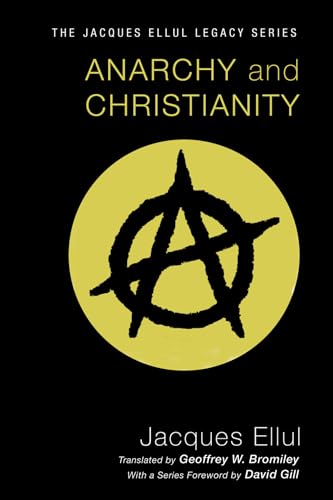
Anarchy and Christianity by Jacques Ellul explores the compatibility of Christian faith and anarchist philosophy. It delves into the teachings of Jesus and the early church to present a thought-provoking perspective on power, authority, and social order.
Topics
Anarchy and Christianity
Summary of key ideas
An Exploration of Anarchy and Christianity
In Anarchy and Christianity, Jacques Ellul provides a thought-provoking exploration of the relationship between two seemingly disparate systems: anarchism and Christianity. Ellul, a French philosopher, sociologist, and theologian, begins by defining anarchy as the nonviolent repudiation of authority, and Christianity as the religion based on the teachings of Jesus Christ.
Ellul argues that the essence of anarchy, as a political philosophy, is rooted in the rejection of coercive authority. He then delves into the Old Testament, where he asserts that the Israelites' demand for a king was a rejection of the direct rule of God, and thus the beginning of a coercive authority. In contrast, Jesus, as Ellul interprets, came to bring the Kingdom of God, which is non-coercive and non-authoritarian.
Christianity and Nonviolence
Ellul emphasizes the importance of nonviolence in the teachings of Jesus, and how it is fundamentally linked to the idea of anarchy. He points out that Jesus' radical message of love, forgiveness, and non-resistance to evil is a direct challenge to the prevailing structures of power and authority. According to Ellul, this message is an embodiment of non-coercive power, which is central to both anarchism and Christianity.
Ellul then turns his attention to the early Christian church, arguing that its structure and practices were closer to anarchy than to any form of institutionalized authority. He highlights the early Christian communities' emphasis on equality, mutual aid, and non-hierarchical organization as a living expression of the anarchic spirit. He also contrasts this with the subsequent development of the institutional church, which he sees as a departure from the original anarchic vision.
Anarchy's Compatibility with Christianity
Despite the historical divergence of the church from its early anarchic ideals, Ellul maintains that anarchism and Christianity are fundamentally compatible. He argues that the essence of Christianity is not found in the institutional church, but in the radical message of Jesus and the example of the early Christian communities. Similarly, the essence of anarchy, as Ellul sees it, is not in chaos and disorder, but in the rejection of coercive authority and the pursuit of nonviolent, egalitarian societies.
Ellul concludes Anarchy and Christianity by advocating for a return to the original anarchic and nonviolent spirit of Christianity. He proposes that Christians should embrace the principles of anarchy in their personal lives and work towards creating communities and societies based on these principles. He also suggests that anarchists should recognize the potential contribution of Christian ethics to their vision of a non-coercive, egalitarian world.
Final Thoughts
In summary, Anarchy and Christianity presents a compelling argument for the compatibility of anarchism and Christianity, rooted in their shared rejection of coercive authority and their emphasis on nonviolence and equality. Ellul's work challenges conventional understandings of both anarchism and Christianity, offering a thought-provoking vision of a nonviolent, non-authoritarian society inspired by the teachings of Jesus and the spirit of anarchy.
More knowledge in less time

Read or listen
Get the key ideas from nonfiction bestsellers in minutes, not hours.

Find your next read
Get book lists curated by experts and personalized recommendations.

Shortcasts
We've teamed up with podcast creators to bring you key insights from podcasts.
What is Anarchy and Christianity about?
Anarchy and Christianity by Jacques Ellul explores the intersection of these two seemingly contradictory ideologies. Through a thought-provoking analysis, the book challenges conventional beliefs and delves into the possibility of a harmonious coexistence between anarchy and Christianity. It offers a unique perspective on social order, freedom, and the role of religion in shaping our world.
Anarchy and Christianity Review
- The unconventional pairing of anarchism and Christianity challenges traditional ideologies, sparking reflection and debate.
- It delves into the ethical implications of both ideologies, providing a fresh lens through which to view social and moral issues.
- By blending philosophical depth with religious inquiry, the book presents a complex yet compelling analysis that keeps readers engaged and intellectually stimulated.
Who should read Anarchy and Christianity?
Individuals interested in exploring the intersection of Christianity and anarchist political theory
Readers seeking a thought-provoking critique of modern society and its systems of power
Those open to challenging their preconceived notions and exploring alternative perspectives on faith and politics
Categories with Anarchy and Christianity
Book summaries like Anarchy and Christianity
 The Audacity of HopeBarack ObamaThoughts on Reclaiming the American Dream4.5
 The Road to SerfdomF.H. HayekTeaser: Van Hayek's classic text on Freedom4.4
 No LogoNaomi KleinTaking Aim at the Brand Bullies4.2
 Man, the State and WarKenneth N. WaltzA Theoretical Analysis4.4
 The Origin of WealthEric D. BeinhockerThe Radical Remaking of Economics and What It Means for Business And Society3.9
 The Communist ManifestoKarl Marx, Friedrich EngelsWorkers of the world unite!4.2
 The SleepwalkersChristopher ClarkHow Europe Went to War in 19144.5
 The PrinceNiccolò MachiavelliMachiavelli’s classic text on leadership and politics4.5
 Second Treatise of the GovernmentJohn LockeAn Essay Concerning the True Origin, Extent and End of Civil Government4.2
 ImmigrantsPhillippe LegrainYour Country Needs Them4.0
 The End of PowerMoisés NaímFrom Boardrooms to Battlefields and Churches to States, Why Being in Charge Isn’t What It Used To Be4.4
 Energy Myths and RealitiesVaclav SmilBringing Science to the Energy Policy Debate3.8
 The RepublicPlatoTEASER: One of the most important philosophical texts ever written4.5
 The Wealth of NationsAdam SmithThe most influential economic book of all time4.3
 Gang Leader For A DaySudhir VenkateshA Rogue Sociologist Crosses The Line3.8
People ❤️ Blinkist
Become a member of our community of 44 million people

96k ratings

73k ratings
Guillem B.
Life changing. The concept of being able to grasp a book's main point in such a short time truly opens multiple opportunities to grow every area of your life at a faster rate.
Thi Viet Quynh N.
Great app. Good selection of book summaries you can read or listen to while commuting. Instead of scrolling through your social media news feed, this is a much better way to spend your spare time in my opinion.
Sven O.
It's highly addictive to get core insights on personally relevant topics without repetition or triviality. Added to that the apps ability to suggest kindred interests opens up a foundation of knowledge.
People also liked these summaries
 LeviathanThomas HobbesTeaser: Thomas Hobbes' classic4.5
 Guantánamo DiaryMohamedou Ould Slahi, edited by Larry SiemsGuantanamo from the Inside4.6
 The Innovator's PrescriptionClayton Christensen, Jerome H. Grossman and Jason D. HwangA Disruptive Solution for Health Care3.5
 Outsider in the White HouseBernie Sanders with Huck GutmanThe political autobiography of the insurgent presidential candidate4.3
 Engines of LibertyDavid ColeThe Power of Citizen Activists to Make Constitutional Law3.6
 You Can’t Read This BookNick CohenCensorship in an Age of Freedom3.9
 MeltdownThomas E. Woods, Jr.A Free-Market Look at Why the Stock Market Collapsed, the Economy Tanked, and Government Bailouts Will Make Things Worse3.9
 The WikiLeaks FilesJulian Assange (introduction)The World According to US Empire4.3
 The Making of Donald TrumpDavid Cay JohnstonHow Donald Trump rose to the pinnacle of power3.0
 Black FlagsJoby WarrickThe Rise of ISIS4.2
 Why The West Rules – For NowIan MorrisThe Patterns of History, and What They Reveal About the Future4.3
 The Gulag Archipelago 1918-1956Aleksandr SolzhenitsynAn Experiment in Literary Investigation4.6
 The Death of TruthMichiko KakutaniNotes on Falsehood in the Age of Trump3.5
 The Road to UnfreedomTimothy SnyderRussia, Europe, America4.2
 Liars, Leakers, and LiberalsJeanine PirroThe Case Against the Anti-Trump Conspiracy2.8
Trusted by the world's leading brands

Powerful ideas from top nonfiction
Try Blinkist to get the key ideas from 7,500+ bestselling nonfiction titles and podcasts. Listen or read in just 15 minutes.
Get started
Blink 3 of 8 - The 5 AM Club
by Robin Sharma