Better than a summary
The Price of Tomorrow summary
Jeff Booth
No credit card required · Cancel anytime
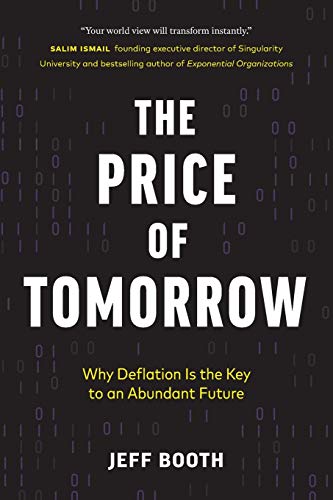
The Price of Tomorrow by Jeff Booth delves into the impact of technological deflation on the economy. It offers insights on how to adapt to this rapid change and thrive in a future where the cost of goods trend towards zero.
Topics
The Price of Tomorrow
Summary of key ideas
Understanding the Impact of Technological Advancements
In The Price of Tomorrow by Jeff Booth, we are introduced to the concept of deflation, a phenomenon that occurs when the price of goods and services decreases over time. Booth argues that deflation is a natural consequence of technological progress, as it leads to increased efficiency and reduced costs. However, our current economic system is built on the assumption of inflation, where prices rise over time, and this creates a fundamental conflict.
Booth illustrates how technological advancements, particularly in the digital realm, are accelerating this deflationary trend. He points to industries such as retail, transportation, and finance, where automation and digitalization are driving down costs and increasing productivity. While this is beneficial for consumers, it poses a significant challenge to traditional businesses and workers who are unable to keep up with the pace of change.
The Inevitability of Technological Unemployment
Continuing his exploration, Booth delves into the concept of technological unemployment, a situation where advancements in technology lead to job losses. He argues that this is not a temporary phase, but rather an ongoing and inevitable consequence of technological progress. As machines become more capable, they can perform an increasing number of tasks, displacing human workers in the process.
Booth emphasizes that the current approach of trying to create new jobs to replace those lost to automation is unsustainable. Instead, he advocates for a shift in mindset, one that acknowledges and embraces the reality of technological unemployment. He suggests that we should focus on creating an economic system that can function effectively in a world with fewer jobs, rather than attempting to maintain the status quo.
The Role of Monetary Policy in the Face of Deflation
Turning his attention to monetary policy, Booth argues that central banks' attempts to combat deflation through measures such as low interest rates and quantitative easing are ultimately futile. These strategies, he contends, are designed to stimulate inflation and encourage spending. However, in a deflationary environment, they can lead to asset bubbles, excessive debt, and economic instability.
Booth suggests that a more effective approach would be to allow deflation to occur naturally, as it would lead to lower prices and increased purchasing power for consumers. He acknowledges that this would require a significant shift in economic thinking, as our current system is heavily reliant on inflation to function. However, he believes that embracing deflation could ultimately lead to a more sustainable and equitable economic model.
Embracing a Future of Abundance
In the latter part of The Price of Tomorrow, Booth presents a vision of a future characterized by abundance, made possible by the relentless march of technology. He argues that, if managed correctly, a deflationary economy could lead to lower costs, increased productivity, and a higher standard of living for all. However, he cautions that this future can only be realized if we are willing to adapt our economic and social structures to accommodate it.
In conclusion, The Price of Tomorrow challenges us to rethink our assumptions about the economy and confront the realities of technological progress. Booth's thought-provoking analysis forces us to consider the potential consequences of our current trajectory and encourages us to embrace a future of abundance, rather than fear it.
More knowledge in less time

Read or listen
Get the key ideas from nonfiction bestsellers in minutes, not hours.

Find your next read
Get book lists curated by experts and personalized recommendations.

Shortcasts
We've teamed up with podcast creators to bring you key insights from podcasts.
What is The Price of Tomorrow about?
The Price of Tomorrow by Jeff Booth explores the impact of technological advancements on our economy and society. It delves into the concept of deflation and how it challenges our current economic systems. The book offers thought-provoking insights and proposes potential solutions for navigating the future in a world where technology continues to rapidly change the way we live and work.
The Price of Tomorrow Review
The Price of Tomorrow (2020) by Jeff Booth is an eye-opening exploration of the impact of rapidly advancing technology on our economy and society. Here's why this book is worth reading:
- It provides a thought-provoking analysis of the current economic system and explores the consequences of infinite technological progress.
- Supported by extensive research and real-world examples, the book offers a compelling argument for embracing change and adapting to the future.
- With its accessible writing style and engaging storytelling, The Price of Tomorrow captivates readers, making complex concepts easily understandable and the topic definitely not boring.
Who should read The Price of Tomorrow?
- Individuals curious about the impact of technology on the economy
- Entrepreneurs and business leaders seeking insights into future market trends
- Investors looking to understand the potential risks and opportunities in a rapidly changing world
Categories with The Price of Tomorrow
Book summaries like The Price of Tomorrow
 Basic EconomicsThomas SowellA Common Sense Guide to the Economy4.4
 Think and Grow RichNapoleon HillThe secrets of 40 millionaires' wealth, revealed4.4
 Rich Dad, Poor DadRobert T. KiyosakiWhat the Rich Teach Their Kids about Money – That the Poor and the Middle Class Do Not!4.5
 Secrets of the Millionaire MindT. Harv EkerMastering the Inner Game of Wealth4.1
 Business AdventuresJohn BrooksTwelve Classic Tales from the World of Wall Street4.3
 The Most Important ThingHoward MarksUncommon Sense for the Thoughtful Investor4.1
 More Money Than GodSebastian MallabyHedge Funds and the Making of a New Elite4.2
 The Misbehavior of MarketsBenoit Mandelbrot and Richard L. HudsonA Fractal View of Risk, Ruin and Reward4.3
 Zillow TalkSpencer Rascoff and Stan HumphriesThe New Rules of Real Estate3.6
 I Will Teach You To Be RichRamit SethiThe easy approach to smart banking, saving, spending and investing3.9
 The Intelligent InvestorBenjamin Graham and comments by Jason ZweigThe Definitive Book on Value Investing4.4
 The Dao of CapitalMark SpitznagelAustrian Investing in a Distorted World4.3
 The Education of a Value InvestorGuy SpierMy Transformative Quest for Wealth, Wisdom and Enlightenment4.3
 Common Stocks and Uncommon Profits and Other WritingsPhilip A. FischerImprove your investment strategy4.2
 Rule #1Phil TownThe Simple Strategy For Successful Investing In Only 15 Minutes Every Week4.2
People ❤️ Blinkist
Become a member of our community of 44 million people

96k ratings

73k ratings
Jonathan A.
Clearly communicates the value proposition of the most popular book summaries and offers a relatable, tangible template that I can use immediately.
Laura H.
When I saw Blinkist had produced an infographic style Blink for the Rich Dad, Poor Dad book, it was a good reminder of the concepts I loved.
Sven O.
It's highly addictive to get core insights on personally relevant topics without repetition or triviality. Added to that the apps ability to suggest kindred interests opens up a foundation of knowledge.
People also liked these summaries
 When Genius FailedRoger LowensteinThe Rise and Fall of Long-Term Capital Management4.1
 Millennial MoneyPatrick O’ShaughnessyHow Young Investors Can Build a Fortune3.9
 The Little Book of Common Sense InvestingJohn C. BogleThe Only Way to Guarantee Your Fair Share of Stock Market Returns 4.3
 The Total Money MakeoverDave RamseyA Proven Plan for Finance Fitness4.2
 The Economist: Numbers GuideRichard Stutely & The EconomistThe Essentials of Business Numeracy4.0
 Second ChanceRobert T. KiyosakiFor Your Money, Your Life and Our World4.3
 The Millionaire Next DoorThomas J. Stanley and William D. DankoThe Surprising Secrets of America’s Wealthy3.9
 Picture Your ProsperityEllen Rogin and Lisa KuengSmart Money Moves to Turn Your Vision into Reality 3.9
 The New Trading for a LivingDr. Alexander ElderPsychology, Discipline, Trading Tools and Systems, Risk Control, Trade Management4.1
 Berkshire Beyond BuffettLawrence A. CunninghamThe Enduring Value of Values4.1
 Cut Costs Not CornersColin BarrowA practical guide to staying competitive and improving profits3.8
 The One-Page Financial PlanCarl RichardsA Simple Way to Be Smart About Your Money4.0
 Outsmarting the CrowdBogumil K. BaranowskiA Value Investor’s Guide to Starting, Building, and Keeping a Family Fortune4.2
 Buying Your First HomeIlona Bray, Alayna Schroeder and Marcia StewartNolo's Essential Guide4.0
 A Wealth of Common SenseBen CarlsonWhy Simplicity Trumps Complexity in Any Investment Plan4.1
Trusted by the world's leading brands

Powerful ideas from top nonfiction
Try Blinkist to get the key ideas from 7,500+ bestselling nonfiction titles and podcasts. Listen or read in just 15 minutes.
Get started
Blink 3 of 8 - The 5 AM Club
by Robin Sharma
The Price of Tomorrow FAQs
What is the main message of The Price of Tomorrow?
The main message of The Price of Tomorrow is that the exponential pace of technological advancement will have profound economic implications.
How long does it take to read The Price of Tomorrow?
The reading time for The Price of Tomorrow varies, but it typically takes several hours. The Blinkist summary can be read in just 15 minutes.
Is The Price of Tomorrow a good book? Is it worth reading?
The Price of Tomorrow is a thought-provoking book that offers valuable insights into the future of technology and economics. It's definitely worth a read.
Who is the author of The Price of Tomorrow?
The author of The Price of Tomorrow is Jeff Booth.