Better than a summary
The Little Book That Beats the Market summary
No credit card required · Cancel anytime
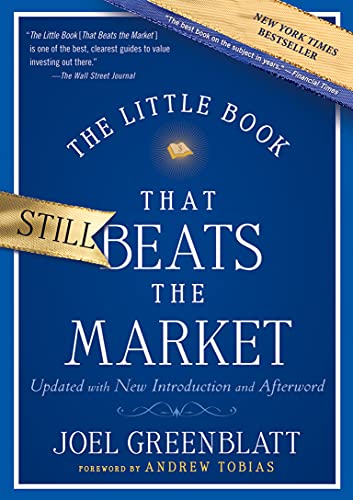
The Little Book That Beats the Market by Joel Greenblatt is a guide to investing in the stock market based on a simple and effective strategy. The book offers practical advice and strategies for achieving better returns in the market.
Table of Contents
- The Little Book That Beats the Market: summary of key ideas
- What is The Little Book That Beats the Market about?
- The Little Book That Beats the Market Review
- Who should read The Little Book That Beats the Market?
- About the author
- Book summaries like The Little Book That Beats the Market
- People also liked these summaries
- The Little Book That Beats the Market FAQs
The Little Book That Beats the Market
Summary of key ideas
A Simple and Effective Investment Strategy
In The Little Book That Beats the Market, Joel Greenblatt introduces a simple and effective investment strategy, known as the 'Magic Formula'. According to Greenblatt, this strategy can help investors consistently outperform the market. The formula is based on two basic financial measures: the earnings yield and the return on capital. These measures, when combined, can help an investor identify good companies at bargain prices.
Greenblatt begins by explaining the disadvantages of the common investment strategy of following the stock market indices. He then takes the reader through the process of how the investor can select winning stocks independently. The 'Magic Formula' essentially combines high earnings yield, which indicates the company's profitability and low share price, and high return on capital, implying that the company is well-managed and has profitable reinvestment opportunities.
The Magic Formula in Action
The 'Magic Formula,' according to Greenblatt, aims to buy good companies at low prices, and then patiently hold the stocks until the market recognizes their true value. This approach requires discipline and a long-term investment horizon, as companies may remain undervalued by the market for quite some time.
Greenblatt emphasizes that the 'Magic Formula' is a mechanical strategy, meaning that it doesn't require any kind of subjective judgment from the investor. The investor just needs to follow the steps and invest in the stocks that the formula identifies. His confidence in this formula is backed by his tested track record and the historical data he provides in the book.
Challenges and Pitfalls
Despite its apparent simplicity, The Little Book That Beats the Market acknowledges the challenges that investors may face while implementing the 'Magic Formula'. One of the main challenges, according to Greenblatt, is the patience and emotional discipline required to stick with the formula, especially during periods when it underperforms the market.
Greenblatt shares advice on how to navigate these pitfalls by reinforcing good investment habits such as diversification, rebalancing, and long-term commitment. He stresses the importance of understanding the underlying principles of the formula and firmly believing in its viability, as faith in the strategy will help the investor weather periods of underperformance.
The Power of Long-Term Investing
In The Little Book That Beats the Market, Greenblatt makes a strong case for the power of long-term investing. He illustrates with examples how indexes, mutual funds, and advisors typically fail to consistently beat the market. The 'Magic Formula ', on the other hand, succeeds because it is based on buying high-quality companies at discounted prices and holding onto them for the long term.
Greenblatt concludes the book by urging readers to teach the 'Magic Formula' to their children. He believes that educating the younger generation about this simple and effective method could not only help them secure their financial futures but also promote a healthier and more educated investing culture.
More knowledge in less time

Read or listen
Get the key ideas from nonfiction bestsellers in minutes, not hours.

Find your next read
Get book lists curated by experts and personalized recommendations.

Shortcasts
We've teamed up with podcast creators to bring you key insights from podcasts.
What is The Little Book That Beats the Market about?
In this book, Joel Greenblatt shares a simple yet effective investment strategy that aims to outperform the market. He introduces the concept of "magic formula investing" which focuses on buying good companies at bargain prices. Through clear explanations and real-life examples, Greenblatt provides valuable insights for both novice and experienced investors. Whether you're interested in stock market investing or simply want to understand how to make better financial decisions, this book offers practical advice and a unique perspective.
The Little Book That Beats the Market Review
The Little Book That Beats the Market (2005) provides a practical and insightful guide on value investing and how to beat the stock market by following a simple strategy. Here's why this book is worth reading:
- It offers a straightforward and actionable approach to selecting stocks, making it accessible to both novice and experienced investors.
- Backed by extensive research and historical data, the book provides a solid foundation for understanding the principles of value investing.
- The author makes complex concepts easy to understand and uses real-life examples to illustrate his points, making the book engaging and not at all mundane.
Who should read The Little Book That Beats the Market?
- Individuals looking for a practical guide to investing in the stock market
- Those who want to learn a simple, yet effective strategy for selecting profitable stocks
- Beginner investors who are interested in learning from a successful investor with a proven track record
Categories with The Little Book That Beats the Market
Book summaries like The Little Book That Beats the Market
 Basic EconomicsThomas SowellA Common Sense Guide to the Economy4.4
 Think and Grow RichNapoleon HillThe secrets of 40 millionaires' wealth, revealed4.4
 Rich Dad, Poor DadRobert T. KiyosakiWhat the Rich Teach Their Kids about Money – That the Poor and the Middle Class Do Not!4.5
 Secrets of the Millionaire MindT. Harv EkerMastering the Inner Game of Wealth4.1
 Business AdventuresJohn BrooksTwelve Classic Tales from the World of Wall Street4.3
 The Most Important ThingHoward MarksUncommon Sense for the Thoughtful Investor4.1
 More Money Than GodSebastian MallabyHedge Funds and the Making of a New Elite4.2
 The Misbehavior of MarketsBenoit Mandelbrot and Richard L. HudsonA Fractal View of Risk, Ruin and Reward4.3
 Zillow TalkSpencer Rascoff and Stan HumphriesThe New Rules of Real Estate3.6
 I Will Teach You To Be RichRamit SethiThe easy approach to smart banking, saving, spending and investing3.9
 The Intelligent InvestorBenjamin Graham and comments by Jason ZweigThe Definitive Book on Value Investing4.4
 The Dao of CapitalMark SpitznagelAustrian Investing in a Distorted World4.3
 The Education of a Value InvestorGuy SpierMy Transformative Quest for Wealth, Wisdom and Enlightenment4.3
 Common Stocks and Uncommon Profits and Other WritingsPhilip A. FischerImprove your investment strategy4.2
 Rule #1Phil TownThe Simple Strategy For Successful Investing In Only 15 Minutes Every Week4.2
People ❤️ Blinkist
Become a member of our community of 44 million people

96k ratings

73k ratings
Laura H.
When I saw Blinkist had produced an infographic style Blink for the Rich Dad, Poor Dad book, it was a good reminder of the concepts I loved.
Sven O.
It's highly addictive to get core insights on personally relevant topics without repetition or triviality. Added to that the apps ability to suggest kindred interests opens up a foundation of knowledge.
Renee D.
I'm absolutely thrilled that Blinkist now offers infographics! I can't get enough of them—they're such a fun and effective way to grasp and remember key points.
People also liked these summaries
 When Genius FailedRoger LowensteinThe Rise and Fall of Long-Term Capital Management4.1
 Millennial MoneyPatrick O’ShaughnessyHow Young Investors Can Build a Fortune3.9
 The Little Book of Common Sense InvestingJohn C. BogleThe Only Way to Guarantee Your Fair Share of Stock Market Returns 4.3
 The Total Money MakeoverDave RamseyA Proven Plan for Finance Fitness4.2
 The Economist: Numbers GuideRichard Stutely & The EconomistThe Essentials of Business Numeracy4.0
 Second ChanceRobert T. KiyosakiFor Your Money, Your Life and Our World4.3
 The Millionaire Next DoorThomas J. Stanley and William D. DankoThe Surprising Secrets of America’s Wealthy3.9
 Picture Your ProsperityEllen Rogin and Lisa KuengSmart Money Moves to Turn Your Vision into Reality 3.9
 The New Trading for a LivingDr. Alexander ElderPsychology, Discipline, Trading Tools and Systems, Risk Control, Trade Management4.1
 Berkshire Beyond BuffettLawrence A. CunninghamThe Enduring Value of Values4.1
 Cut Costs Not CornersColin BarrowA practical guide to staying competitive and improving profits3.8
 The One-Page Financial PlanCarl RichardsA Simple Way to Be Smart About Your Money4.0
 Outsmarting the CrowdBogumil K. BaranowskiA Value Investor’s Guide to Starting, Building, and Keeping a Family Fortune4.2
 Buying Your First HomeIlona Bray, Alayna Schroeder and Marcia StewartNolo's Essential Guide4.0
 A Wealth of Common SenseBen CarlsonWhy Simplicity Trumps Complexity in Any Investment Plan4.1
Trusted by the world's leading brands

Powerful ideas from top nonfiction
Try Blinkist to get the key ideas from 7,500+ bestselling nonfiction titles and podcasts. Listen or read in just 15 minutes.
Get started
Blink 3 of 8 - The 5 AM Club
by Robin Sharma
The Little Book That Beats the Market FAQs
What is the main message of The Little Book That Beats the Market?
The main message of The Little Book That Beats the Market is that you can achieve superior investment results by focusing on simple strategies.
How long does it take to read The Little Book That Beats the Market?
The reading time for The Little Book That Beats the Market varies, but it typically takes several hours. The Blinkist summary can be read in just a few minutes.
Is The Little Book That Beats the Market a good book? Is it worth reading?
The Little Book That Beats the Market is worth reading as it offers a practical approach to beating the market with clear explanations and actionable advice.
Who is the author of The Little Book That Beats the Market?
The author of The Little Book That Beats the Market is Joel Greenblatt.
How many chapters are in The Little Book That Beats the Market?
There are several chapters in The Little Book That Beats the Market.
How many pages are in The Little Book That Beats the Market?
The Little Book That Beats the Market contains 160 pages.
When was The Little Book That Beats the Market published?
The Little Book That Beats the Market was published in 2005.
Featured Titles
- The 9 Steps to Financial Freedom
- The Business Owner's Definitive Guide to Captive Insurance Companies
- The Field Guide to Understanding 'human Error'
- The Five Rules for Successful Stock Investing
- The Five Temptations of a CEO
- The Great Transformation
- The Lexus and the Olive Tree
- The McKinsey Way
- The New One Minute Manager
- Wealth, Actually