Better than a summary
Anna Karenina summary
No credit card required · Cancel anytime
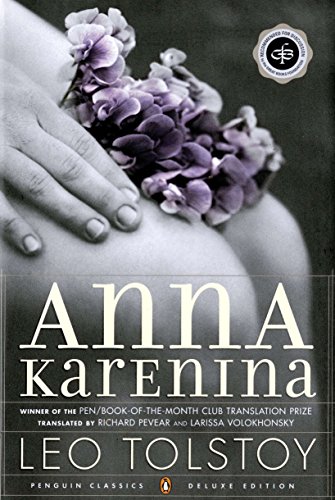
Anna Karenina by Leo Tolstoy is a timeless classic set in 19th century Russia. It tells the story of Anna Karenina's forbidden love affair and the consequences it brings. The novel explores themes of love, society, and the human condition.
Anna Karenina
Summary of key ideas
Exploring Love, Society, and Morality
In Anna Karenina by Leo Tolstoy, we are introduced to the eponymous character, Anna Karenina, a married woman who embarks on a passionate affair with the dashing Count Vronsky. This decision sets off a chain of events that explores the complexities of love, society, and morality in 19th century Russia.
Anna's affair with Vronsky leads to her social ostracization and a deep internal struggle. She is torn between her love for Vronsky and her duty as a mother and wife to her husband, Alexei Karenin. As the affair progresses, Anna's mental state deteriorates, and she becomes increasingly isolated and despondent.
Parallel Stories of Love and Obligation
Running parallel to Anna's story is the tale of Konstantin Levin, a wealthy landowner who is deeply in love with Princess Kitty, Darya Alexandrovna's sister. Levin's story serves as a counterpoint to Anna's, exploring the themes of love and obligation from a different perspective. Levin's struggle is not with infidelity but with his own insecurities and the societal expectations placed upon him.
Levin's journey is one of self-discovery and spiritual awakening. He grapples with questions about the meaning of life, the nature of work, and the role of faith in a rapidly changing world. His story provides a stark contrast to Anna's tragic descent, highlighting the different paths individuals can take when faced with similar existential dilemmas.
The Hypocrisy of High Society
Throughout Anna Karenina, Tolstoy offers a scathing critique of the Russian aristocracy and its hypocritical social norms. The characters in high society are often portrayed as shallow, self-absorbed, and morally bankrupt. Their lives are governed by rigid codes of conduct and appearances, leading to a pervasive sense of inauthenticity and dissatisfaction.
Anna's affair with Vronsky exposes the double standards and gender inequalities prevalent in this society. While Vronsky is able to continue his life relatively unscathed, Anna is condemned and shunned. Her tragic fate serves as a stark reminder of the harsh consequences faced by women who dare to challenge societal norms.
The Inevitability of Fate
As the novel progresses, the narrative shifts from the personal to the philosophical, with Tolstoy delving into broader questions about fate, free will, and the nature of existence. He argues that individuals are not entirely in control of their destinies, and that external forces, such as societal expectations and historical circumstances, play a significant role in shaping their lives.
In conclusion, Anna Karenina is a profound exploration of the human condition, offering a complex portrayal of love, society, and morality. Through the tragic story of Anna Karenina and the introspective journey of Konstantin Levin, Tolstoy presents a nuanced critique of Russian society while grappling with timeless existential questions. The novel's enduring relevance lies in its ability to provoke deep reflection on the nature of our own lives and the forces that shape them.
More knowledge in less time

Read or listen
Get the key ideas from nonfiction bestsellers in minutes, not hours.

Find your next read
Get book lists curated by experts and personalized recommendations.

Shortcasts
We've teamed up with podcast creators to bring you key insights from podcasts.
What is Anna Karenina about?
Anna Karenina is a classic novel by Leo Tolstoy that delves into themes of love, infidelity, and the societal norms of 19th century Russia. Through the story of the beautiful and unhappily married Anna Karenina, Tolstoy paints a vivid portrait of the complexities of human relationships and the consequences of challenging societal expectations.
Anna Karenina Review
Anna Karenina (1877) tells the captivating story of a woman named Anna who risks everything for love, ultimately leading to her downfall. Here's why this book is worth reading:
- The complex characters and their intertwined relationships provide a rich exploration of human emotions and motivations.
- Through its realistic portrayal of 19th-century Russian society, the book offers valuable insights into the cultural and societal forces that shape individual lives.
- Tolstoy's philosophical musings on love, morality, and the pursuit of happiness elevate the novel beyond a simple love story, making it a thought-provoking read.
Who should read Anna Karenina?
- Readers who enjoy deep explorations of human psychology and relationships
- Individuals interested in Russian literature and the social dynamics of 19th-century Russia
- People who appreciate complex and multi-layered narratives
Categories with Anna Karenina
Book summaries like Anna Karenina
 Fast Food NationEric SchlosserThe Dark Side of the All-American Meal 4.2
 Eating AnimalsJonathan Safran FoerThe (a)morality of our eating habits and traditions4.3
 HappinessRichard LayardLessons from a New Science4.0
 The Wisdom of CrowdsJames SurowieckiWhy the Many Are Smarter Than the Few4.4
 The Omnivore's DilemmaMichael PollanA Natural History of Four Meals4.4
 Trust Me, I’m LyingRyan HolidayConfessions of a Media Manipulator4.0
 The World Without Us Alan WeismanIf humankind were to vanish, what would be left?4.2
 The Paradox of ChoiceBarry SchwartzWhy More Is Less4.5
 The Confidence CodeKatty Kay and Claire ShipmanThe Science and Art of Self-Assurance: What Women Should Know3.9
 Behind the Beautiful ForeversKatherine BooLife, Death, and Hope in a Mumbai Undercity4.3
 AffluenzaJohn de Graaf, David WannHow Overconsumption is Killing Us – and How to Fight Back4.5
 Alone togetherSherry TurkleWhy We Expect More from Technology and Less from Each Other3.7
 Future CrimesMarc GoodmanEverything Is Connected, Everyone Is Vulnerable and What We Can Do About It4.0
 So You’ve Been Publicly ShamedJon RonsonHow Our Mistakes Are Costlier And More Public Than Ever3.8
 Rational RitualMichael Suk-Young ChweCulture, Coordination, and Common Knowledge3.9
 Cradle to CradleWilliam McDonough, Michael BraungartRe-making the way we make things4.3
 The Social AnimalDavid BrooksThe Hidden Sources of Love, Character, and Achievement4.3
 The Road to Character David BrooksLearn how to make yourself whole3.8
 Should We Eat Meat? Vaclav SmilEvolution and Consequences of Modern Carnivory3.3
 The Power of Myth Joseph Campbell, Bill MoyersTeaser: From ancient myths to Han Solo4.2
 Consider the ForkBee WilsonHow Technology Transforms the Way We Cook and Eat3.8
 Stuffocation James WallmanWhy We've Had Enough of Stuff and Need Experience More Than Ever4.2
 Unfair Adam BenforadoThe New Science of Criminal Injustice4.1
 Ghettoside Jill LeovyA True Story of Murder in America3.6
 Just MercyBryan StevensonA Story of Justice and RedemPDion4.1
 The True BelieverEric HofferThoughts on the Nature of Mass Movements3.9
 How Music Got FreeStephen WittWhat happens when an entire generation commits the same crime?4.7
 One Of UsAsne Seierstad, Sarah DeathThe Story of Anders Breivik and the Massacre in Norway 4.5
 Present ShockDouglas RushkoffWhen Everything Happens Now Reprint3.6
 Why Information GrowsCesar Hidalgo The Evolution of Order, from Atoms to Economies4.1
People ❤️ Blinkist
Become a member of our community of 44 million people

96k ratings

73k ratings
Jonathan A.
Clearly communicates the value proposition of the most popular book summaries and offers a relatable, tangible template that I can use immediately.
Sven O.
It's highly addictive to get core insights on personally relevant topics without repetition or triviality. Added to that the apps ability to suggest kindred interests opens up a foundation of knowledge.
Renee D.
I'm absolutely thrilled that Blinkist now offers infographics! I can't get enough of them—they're such a fun and effective way to grasp and remember key points.
People also liked these summaries
 A Canticle for LeibowitzWalter M. Miller
 The Boy in the Striped PajamasJohn BoyneTeaser: Heartbreaking Truths Unfold in a Tale of Friendship and Innocence4.9
 Little House in the Big WoodsLaura Ingalls Wilder
 Wide Sargasso SeaJean Rhys, Judith L. Raiskin
 Just After SunsetStephen King
 WhereaboutsJhumpa Lahiri
 Hearts in DarknessLaura Kaye
 Every Heart a DoorwaySeanan McGuire
 The Curious Case of Benjamin ButtonF. Scott Fitzgerald, Nunzio DeFilippis
 Side JobsJim Butcher
 Brokeback MountainAnnie Proulx
 A Single ManChristopher Isherwood
 And Every Morning the Way Home Gets Longer and LongerFredrik Backman, Alice Menzies
 Burning ChromeWilliam Gibson
 Hearts in AtlantisStephen King
 Bonjour TristesseFrancoise Sagan
 Chronicle of a Death ForetoldGabriel García Márquez, Gregory Rabassa
 For Whom the Bell TollsErnest Hemingway
 The Last QuestionIsaac Asimov
 The 5th WaveRick Yancey
 The Killer AngelsMichael Shaara
 The Martian ChroniclesRay Bradbury
 Cloud AtlasDavid Mitchell
 The Forever WarJoe Haldeman
 I, RobotIsaac Asimov
 Kill SwitchPenelope Douglas
 The Alice NetworkKate Quinn
 Number the StarsLois Lowry
 The SympathizerViet Thanh Nguyen
 City of ThievesDavid Benioff
Trusted by the world's leading brands

Powerful ideas from top nonfiction
Try Blinkist to get the key ideas from 7,500+ bestselling nonfiction titles and podcasts. Listen or read in just 15 minutes.
Get started
Blink 3 of 8 - The 5 AM Club
by Robin Sharma
Anna Karenina FAQs
What is the main message of Anna Karenina?
The main message of Anna Karenina is that societal expectations and norms can lead to personal unhappiness and destruction.
How long does it take to read Anna Karenina?
The estimated reading time for Anna Karenina varies depending on the reader's speed. However, the Blinkist summary can be read in just 15 minutes.
Is Anna Karenina a good book? Is it worth reading?
Anna Karenina is a classic masterpiece that delves into complex human emotions and social issues. It is definitely worth reading for its timeless storytelling and depth of characters.
Who is the author of Anna Karenina?
The author of Anna Karenina is Leo Tolstoy.
What is the main message of Anna Karenina?
The main message of Anna Karenina is the consequences of pursuing passion at the expense of societal norms.
How long does it take to read Anna Karenina?
The reading time for Anna Karenina varies depending on the reader's speed. However, the Blinkist summary can be read in just 15 minutes.
Is Anna Karenina a good book? Is it worth reading?
Anna Karenina is worth reading for its captivating characters and exploration of complex human emotions.
Who is the author of Anna Karenina?
Anna Karenina was written by Leo Tolstoy.