
Better than a summary
The Tell-Tale Heart and Other Stories summary
No credit card required · Cancel anytime
The Tell-Tale Heart is a captivating short story by Edgar Allan Poe that delves into the mind of a murderer haunted by guilt. It is a chilling tale that explores the depths of human madness and the harrowing consequences of our actions.
Topics
Table of Contents
- The Tell-Tale Heart and Other Stories: summary of key ideas
- What is The Tell-Tale Heart and Other Stories about?
- The Tell-Tale Heart and Other Stories Review
- Who should read The Tell-Tale Heart and Other Stories?
- About the author
- Book summaries like The Tell-Tale Heart and Other Stories
- People also liked these summaries
- The Tell-Tale Heart and Other Stories FAQs
The Tell-Tale Heart and Other Stories
Summary of key ideas
The Tell-Tale Heart
In The Tell-Tale Heart by Edgar Allan Poe, the narrator, who insists on his sanity, recounts the chilling tale of how he murdered an old man with a 'vulture eye' and hid his dismembered body under the floorboards. The narrator's guilt manifests in the form of a relentless, maddening heartbeat, which he believes to be the old man's heart, still beating. This classic tale of guilt, paranoia, and the descent into madness is a haunting exploration of the human psyche.
As the story unfolds, the narrator's obsession with the old man's eye grows, leading him to commit the heinous act. He meticulously plans the murder, but his meticulousness is overshadowed by his irrational fear of the old man's eye. After the murder, the narrator's guilt manifests in the form of the incessant sound of the old man's heart, which he believes is still beating, driving him to confess his crime to the police.
The System of Dr. Tarr and Professor Fether
In The System of Dr. Tarr and Professor Fether, Poe takes us to a French asylum where the narrator, a curious traveler, encounters a seemingly bizarre system of management. The inmates, who are allowed to roam freely, have overthrown the staff and now run the asylum. The narrator is initially intrigued by the seemingly humane treatment of the patients, but as the story progresses, he realizes the horrifying truth.
He discovers that the inmates have taken on the roles of the staff, while the actual staff members are kept in cells, treated as the insane. The story ends with a chilling revelation that the director of the asylum is the most insane of them all. Poe's tale is a commentary on the thin line between sanity and madness, and the potential for power to corrupt even the most well-intentioned systems.
The Oblong Box
In The Oblong Box, we follow the narrator and his friend Cornelius Wyatt on a sea voyage from Charleston to New York. The story revolves around a mysterious oblong box, which Wyatt insists on keeping in his cabin. The box, rumored to contain a valuable painting, becomes the subject of much speculation and curiosity among the passengers.
As the voyage progresses, the narrator becomes increasingly disturbed by Wyatt's obsession with the box. When a fire breaks out on the ship, Wyatt refuses to abandon the box, leading to a tragic end. The box, which was believed to contain a painting, is revealed to hold the decomposing body of Wyatt's wife. The story is a cautionary tale about the dangers of obsession and the consequences of keeping dark secrets.
The Facts in the Case of M. Valdemar
In The Facts in the Case of M. Valdemar, Poe delves into the realm of mesmerism, a popular form of hypnosis in the 19th century. The narrator, a mesmerist, conducts an experiment on his dying friend, M. Valdemar, to test the effects of mesmerism on the human body at the point of death. To everyone's astonishment, Valdemar appears to be in a state of suspended animation, even after his death.
However, the mesmerist soon realizes the horrifying consequences of his experiment when Valdemar's body begins to rapidly decompose while still in this state. The story ends with a chilling description of Valdemar's body disintegrating into a 'mass of loathsome, of detestable putrescence.' Poe's tale serves as a cautionary warning against the dangers of tampering with the natural order and the consequences of unchecked scientific curiosity.
More knowledge in less time

Read or listen
Get the key ideas from nonfiction bestsellers in minutes, not hours.

Find your next read
Get book lists curated by experts and personalized recommendations.

Shortcasts
We've teamed up with podcast creators to bring you key insights from podcasts.
What is The Tell-Tale Heart and Other Stories about?
The Tell-Tale Heart and Other Stories is a collection of chilling tales by Edgar Allan Poe. From the haunting account of a man driven to murder by the sound of a beating heart to the eerie exploration of a cursed family, these stories delve into the darkest corners of the human psyche. With its masterful storytelling and spine-tingling suspense, this book is a must-read for fans of gothic literature.
The Tell-Tale Heart and Other Stories Review
The Tell-Tale Heart and Other Stories (1843) is a collection of thrilling tales by Edgar Allan Poe. Here's why this book is worth reading:
- With captivating plots and unpredictable twists, it keeps readers on the edge of their seats, making it impossible to put down.
- Poe's masterful storytelling creates a haunting atmosphere, immersing readers in a world of suspense and horror.
- Exploring themes of madness, guilt, and the dark depths of the human psyche, the book offers psychological depth that lingers in the mind long after reading.
Who should read The Tell-Tale Heart and Other Stories?
- Readers who enjoy dark and psychological horror
- Those with an interest in literary classics and gothic fiction
- People who appreciate intricate and unsettling storytelling
Categories with The Tell-Tale Heart and Other Stories
Book summaries like The Tell-Tale Heart and Other Stories
 Where Good Ideas Come FromSteven JohnsonThe Natural History of Innovation4.1
 Theory UC. Otto ScharmerLeading From the Future as it Emerges4.0
 The Laws of SimplicityJohn MaedaDesign, Technology, Business, Life3.8
 The Myths of CreativityDavid BurkusThe Truth About How Innovative Companies and People Generate Great Ideas4.4
 Art, Inc.Lisa Congdon and Meg Mateo IlascoThe Essential Guide for Building Your Career as an Artist3.9
 Building Your Business the Right-Brain WayJennifer LeeSustainable Success for the Creative Entrepreneur4.2
 Creative, Inc.Meg Mateo Ilasco and Joy Deangdeelert ChoThe Ultimate Guide to Running a Successful Freelance Business3.9
 Ungifted: Intelligence RedefinedScott Barry KaufmanThe Truth About Talent, Practice, Creativity and the Many Paths to Greatness4.3
 OriginalsAdam GrantHow Non-Conformists Move the World4.3
 The Innovator’s HypothesisMichael SchrageHow Cheap Experiments Are Worth More than Good Ideas3.8
 How To Be Like WaltPat WilliamsCapturing the Disney Magic Every Day of Your Life4.1
 Perennial SellerRyan HolidayThe Art of Making and Marketing Work that Lasts3.9
 The Myths of InnovationScott BerkunThe bestseller on the history of ideas4.3
 Creative SuperpowersLaura Jordan Bambach, Mark Earls, Daniele Fiandaca, Scott Morrison (Ed.)Equip Yourself for the Age of Creativity4.4
 Deep ThinkingGarry KasparovWhere Machine Intelligence Ends and Human Creativity Begins3.9
 Wired to CreateScott Barry Kaufman, Carolyn GregoireUnraveling the Mysteries of the Creative Mind4.6
 StoryworthyMatthew DicksEngage, Teach, Persuade, and Change Your Life through the Power of Storytelling4.2
 Imagine It ForwardBeth Comstock with Thal RazCourage, Creativity, and the Power of Change3.9
 Stories for WorkGabrielle DolanThe Essential Guide to Business Storytelling4.4
 RestAlex Soojung-Kim PangWhy You Get More Done When You Work Less4.4
 LoonshotsSafi BahcallHow to Nurture the Crazy Ideas That Win Wars, Cure Diseases, and Transform Industries4.5
 The Icarus DeceptionSeth GodinHow High Will You Fly?4.4
 The Creativity CodeMarcus du SautoyHow AI is learning to write, paint and think4.4
 The Science of StorytellingWill StorrTeaser: The scientific underpinnings of a good story4.2
 Keep GoingAustin Kleon10 Ways to Stay Creative in Good Times and Bad4.5
 Against CreativityOli MouldTeaser: A critical examination of the contemporary notion of creativity3.7
 Unlocking CreativityMichael A. RobertoHow to Solve Any Problem and Make the Best Decisions by Shifting Creative Mindsets4.3
 Do DesignAlan MooreWhy Beauty is Key to Everything4.5
 Gamification for BusinessSune Gudiksen, Jake InloveWhy Innovators and Changemakers Use Games to Break Down Silos, Drive Engagement and Build Trust4.0
 Innovation for the FatiguedAlf RehnHow to build a culture of deep creativity4.3
People ❤️ Blinkist
Become a member of our community of 44 million people

96k ratings

73k ratings
Sven O.
It's highly addictive to get core insights on personally relevant topics without repetition or triviality. Added to that the apps ability to suggest kindred interests opens up a foundation of knowledge.
Jonathan A.
Clearly communicates the value proposition of the most popular book summaries and offers a relatable, tangible template that I can use immediately.
Guillem B.
Life changing. The concept of being able to grasp a book's main point in such a short time truly opens multiple opportunities to grow every area of your life at a faster rate.
People also liked these summaries
 A Canticle for LeibowitzWalter M. Miller
 The Boy in the Striped PajamasJohn BoyneTeaser: Heartbreaking Truths Unfold in a Tale of Friendship and Innocence4.9
 Little House in the Big WoodsLaura Ingalls Wilder
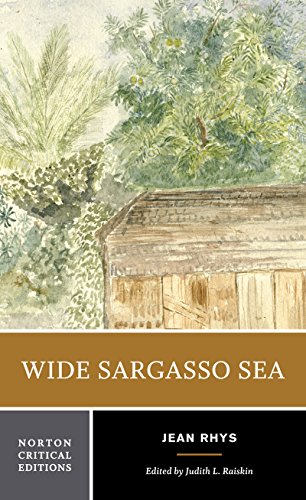 Wide Sargasso SeaJean Rhys, Judith L. Raiskin
 Just After SunsetStephen King
 WhereaboutsJhumpa Lahiri
 Hearts in DarknessLaura Kaye
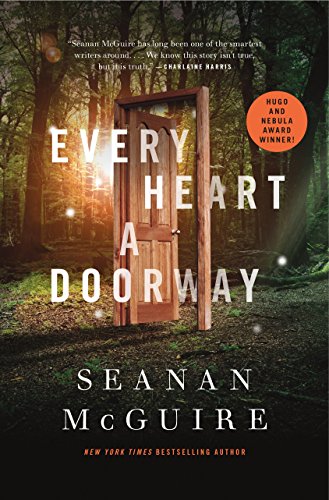 Every Heart a DoorwaySeanan McGuire
 The Curious Case of Benjamin ButtonF. Scott Fitzgerald, Nunzio DeFilippis
 Side JobsJim Butcher
 Brokeback MountainAnnie Proulx
 A Single ManChristopher Isherwood
 And Every Morning the Way Home Gets Longer and LongerFredrik Backman, Alice Menzies
 Burning ChromeWilliam Gibson
 Hearts in AtlantisStephen King
 Bonjour TristesseFrancoise Sagan
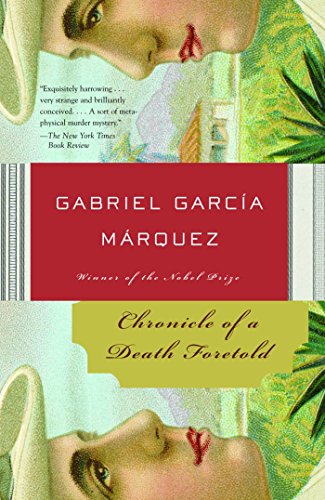 Chronicle of a Death ForetoldGabriel García Márquez, Gregory Rabassa
 For Whom the Bell TollsErnest Hemingway
 The Last QuestionIsaac Asimov
 The 5th WaveRick Yancey
 The Killer AngelsMichael Shaara
 The Martian ChroniclesRay Bradbury
 Cloud AtlasDavid Mitchell
 The Forever WarJoe Haldeman
 I, RobotIsaac Asimov
 Kill SwitchPenelope Douglas
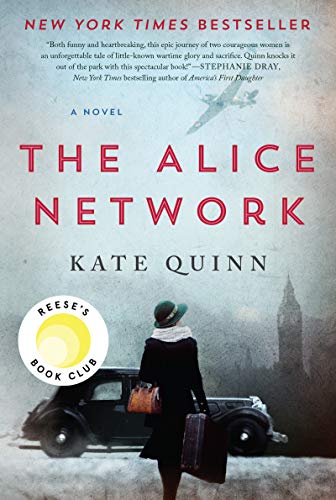 The Alice NetworkKate Quinn
 Number the StarsLois Lowry
 The SympathizerViet Thanh Nguyen
 City of ThievesDavid Benioff
Trusted by the world's leading brands

Powerful ideas from top nonfiction
Try Blinkist to get the key ideas from 7,500+ bestselling nonfiction titles and podcasts. Listen or read in just 15 minutes.
Get started
Blink 3 of 8 - The 5 AM Club
by Robin Sharma
The Tell-Tale Heart and Other Stories FAQs
What is the main message of The Tell-Tale Heart and Other Stories?
The main message of The Tell-Tale Heart and Other Stories revolves around themes like madness, guilt, and the blurred lines between reality and imagination.
How long does it take to read The Tell-Tale Heart and Other Stories?
The reading time for The Tell-Tale Heart and Other Stories varies depending on the reader's speed. However, the Blinkist summary can be read in just 15 minutes.
Is The Tell-Tale Heart and Other Stories a good book? Is it worth reading?
The Tell-Tale Heart and Other Stories is definitely worth reading for fans of Edgar Allan Poe. It offers a gripping collection of haunting and psychologically intense tales.
Who is the author of The Tell-Tale Heart and Other Stories?
The author of The Tell-Tale Heart and Other Stories is Edgar Allan Poe.