Better than a summary
The Color of Money summary
Mehrsa Baradaran
No credit card required · Cancel anytime
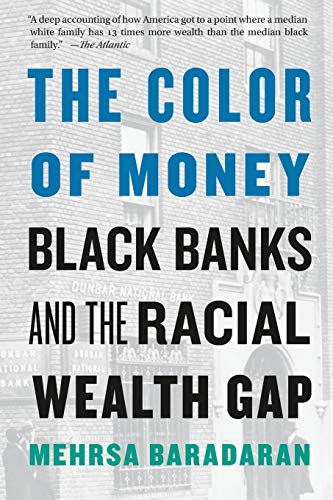
The Color of Money by Mehrsa Baradaran is a thought-provoking book that delves into the history of racial inequality in banking and finance, shedding light on the systemic barriers that have prevented economic empowerment within minority communities.
The Color of Money
Summary of key ideas
The Historical Context of Wealth Disparities
In The Color of Money, Mehrsa Baradaran delves into the historical context of wealth disparities in the United States. She begins by highlighting the economic struggles faced by African Americans post-Civil War, despite their newfound freedom. Baradaran argues that the lack of access to financial institutions and credit prevented them from accumulating wealth, a problem that persisted through the Jim Crow era and into the Civil Rights Movement.
Baradaran then introduces the concept of “black capitalism,” a strategy proposed by President Nixon to address economic inequality. This approach aimed to uplift African American communities by encouraging entrepreneurship and supporting black-owned businesses and banks. However, Baradaran contends that this initiative failed to address the systemic barriers that prevented wealth accumulation among African Americans.
The Role of Black-Owned Banks
Next, Baradaran focuses on the role of black-owned banks in the fight for economic equality. She explains how these institutions emerged as a response to the exclusion of African Americans from mainstream banks and financial services. Despite their noble intentions, these banks faced significant challenges, including limited resources, regulatory hurdles, and the broader economic struggles of their communities.
Baradaran argues that the failure of black-owned banks to significantly impact the wealth gap is not due to mismanagement or lack of effort, but rather the result of a deeply entrenched system of economic exclusion. She illustrates this point by examining the history of several prominent black-owned banks and their struggles to survive and thrive in a racially segregated financial landscape.
The Persistence of Economic Inequality
As The Color of Money progresses, Baradaran highlights the persistence of economic inequality and the widening wealth gap between black and white Americans. She attributes this disparity to a combination of historical injustices, ongoing discrimination, and the failure of policies like black capitalism to address the root causes of economic inequality.
Baradaran also critiques the mainstream banking industry for its role in perpetuating racial disparities. She argues that redlining, predatory lending, and other discriminatory practices have further marginalized African American communities, making it even more challenging for them to build and maintain wealth.
Reimagining Economic Justice
In the final section of the book, Baradaran calls for a reimagining of economic justice. She argues that true economic equality cannot be achieved through incremental reforms or isolated initiatives like black capitalism. Instead, she advocates for more comprehensive and systemic solutions that address the structural barriers preventing wealth accumulation in African American communities.
Baradaran suggests policies such as baby bonds, universal basic income, and public banking as potential solutions to address the racial wealth gap. She also emphasizes the importance of acknowledging and addressing the historical injustices that continue to shape economic outcomes for African Americans.
Concluding Thoughts
In conclusion, The Color of Money offers a thought-provoking analysis of the racial wealth gap in the United States. Baradaran’s exploration of the history of black capitalism and the role of black-owned banks sheds light on the persistent economic inequalities faced by African American communities. By challenging conventional wisdom and advocating for more radical solutions, she encourages readers to rethink traditional approaches to economic justice and wealth distribution.
More knowledge in less time

Read or listen
Get the key ideas from nonfiction bestsellers in minutes, not hours.

Find your next read
Get book lists curated by experts and personalized recommendations.

Shortcasts
We've teamed up with podcast creators to bring you key insights from podcasts.
What is The Color of Money about?
The Color of Money by Mehrsa Baradaran delves into the history of racial inequality in the United States through the lens of banking and financial systems. It explores how government policies and banking practices have perpetuated wealth disparities between white and black Americans, and offers thought-provoking insights into the ongoing challenges of economic justice.
The Color of Money Review
The Color of Money (2017) by Mehrsa Baradaran is a thought-provoking examination of the racial wealth gap in America and the role that banking and finance play in perpetuating inequality. Here's why this book is worth reading:
- With meticulously researched evidence, the book provides a deep understanding of how historic and systemic factors have led to the racial wealth divide.
- Through compelling storytelling and personal narratives, Baradaran humanizes the issue, making it relatable and urgent.
- The book offers fascinating insights into the history of banking and finance, shedding light on the often overlooked aspects that contribute to inequality.
Who should read The Color of Money?
- Individuals interested in understanding the history and impact of racial wealth disparities
- Entrepreneurs and business owners looking to support and invest in minority-owned businesses
- Policy makers and advocates seeking to address systemic economic inequalities
Categories with The Color of Money
Book summaries like The Color of Money
 Basic EconomicsThomas SowellA Common Sense Guide to the Economy4.4
 The Ascent of MoneyNiall FergusonA Financial History of the World4.3
 Think and Grow RichNapoleon HillThe secrets of 40 millionaires' wealth, revealed4.4
 The 4-Hour WorkweekTim FerrissEscape 9–5, Live Anywhere, and Join the New Rich4.2
 Rich Dad, Poor DadRobert T. KiyosakiWhat the Rich Teach Their Kids about Money – That the Poor and the Middle Class Do Not!4.5
 Secrets of the Millionaire MindT. Harv EkerMastering the Inner Game of Wealth4.1
 The Richest Man in BabylonGeorge S. ClasonNow Revised and Updated for the 21st Century4.3
 Business AdventuresJohn BrooksTwelve Classic Tales from the World of Wall Street4.3
 The Most Important ThingHoward MarksUncommon Sense for the Thoughtful Investor4.1
 More Money Than GodSebastian MallabyHedge Funds and the Making of a New Elite4.2
 The Misbehavior of MarketsBenoit Mandelbrot and Richard L. HudsonA Fractal View of Risk, Ruin and Reward4.3
 Zillow TalkSpencer Rascoff and Stan HumphriesThe New Rules of Real Estate3.6
 I Will Teach You To Be RichRamit SethiThe easy approach to smart banking, saving, spending and investing3.9
 The Intelligent InvestorBenjamin Graham and comments by Jason ZweigThe Definitive Book on Value Investing4.4
 The Dao of CapitalMark SpitznagelAustrian Investing in a Distorted World4.3
People ❤️ Blinkist
Become a member of our community of 43 million people

96k ratings

73k ratings
Laura H.
When I saw Blinkist had produced an infographic style Blink for the Rich Dad, Poor Dad book, it was a good reminder of the concepts I loved.
Jonathan A.
Clearly communicates the value proposition of the most popular book summaries and offers a relatable, tangible template that I can use immediately.
Renee D.
I'm absolutely thrilled that Blinkist now offers infographics! I can't get enough of them—they're such a fun and effective way to grasp and remember key points.
People also liked these summaries
 The Education of a Value InvestorGuy SpierMy Transformative Quest for Wealth, Wisdom and Enlightenment4.3
 Young MoneyKevin RooseInside the Hidden World of Wall Street’s Post-Crash Recruits4.0
 The Hour Between Dog and WolfJohn CoatesHow Risk-Taking Transforms Us, Body and Mind4.2
 Common Stocks and Uncommon Profits and Other WritingsPhilip A. FischerImprove your investment strategy4.2
 Rule #1Phil TownThe Simple Strategy For Successful Investing In Only 15 Minutes Every Week4.2
 When Genius FailedRoger LowensteinThe Rise and Fall of Long-Term Capital Management4.1
 Millennial MoneyPatrick O’ShaughnessyHow Young Investors Can Build a Fortune3.9
 The Compound EffectDarren HardyJumpstart Your Income, Your Life, Your Success4.3
 The Little Book of Common Sense InvestingJohn C. BogleThe Only Way to Guarantee Your Fair Share of Stock Market Returns 4.3
 The Total Money MakeoverDave RamseyA Proven Plan for Finance Fitness4.2
 The Economist: Numbers GuideRichard Stutely & The EconomistThe Essentials of Business Numeracy4.0
 Second ChanceRobert T. KiyosakiFor Your Money, Your Life and Our World4.3
 The Millionaire Next DoorThomas J. Stanley and William D. DankoThe Surprising Secrets of America’s Wealthy3.9
 18 MinutesPeter BregmanFind Your Focus, Master Distraction, and Get the Right Things Done3.7
 Picture Your ProsperityEllen Rogin and Lisa KuengSmart Money Moves to Turn Your Vision into Reality 3.9
Trusted by the world's leading brands

Powerful ideas from top nonfiction
Try Blinkist to get the key ideas from 7,500+ bestselling nonfiction titles and podcasts. Listen or read in just 15 minutes.
Get started
Blink 3 of 8 - The 5 AM Club
by Robin Sharma
The Color of Money FAQs
What is the main message of The Color of Money?
The main message of The Color of Money explores the racial wealth gap and the historical factors that have shaped it.
How long does it take to read The Color of Money?
The reading time for The Color of Money varies, but it typically takes several hours. However, the Blinkist summary can be read in just 15 minutes.
Is The Color of Money a good book? Is it worth reading?
The Color of Money is a thought-provoking book that sheds light on an important issue. It is definitely worth reading.
Who is the author of The Color of Money?
The author of The Color of Money is Mehrsa Baradaran.