Better than a summary
The Code Breaker summary
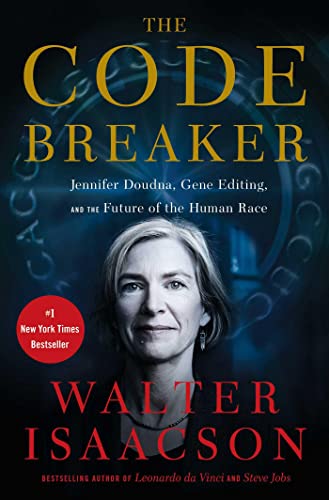
Jennifer Doudna, Gene Editing, and the Future of the Human Race
No credit card required · Cancel anytime
The Code Breaker by Walter Isaacson delves into the life and work of Jennifer Doudna, the pioneering scientist behind CRISPR gene-editing technology. It explores the ethical implications and potential of this revolutionary discovery.
The Code Breaker
Summary of key ideas
The Discovery of CRISPR
The The Code Breaker by Walter Isaacson chronicles the world of biochemistry with a focus on the revolutionary gene-editing tool, CRISPR. He takes us on a journey that begins with the discovery of CRISPR (Clustered Regularly Interspaced Short Palindromic Repeat) in bacteria. Bacteria use CRISPR as part of their immune system to resist viral attacks. Understanding this potential, scientists began to explore the possibility of harnessing CRISPR to edit genes in other organisms, including humans.
The main protagonist of the story is biochemist Jennifer Doudna. Her contributions, along with others on her team, led to the realization that an associated enzyme, called Cas9, could be used as a pair of "molecular scissors," allowing targeted changes to DNA sequences. This began a new era of genetic engineering and biotechnology, opening new possibilities for curing genetic disorders and improving health care.
The Ethical Dilemmas
As Isaacson lays out the transformational potential of this technology, he also delves into the ethical questions it raises. CRISPR's power to modify the human genetic code raises complex moral dilemmas. Is it ethical to design our children or to eradicate disease before birth? Could we risk producing unforeseen effects or creating new disparities in society? These ethical quandaries become central to the narrative, highlighting the difficulty of balancing rapid scientific advancement with necessary ethical considerations.
In the middle of the book, a character enters who pushes these ethical boundaries: He Jiankui, a Chinese scientist who created the world's first gene-edited babies, effectively engineering their DNA to be resistant to HIV. This experiment sparked intense global controversy, as it was deemed premature and reckless, crossing a line many scientists believe shouldn't have been crossed.
The Nobel Prize and a Patent War
Amidst these profound ethical questions, the book also captures the intense competition and egos in the scientific community. A key point of contention emerges over who exactly has the right to the CRISPR-Cas9 patent. Two main parties are involved: Jennifer Doudna and her research associate Emmanuelle Charpentier; and Feng Zhang, a scientist from the Broad Institute of MIT and Harvard. Isaacson chronicles this intense patent war in detail, showing the intersection of science and commerce.
In 2020, Doudna and Charpentier are awarded the Nobel Prize in Chemistry for the development of CRISPR-Cas9, making them the first two women to share the prize. Isaacson presents this historical moment as not only a triumph for the two women but also a progressive precedent for future Nobel Prizes.
Implications for the Future
Toward the end of The Code Breaker, Isaacson speculates about the technology's future applications. He considers the implications for agriculture, which can potentially be transformed by rewriting the genomes of plants and animals. He also points out that CRISPR can be used to combat climate change by engineering species to capture more carbon dioxide.
As a conclusion, Isaacson suggests that handling CRISPR responsibly requires a global, inclusive dialogue about its ethical implications. He highlights the need for principled decision-making, wise regulatory policies, and wide public understanding and engagement. The book leaves us pondering the question: Must we change what it means to be human, simply because we can?
More knowledge in less time

Read or listen
Get the key ideas from nonfiction bestsellers in minutes, not hours.

Find your next read
Get book lists curated by experts and personalized recommendations.

Shortcasts
We've teamed up with podcast creators to bring you key insights from podcasts.
What is The Code Breaker about?
This book explores the fascinating world of genetic engineering and the scientists who are revolutionizing medicine and biology. It delves into the history of genetics, the ethical implications of gene editing, and the potential for curing diseases and improving human health. Isaacson provides a captivating and thought-provoking look at the groundbreaking discoveries and the individuals behind them.
The Code Breaker Review
The Code Breaker (2021) is a captivating exploration of genetic science, its groundbreaking discoveries, and the woman behind it all, Jennifer Doudna. Here's what makes this book a worthwhile read:
- With fascinating insights into the world of gene editing, it offers a unique glimpse into the future of medicine and the ethical dilemmas we face.
- Through detailed research and personal interviews, the book delves into Doudna's journey, showcasing her brilliance and the challenges she overcame.
- It presents the global impact of gene editing, from curing diseases to potentially reshaping the human species, making it an engrossing and thought-provoking read.
Who should read The Code Breaker?
- People interested in the history and impact of genetics and biotechnology
- Readers who enjoy learning about scientific discoveries and breakthroughs
- Those who want to gain insight into the life and work of Jennifer Doudna, a pioneering scientist in gene editing technology
Categories with The Code Breaker
Book summaries like The Code Breaker
 The Devil in the White CityErik LarsonMurder, Magic and Madness at the Fair that Changed America3.8
 Man’s Search for MeaningViktor FranklThe harrowing experiences of the author in a concentration camp4.3
 Losing My VirginityRichard BransonHow I Survived, Had Fun, and Made a Fortune Doing Business My Way4.4
 The Immortal Life of Henrietta Lacks Rebecca SklootHow one woman's cells changed scientific thinking forever.4.3
 I Am MalalaMalala YousafzaiThe Girl Who Stood Up for Education and Was Shot by the Taliban 4.5
 Gang Leader For A DaySudhir VenkateshA Rogue Sociologist Crosses The Line3.8
 Do No Harm Henry MarshStories of Life, Death, and Brain Surgery4.2
 The Man Without A FaceMasha GessenThe Unlikely Rise of Vladimir Putin4.2
 Long Walk to FreedomNelson MandelaThe Autobiography of Nelson Mandela4.5
 Moore’s LawArnold Thackray, David Brock and Rachel JonesThe Life of Gordon Moore, Silicon Valley’s Quiet Revolutionary4.3
 Elon MuskAshlee VanceTesla, SpaceX, and the Quest for a Fantastic Future4.3
 The Art of AskingAmanda PalmerHow I Learned to Stop Worrying and Let People Help3.3
 Guantánamo DiaryMohamedou Ould Slahi, edited by Larry SiemsGuantanamo from the Inside4.6
 One Of UsAsne Seierstad, Sarah DeathThe Story of Anders Breivik and the Massacre in Norway 4.5
 The Intel TrinityMichael S. MaloneHow Robert Noyce, Gordon Moore and Andy Grove Built the World’s Most Important Company4.2
 A Life DecodedJ. Craig VenterMy Genome: My Life4.1
 Nothing to Envy Barbara DemickOrdinary Lives in North Korea4.3
 Between the World and MeTa-Nehisi CoatesThe 2015 National Book Award Winner is a deep look at being black in America today4.3
 Strength in What RemainsTracy KidderA Journey of Remembrance and Forgiveness4.0
 The Invention of NatureAndrea WulfAlexander von Humboldt's New World4.6
 And the Good News Is …Dana PerinoLessons and Advice from the Bright Side4.0
 On the Move Oliver SacksA Life4.5
 A Long Way GoneIshmael BeahMemoirs of a Boy Soldier4.4
 Charlie MungerTren GriffinThe Complete Investor4.2
 The House of RothschildNiall FergusonMoney’s Prophets 1798–18484.2
 Sam Walton: Made in AmericaSam Walton with John HueyMy Story4.4
 Lawrence in ArabiaScott AndersonWar, Deceit, Imperial Folly and the Making of the Modern Middle East4.7
 The Run of His LifeJeffrey ToobinThe People v. O.J. Simpson4.5
 DogfightFred VogelsteinHow Apple and Google Went to War and Started a Revolution4.4
People ❤️ Blinkist
Become a member of our community of 44 million people

96k ratings

73k ratings
Renee D.
I'm absolutely thrilled that Blinkist now offers infographics! I can't get enough of them—they're such a fun and effective way to grasp and remember key points.
Sven O.
It's highly addictive to get core insights on personally relevant topics without repetition or triviality. Added to that the apps ability to suggest kindred interests opens up a foundation of knowledge.
Laura H.
When I saw Blinkist had produced an infographic style Blink for the Rich Dad, Poor Dad book, it was a good reminder of the concepts I loved.
People also liked these summaries
 Hatching TwitterNick BiltonA True Story of Money, Power, Friendship, and Betrayal4.5
 Where Good Ideas Come FromSteven JohnsonThe Natural History of Innovation4.1
 God is not greatChristopher HitchensHow Religion Poisons Everything3.9
 A Brief History of Time Stephen HawkingFrom the Big Bang to Black Holes4.4
 The Selfish GeneRichard DawkinsA landmark work in the field of biology and evolution4.4
 AntifragileNassim Nicholas TalebThings That Gain from Disorder4.5
 Physics of the futureMichio KakuHow Science Will Shape Human Destiny and Our Daily Lives by the Year 21004.1
 MusicophiliaOliver SacksTales of Music and the Brain, Revised and Expanded Edition4.3
 How Music Works David ByrneHow circumstance and creativity collide in tune4.4
 The Sports GeneDavid EpsteinInside the Science of Extraordinary Athletic Performance4.3
 On intelligence Jeff Hawkins, Sandra BlakesleeHow a New Understanding of the Brain Will Lead to the Creation of Truly Intelligent Machines3.9
 Nutrition and Physical DegenerationWeston Andrew PriceA Comparison of Primitive and Modern Diets and their Effects4.2
 GutGiulia EndersThe Inside Story of Our Body’s Most Underrated Organ4.3
 Bad ScienceBen GoldacreA behind-the-scenes look at the bogus science used to mislead us every day.4.4
 Moonwalking with EinsteinJoshua FoerThe Art and Science of Remembering Everything4.2
 Fluent ForeverGabriel WynerHow to Learn Any Language Fast and Never Forget It4.3
 Life at the Speed of Light J. Craig VenterFrom the Double Helix to the Dawn of Digital Life4.3
 The Language InstinctSteven PinkerHow the Mind Creates Language4.0
 A mind for numbersBarbara OakleyHow to Excel at Math and Science (Even If You Flunked Algebra)4.3
 The Structure of Scientific RevolutionsThomas S. KuhnA groundbreaking study in how science progresses4.3
 SmarterDan HurleyThe New Science of Building Brain Power3.6
 An Astronaut’s Guide to Life on EarthChris HadfieldWhat Going to Space Taught Me About Ingenuity, Determination, and Being Prepared for Anything3.9
 The Demon-Haunted WorldCarl SaganScience as a Candle in the Dark4.3
 Grain BrainDavid PerlmutterThe Surprising Truth about Wheat, Carbs, and Sugar4.3
 What If?Randall MunroeSerious Scientific Answers to Absurd Hypothetical Questions3.4
 On ImmunityEula BissAn Inoculation3.3
 Sonic BoomJoel Beckerman (Autor), Tyler GrayHow Sound Transforms the Way We Think, Feel, and Buy3.4
 Consider the ForkBee WilsonHow Technology Transforms the Way We Cook and Eat3.8
 Driven Paul Lawrence & Nitin NohriaHow Human Nature Shapes our Choices3.6
Trusted by the world's leading brands

Powerful ideas from top nonfiction
Try Blinkist to get the key ideas from 7,500+ bestselling nonfiction titles and podcasts. Listen or read in just 15 minutes.
Get started
Blink 3 of 8 - The 5 AM Club
by Robin Sharma
The Code Breaker FAQs
What is the main message of The Code Breaker?
The main message of The Code Breaker is the power of gene editing to transform medicine and humanity.
How long does it take to read The Code Breaker?
The reading time for The Code Breaker varies, but it typically takes several hours. The Blinkist summary can be read in just 15 minutes.
Is The Code Breaker a good book? Is it worth reading?
The Code Breaker is a fascinating and informative read. It explores the cutting-edge science and ethical dilemmas surrounding gene editing.
Who is the author of The Code Breaker?
The author of The Code Breaker is Walter Isaacson.