Better than a summary
Silencing the Past summary
Michel-Rolph Trouillot
Power and the Production of History
No credit card required · Cancel anytime
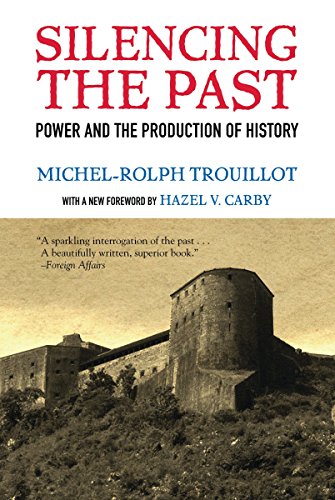
Silencing the Past by Michel-Rolph Trouillot delves into the history of power and the construction of historical narratives. It examines how silences and omissions shape our understanding of the past and challenges our notions of truth and objectivity.
Topics
Silencing the Past
Summary of key ideas
The Unmasking of Historical Power Dynamics
In Silencing the Past, Michel-Rolph Trouillot explores how power dynamics influence the production of historical narratives. He makes the case that history is not simply a collection of facts, but rather a narrative constructed by those with power to shape the collective memory of societies. To illustrate his argument, Trouillot presents various case studies, including the Haitian Revolution and the discovery of the Americas.
The Haitian Revolution, according to Trouillot, is an example of an event that has been silenced in historical record due to the uncomfortable truths it might reveal about power, race, and colonial exploitation. The revolution, led by a successful slave uprising, challenged the predominant racial norms of the time and was therefore downplayed in historical narratives. Similarly, the discovery of the Americas story, as it is commonly told, often omits the perspective of the indigenous people, further demonstrating the influence of power in shaping history.
Creation and Silencing of Historical Facts
Trouillot introduces the concept of 'historical facts,' pointing out the dichotomy between what happens, and what is recorded to have happened. He argues that historical facts are not simply found, but are instead created through a complex process involving multiple stages of validation and interpretation. Understanding this process, Trouillot argues, is crucial to discerning the silences in historical narratives and unraveling the true breadth of human experiences.
However, not all stories make it into the dominant narrative, which Trouillot dubs the 'silencing of the past.' Silencing, he explains, can occur at various stages of historical production, from the point of an event’s occurrence, to its recording, and finally in its retrieval and interpretation for contemporary audiences. These processes are fraught with power dynamics that often silence marginal voices.
Eternal Contest of Power and History
As Trouillot elucidates the power dynamics intrinsic to the production of history, Silencing the Past presents historiography as a contest of power, continuously grappling with the present. With the marked absence of subaltern perspectives, such as those of the slaves in the Haitian Revolution and the indigenous people during the discovery of the Americas, Trouillot underscores the imperialistic domination permeating historical narratives.
He asserts that silences are never accidental but are ideological choices reflecting the power structures of the time. Therefore, a challenge for historians is to uncover these hidden narratives and bring forth a more equitable and representative historical account.
The Power to Make History
In conclusion, Silencing the Past serves as a potent critique of the traditional ways history is recorded and narrated, uncovering the process' endemic power imbalances. Trouillot argues that the power to make history goes far beyond simply recording events as they unfold. It is instead a continuous, evolving process that shapes and is shaped by the societies it represents.
His work challenges us to reconsider our understanding of history, urging us to delve into the silences and uncover the stories overlooked due to systemic biases. Trouillot’s exploration of the power dynamics in historical narration offers a profound understanding of the complex interplay between power, history, and society.
More knowledge in less time

Read or listen
Get the key ideas from nonfiction bestsellers in minutes, not hours.

Find your next read
Get book lists curated by experts and personalized recommendations.

Shortcasts
We've teamed up with podcast creators to bring you key insights from podcasts.
What is Silencing the Past about?
This book explores the ways in which history is constructed and how certain voices and narratives are silenced or marginalized. Trouillot examines the power dynamics at play in the writing and teaching of history, and argues that understanding these dynamics is crucial for a more accurate and inclusive portrayal of the past. Drawing on examples from colonialism, slavery, and other historical events, the book challenges readers to critically examine the stories we are told about the past.
Silencing the Past Review
Silencing the Past (1995) by Michel-Rolph Trouillot is an eye-opening exploration of how historical narratives are constructed and the political agendas behind them. Here's why this book is worth reading:
- It reveals the hidden stories of marginalized groups and events that have been intentionally silenced, challenging traditional historical narratives.
- By analyzing different methodologies and examining the silences in historical records, it raises crucial questions about whose stories are told and whose are omitted.
- Through its critical examination of historical memory, the book provides readers with a deeper understanding of the complexities of power and knowledge in history.
Who should read Silencing the Past?
- Curious individuals interested in exploring the complexities of historical narratives
- Students and scholars of history, anthropology, and sociology
- Readers who enjoy thought-provoking and critically engaging non-fiction
Categories with Silencing the Past
Book summaries like Silencing the Past
 Where Good Ideas Come FromSteven JohnsonThe Natural History of Innovation4.1
 God is not greatChristopher HitchensHow Religion Poisons Everything3.9
 A Brief History of Time Stephen HawkingFrom the Big Bang to Black Holes4.4
 The Selfish GeneRichard DawkinsA landmark work in the field of biology and evolution4.4
 AntifragileNassim Nicholas TalebThings That Gain from Disorder4.5
 Physics of the futureMichio KakuHow Science Will Shape Human Destiny and Our Daily Lives by the Year 21004.1
 MusicophiliaOliver SacksTales of Music and the Brain, Revised and Expanded Edition4.3
 How Music Works David ByrneHow circumstance and creativity collide in tune4.4
 The Sports GeneDavid EpsteinInside the Science of Extraordinary Athletic Performance4.3
 On intelligence Jeff Hawkins, Sandra BlakesleeHow a New Understanding of the Brain Will Lead to the Creation of Truly Intelligent Machines3.9
 Nutrition and Physical DegenerationWeston Andrew PriceA Comparison of Primitive and Modern Diets and their Effects4.2
 GutGiulia EndersThe Inside Story of Our Body’s Most Underrated Organ4.3
 Bad ScienceBen GoldacreA behind-the-scenes look at the bogus science used to mislead us every day.4.4
 Moonwalking with EinsteinJoshua FoerThe Art and Science of Remembering Everything4.2
 Do No Harm Henry MarshStories of Life, Death, and Brain Surgery4.2
 Fluent ForeverGabriel WynerHow to Learn Any Language Fast and Never Forget It4.3
 Life at the Speed of Light J. Craig VenterFrom the Double Helix to the Dawn of Digital Life4.3
 The Language InstinctSteven PinkerHow the Mind Creates Language4.0
 A mind for numbersBarbara OakleyHow to Excel at Math and Science (Even If You Flunked Algebra)4.3
 The Structure of Scientific RevolutionsThomas S. KuhnA groundbreaking study in how science progresses4.3
 SmarterDan HurleyThe New Science of Building Brain Power3.6
 An Astronaut’s Guide to Life on EarthChris HadfieldWhat Going to Space Taught Me About Ingenuity, Determination, and Being Prepared for Anything3.9
 The Demon-Haunted WorldCarl SaganScience as a Candle in the Dark4.3
 Moore’s LawArnold Thackray, David Brock and Rachel JonesThe Life of Gordon Moore, Silicon Valley’s Quiet Revolutionary4.3
 Grain BrainDavid PerlmutterThe Surprising Truth about Wheat, Carbs, and Sugar4.3
 What If?Randall MunroeSerious Scientific Answers to Absurd Hypothetical Questions3.4
 On ImmunityEula BissAn Inoculation3.3
 Sonic BoomJoel Beckerman (Autor), Tyler GrayHow Sound Transforms the Way We Think, Feel, and Buy3.4
 Consider the ForkBee WilsonHow Technology Transforms the Way We Cook and Eat3.8
 Driven Paul Lawrence & Nitin NohriaHow Human Nature Shapes our Choices3.6
People ❤️ Blinkist
Become a member of our community of 44 million people

96k ratings

177k ratings
Laura H.
When I saw Blinkist had produced an infographic style Blink for the Rich Dad, Poor Dad book, it was a good reminder of the concepts I loved.
Jonathan A.
Clearly communicates the value proposition of the most popular book summaries and offers a relatable, tangible template that I can use immediately.
Sven O.
It's highly addictive to get core insights on personally relevant topics without repetition or triviality. Added to that the apps ability to suggest kindred interests opens up a foundation of knowledge.
People also liked these summaries
 I Am MalalaMalala YousafzaiThe Girl Who Stood Up for Education and Was Shot by the Taliban 4.5
 The MonopolistsMary PilonObsession, Fury and the Scandal Behind the World's Favorite Board Game4.0
 SapiensYuval Noah HarariA Brief History of Humankind4.3
 Doubt: A HistoryJennifer Michael HechtThe Great Doubters and Their Legacy of Innovation from Socrates and Jesus to Thomas Jefferson and Emily Dickinson3.6
 The Better Angels of Our Nature Steven PinkerWhy Violence has Declined4.5
 Bourbon EmpireReid MitenbulerThe Past and Future of America's Whiskey4.4
 The Story of SushiTrevor CorsonAn Unlikely Saga of Raw Fish and Rice4.0
 Genghis Khan and the Making of the Modern WorldJack WeatherfordThe fascinating story behind the Mongol Empire4.3
 Black FlagsJoby WarrickThe Rise of ISIS4.2
 Ta-Ra-Ra-Boom-De-AySimon Napier-BellThe (Dodgy) Business of Popular Music4.0
 How To Be Like WaltPat WilliamsCapturing the Disney Magic Every Day of Your Life4.1
 The Geography of BlissEric WeinerOne Grump’s Search for the Happiest Places in the World4.2
 A People’s History of the United StatesHoward ZinnA brilliant and moving history of the American people3.9
 CannibalismBill SchuttA Perfectly Natural History 3.8
 Women and PowerMary BeardA Manifesto4.1
 21 Lessons for the 21st CenturyYuval Noah HarariTeaser: Future proof yourself against the 21st Century4.4
 A History of GodKaren ArmstrongThe 4,000-Year Quest of Judaism, Christianity and Islam4.2
 CivilizationsMary BeardHow Do We Look / The Eye of Faith4.1
 The Spy and the TraitorBen MacintyreThe Greatest Espionage Story of the Cold War4.6
 The Origins of TotalitarianismHannah ArendtHannah Arendt's landmark work about Europe's anti-Semitic and imperialist roots4.6
 DreamlandSam QuinonesThe True Tale of America’s Opiate Epidemic4.5
 The Happiness FantasyCarl CederströmTeaser: A history of happiness3.8
 Why The West Rules – For NowIan MorrisThe Patterns of History, and What They Reveal About the Future4.3
 The New Silk RoadsPeter FrankopanThe Present and Future of the World3.9
 The Golden ThreadKassia St ClairHow Fabric Changed History4.1
 The Square and the TowerNiall FergusonNetworks and Power, from the Freemasons to Facebook4.4
 IslamKaren ArmstrongA Short History4.2
 Revolutionary IranMichael AxworthyA History of the Islamic Republic4.0
 China in Ten WordsYu HuaTeaser: The ten key concePDs underlying China’s transformation4.1
 The Congo from Leopold to KabilaGeorges Nzongola-NtalajaA People's History4.3
Trusted by the world's leading brands

Powerful ideas from top nonfiction
Try Blinkist to get the key ideas from 7,500+ bestselling nonfiction titles and podcasts. Listen or read in just 15 minutes.
Get started
Blink 3 of 8 - The 5 AM Club
by Robin Sharma
Silencing the Past FAQs
What is the main message of Silencing the Past?
Understanding how power shapes the recording and interpretation of history.
How long does it take to read Silencing the Past?
Reading time for Silencing the Past varies, but the Blinkist summary can be read in just 15 minutes.
Is Silencing the Past a good book? Is it worth reading?
Silencing the Past is worth reading for its insightful exploration of the politics of history.
Who is the author of Silencing the Past?
Michel-Rolph Trouillot is the author of Silencing the Past.
How many chapters are in Silencing the Past?
Silencing the Past has 12 chapters.
- Introduction
- The Unthinkable
- The Making of the Unthinkable
- The Four Moments of the Haitian Revolution
- Structure of a Chronicle of the Haitian Revolution
- An Anthropologist as Historian
- Global Politics of Scale
- Historical Anthropology in a Comparative Perspective
- Writing Against Culture
- The Challenges of a Counterhegemonic History
- Can the Subaltern Vote?
- The Rituals of Silencing
How many pages are in Silencing the Past?
Silencing the Past contains 216 pages.
When was Silencing the Past published?
Silencing the Past was published in 1995.