Better than a summary
Maus I: A Survivor's Tale summary
No credit card required · Cancel anytime
Maus I: A Survivor's Tale by Art Spiegelman is a powerful graphic novel that depicts the author's father's experiences as a Polish Jew and Holocaust survivor. It skillfully conveys the horrors of the Holocaust and the enduring impact it had on survivors.
Topics
Table of Contents
Maus I: A Survivor's Tale
Summary of key ideas
Maus I: A Survivor's Tale
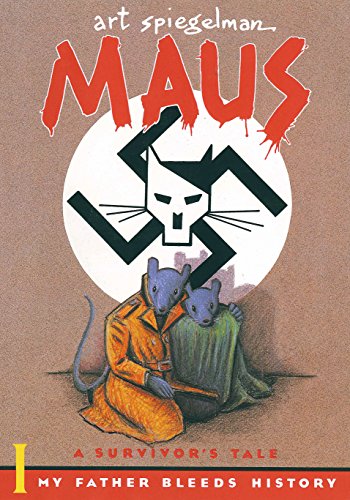
In Maus I: A Survivor's Tale by Art Spiegelman, the author tells the story of his father, Vladek, a Polish Jew and Holocaust survivor. The narrative unfolds in a series of interviews between Art and his father, where Vladek recounts his experiences during World War II. The unique aspect of this graphic novel is that it portrays Jews as mice and Nazis as cats, a metaphor that effectively captures the horror and helplessness of the Holocaust.
Vladek's story begins with the German invasion of Poland. He describes the gradual implementation of anti-Semitic laws and the confinement of Jews to ghettos. Vladek's resourcefulness and luck help him survive the harsh conditions of the ghetto, but he is eventually captured and sent to Auschwitz, the notorious concentration camp. The horrors of Auschwitz are depicted in stark, unflinching detail, highlighting the dehumanizing treatment of the prisoners.
Despite the unimaginable suffering, Vladek's intelligence and skills enable him to survive. He becomes a prisoner of war and is eventually liberated by the advancing Soviet army. The novel ends with Vladek's return to Poland, where he learns of the tragic fate of his first wife and their two children, who perished in the Holocaust. The emotional toll of these revelations is evident, and the novel concludes with Vladek's marriage to Art's mother and their immigration to the United States.
Survival and Guilt
Throughout Maus I, the theme of survival is central. Vladek's resourcefulness, adaptability, and a fair amount of luck enable him to endure the unimaginable horrors of the Holocaust. However, his survival comes at a great cost. The guilt of outliving his family, the trauma of his experiences, and the loss of his pre-war life weigh heavily on him, shaping his personality and behavior in the post-war years.
Art, on the other hand, grapples with his own form of survivor's guilt. Born in the United States after the war, he feels disconnected from his father's experiences and struggles to understand the magnitude of the Holocaust. Their strained relationship forms a significant part of the narrative, with Art often feeling frustrated by his father's idiosyncrasies and Vladek's inability to express his emotions.
Artistic and Emotional Depth
Spiegelman's decision to depict the characters as animals adds an extra layer of complexity to the narrative. The use of animals to represent different ethnic groups not only provides a degree of emotional distance from the horrific events but also allows for a more nuanced exploration of the power dynamics at play during the Holocaust.
Furthermore, the graphic novel format of Maus I allows Spiegelman to convey the emotional intensity of the Holocaust in a unique way. The stark black-and-white illustrations, combined with the use of speech bubbles and panel layouts, create a powerful visual narrative that complements Vladek's harrowing story.
In conclusion, Maus I: A Survivor's Tale is a poignant and powerful exploration of the Holocaust's impact on survivors and their families. Through Vladek's story, Spiegelman provides a deeply personal account of one man's struggle for survival amidst unimaginable horror. The graphic novel format, combined with the animal metaphor, adds an extra layer of complexity and emotional depth to this already compelling narrative.
More knowledge in less time

Read or listen
Get the key ideas from nonfiction bestsellers in minutes, not hours.

Find your next read
Get book lists curated by experts and personalized recommendations.

Shortcasts
We've teamed up with podcast creators to bring you key insights from podcasts.
What is Maus I: A Survivor's Tale about?
Maus I: A Survivor's Tale by Art Spiegelman is a powerful graphic novel that tells the story of the Holocaust through the eyes of the author’s father. Using the metaphor of Jews as mice and Nazis as cats, this deeply moving book delves into the horrors of the past while also exploring the complex relationship between the author and his father.
Maus I: A Survivor's Tale Review
Maus I: A Survivor's Tale (1986) is a graphic novel that chronicles the author's father's experience as a Jewish survivor of the Holocaust. Here's why this book is worth reading:
- Illustrated as anthropomorphic characters, the graphic novel offers a unique and powerful perspective on the Holocaust.
- By incorporating interviews with his father, Spiegelman adds a personal and authentic touch to the narrative, making it emotionally impactful.
- The book explores complex themes of survival, guilt, and prejudice, sparking thought-provoking discussions on human resilience and the consequences of hatred.
Who should read Maus I: A Survivor's Tale?
- Readers who are interested in World War II history and the Holocaust
- Those who enjoy thought-provoking and emotionally impactful graphic novels
- Individuals who appreciate unique storytelling methods, such as using anthropomorphic animals to depict real-life events
Categories with Maus I: A Survivor's Tale
Book summaries like Maus I: A Survivor's Tale
 I Am MalalaMalala YousafzaiThe Girl Who Stood Up for Education and Was Shot by the Taliban 4.5
 The MonopolistsMary PilonObsession, Fury and the Scandal Behind the World's Favorite Board Game4.0
 SapiensYuval Noah HarariA Brief History of Humankind4.3
 Doubt: A HistoryJennifer Michael HechtThe Great Doubters and Their Legacy of Innovation from Socrates and Jesus to Thomas Jefferson and Emily Dickinson3.6
 The Better Angels of Our Nature Steven PinkerWhy Violence has Declined4.5
 Bourbon EmpireReid MitenbulerThe Past and Future of America's Whiskey4.4
 The Story of SushiTrevor CorsonAn Unlikely Saga of Raw Fish and Rice4.0
 Genghis Khan and the Making of the Modern WorldJack WeatherfordThe fascinating story behind the Mongol Empire4.3
 Black FlagsJoby WarrickThe Rise of ISIS4.2
 Ta-Ra-Ra-Boom-De-AySimon Napier-BellThe (Dodgy) Business of Popular Music4.0
 How To Be Like WaltPat WilliamsCapturing the Disney Magic Every Day of Your Life4.1
 The Geography of BlissEric WeinerOne Grump’s Search for the Happiest Places in the World4.2
 A People’s History of the United StatesHoward ZinnA brilliant and moving history of the American people3.9
 CannibalismBill SchuttA Perfectly Natural History 3.8
 Women and PowerMary BeardA Manifesto4.1
 21 Lessons for the 21st CenturyYuval Noah HarariTeaser: Future proof yourself against the 21st Century4.4
 A History of GodKaren ArmstrongThe 4,000-Year Quest of Judaism, Christianity and Islam4.2
 CivilizationsMary BeardHow Do We Look / The Eye of Faith4.1
 The Spy and the TraitorBen MacintyreThe Greatest Espionage Story of the Cold War4.6
 The Origins of TotalitarianismHannah ArendtHannah Arendt's landmark work about Europe's anti-Semitic and imperialist roots4.6
 DreamlandSam QuinonesThe True Tale of America’s Opiate Epidemic4.5
 The Happiness FantasyCarl CederströmTeaser: A history of happiness3.8
 Why The West Rules – For NowIan MorrisThe Patterns of History, and What They Reveal About the Future4.3
 The New Silk RoadsPeter FrankopanThe Present and Future of the World3.9
 The Golden ThreadKassia St ClairHow Fabric Changed History4.1
 The Square and the TowerNiall FergusonNetworks and Power, from the Freemasons to Facebook4.4
 IslamKaren ArmstrongA Short History4.2
 Revolutionary IranMichael AxworthyA History of the Islamic Republic4.0
 China in Ten WordsYu HuaTeaser: The ten key concePDs underlying China’s transformation4.1
 The Congo from Leopold to KabilaGeorges Nzongola-NtalajaA People's History4.3
People ❤️ Blinkist
Become a member of our community of 44 million people

96k ratings

73k ratings
Sven O.
It's highly addictive to get core insights on personally relevant topics without repetition or triviality. Added to that the apps ability to suggest kindred interests opens up a foundation of knowledge.
Laura H.
When I saw Blinkist had produced an infographic style Blink for the Rich Dad, Poor Dad book, it was a good reminder of the concepts I loved.
Renee D.
I'm absolutely thrilled that Blinkist now offers infographics! I can't get enough of them—they're such a fun and effective way to grasp and remember key points.
People also liked these summaries
 The Devil in the White CityErik LarsonMurder, Magic and Madness at the Fair that Changed America3.8
 Man’s Search for MeaningViktor FranklThe harrowing experiences of the author in a concentration camp4.3
 Losing My VirginityRichard BransonHow I Survived, Had Fun, and Made a Fortune Doing Business My Way4.4
 The Immortal Life of Henrietta Lacks Rebecca SklootHow one woman's cells changed scientific thinking forever.4.3
 Gang Leader For A DaySudhir VenkateshA Rogue Sociologist Crosses The Line3.8
 Do No Harm Henry MarshStories of Life, Death, and Brain Surgery4.2
 The Man Without A FaceMasha GessenThe Unlikely Rise of Vladimir Putin4.2
 Long Walk to FreedomNelson MandelaThe Autobiography of Nelson Mandela4.5
 Moore’s LawArnold Thackray, David Brock and Rachel JonesThe Life of Gordon Moore, Silicon Valley’s Quiet Revolutionary4.3
 Elon MuskAshlee VanceTesla, SpaceX, and the Quest for a Fantastic Future4.3
 The Art of AskingAmanda PalmerHow I Learned to Stop Worrying and Let People Help3.3
 Guantánamo DiaryMohamedou Ould Slahi, edited by Larry SiemsGuantanamo from the Inside4.6
 One Of UsAsne Seierstad, Sarah DeathThe Story of Anders Breivik and the Massacre in Norway 4.5
 The Intel TrinityMichael S. MaloneHow Robert Noyce, Gordon Moore and Andy Grove Built the World’s Most Important Company4.2
 A Life DecodedJ. Craig VenterMy Genome: My Life4.1
 Nothing to Envy Barbara DemickOrdinary Lives in North Korea4.3
 Between the World and MeTa-Nehisi CoatesThe 2015 National Book Award Winner is a deep look at being black in America today4.3
 Strength in What RemainsTracy KidderA Journey of Remembrance and Forgiveness4.0
 The Invention of NatureAndrea WulfAlexander von Humboldt's New World4.6
 And the Good News Is …Dana PerinoLessons and Advice from the Bright Side4.0
 On the Move Oliver SacksA Life4.5
 A Long Way GoneIshmael BeahMemoirs of a Boy Soldier4.4
 Charlie MungerTren GriffinThe Complete Investor4.2
 The House of RothschildNiall FergusonMoney’s Prophets 1798–18484.2
 Sam Walton: Made in AmericaSam Walton with John HueyMy Story4.4
 Lawrence in ArabiaScott AndersonWar, Deceit, Imperial Folly and the Making of the Modern Middle East4.7
 The Run of His LifeJeffrey ToobinThe People v. O.J. Simpson4.5
 DogfightFred VogelsteinHow Apple and Google Went to War and Started a Revolution4.4
 Hatching TwitterNick BiltonA True Story of Money, Power, Friendship, and Betrayal4.5
Trusted by the world's leading brands

Powerful ideas from top nonfiction
Try Blinkist to get the key ideas from 7,500+ bestselling nonfiction titles and podcasts. Listen or read in just 15 minutes.
Get started
Blink 3 of 8 - The 5 AM Club
by Robin Sharma
Maus I: A Survivor's Tale FAQs
What is the main message of Maus I: A Survivor's Tale?
The main message of Maus I: A Survivor's Tale is the portrayal of the Holocaust through the eyes of the author's father and the impact it had on their relationship.
How long does it take to read Maus I: A Survivor's Tale?
The reading time for Maus I: A Survivor's Tale varies, but it typically takes several hours. The Blinkist summary can be read in just 15 minutes.
Is Maus I: A Survivor's Tale a good book? Is it worth reading?
Maus I: A Survivor's Tale is worth reading for its unique storytelling approach, powerful themes, and thought-provoking narrative. Highly recommended.
Who is the author of Maus I: A Survivor's Tale?
The author of Maus I: A Survivor's Tale is Art Spiegelman.