Better than a summary
Global Inequality summary
No credit card required · Cancel anytime
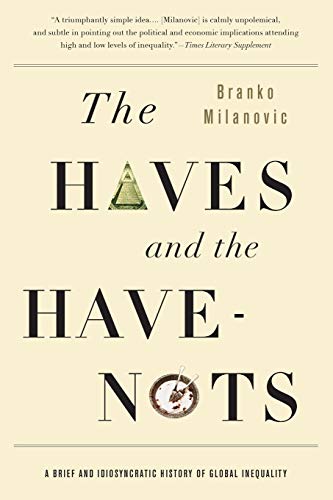
Global Inequality by Branko Milanovic provides a comprehensive analysis of income and wealth distribution on a global scale. It delves into the factors driving inequality and offers insightful solutions for a more equitable world.
Topics
Global Inequality
Summary of key ideas
Understanding Global Inequality
In Global Inequality, Branko Milanovic, a leading economist, takes us on a journey to understand the complex dynamics of global inequality. He begins by introducing the concept of global inequality, which is the inequality between individuals in the world, regardless of their nationality. Milanovic argues that this form of inequality is more significant than national inequality, as it reflects the disparities in living standards and opportunities across the entire human population.
He then delves into the historical evolution of global inequality, tracing it back to the pre-industrial era when inequality was primarily driven by differences in income and wealth within countries. The Industrial Revolution, however, marked a turning point, as it led to a significant reduction in inequality within countries, while simultaneously increasing inequality between them. This trend continued into the 20th century, with the rise of globalization further exacerbating global inequality.
The Great Convergence and the Middle Class Squeeze
Milanovic introduces the concept of the 'Great Convergence', a period from the 1980s to the early 21st century, during which global inequality decreased due to rapid economic growth in developing countries, particularly China and India. This growth lifted millions out of poverty and created a burgeoning global middle class. However, within developed countries, the middle class experienced a 'squeeze' as their incomes stagnated while the top earners continued to amass wealth.
He attributes this phenomenon to technological advancements and globalization, which led to the decline of manufacturing jobs in developed countries and the rise of a global labor market. As a result, the middle class in developed countries faced increased competition from lower-wage workers in emerging economies, leading to stagnant wages and job insecurity.
The Rise of Global Plutocracy
Milanovic then discusses the rise of global plutocracy, a term he uses to describe the increasing concentration of wealth at the top of the global income distribution. He argues that the top 1% of global earners, who are predominantly from developed countries, have seen their incomes soar, while the middle class in these countries has struggled to maintain its standard of living.
He attributes this trend to the unequal distribution of capital income, particularly in the form of financial assets and property, which has allowed the global elite to accumulate wealth at a much faster rate than the rest of the population. Milanovic warns that if left unchecked, this trend could lead to increased social and political instability, as well as a further entrenchment of global inequality.
Policy Implications and the Future of Global Inequality
In the final part of Global Inequality, Milanovic explores potential policy responses to address global inequality. He emphasizes the importance of both domestic and international policies, such as progressive taxation, social safety nets, and global labor standards, to mitigate the adverse effects of inequality.
He also discusses the potential impact of future technological advancements, such as automation and artificial intelligence, on global inequality. While acknowledging the potential for further job displacement and increased inequality, Milanovic also highlights the possibility of these technologies leading to a more equitable distribution of wealth and resources.
In conclusion, Global Inequality provides a comprehensive analysis of the complex forces driving global inequality and its potential implications for the future. Milanovic's work serves as a call to action, urging policymakers and global citizens to address this pressing issue and work towards a more equitable and sustainable global economy.
More knowledge in less time

Read or listen
Get the key ideas from nonfiction bestsellers in minutes, not hours.

Find your next read
Get book lists curated by experts and personalized recommendations.

Shortcasts
We've teamed up with podcast creators to bring you key insights from podcasts.
What is Global Inequality about?
Global Inequality by Branko Milanovic offers a comprehensive analysis of income and wealth disparities around the world. Through extensive research and compelling data, Milanovic explores the root causes of global inequality and its far-reaching implications. This thought-provoking book challenges our understanding of economic development and offers insights into potential solutions for a more equitable future.
Global Inequality Review
Global Inequality (2016) by Branko Milanovic is a thought-provoking book that explores the complex issue of wealth disparity across the world. Here's why this book is worth reading:
- Packed with data-driven insights and analysis, it presents a comprehensive understanding of global income inequality and its consequences.
- Using clear language and relatable examples, the book breaks down complex economic concepts and makes them accessible to readers from all backgrounds.
- By shedding light on the causes and potential solutions to global inequality, the book inspires readers to consider the impact of their actions and advocate for change.
Who should read Global Inequality?
- Readers interested in understanding the root causes of global inequality
- Policy makers and economists seeking insights into addressing income disparities
- Individuals who want to expand their knowledge of social and economic issues
Categories with Global Inequality
Book summaries like Global Inequality
 Basic EconomicsThomas SowellA Common Sense Guide to the Economy4.4
 Think and Grow RichNapoleon HillThe secrets of 40 millionaires' wealth, revealed4.4
 Rich Dad, Poor DadRobert T. KiyosakiWhat the Rich Teach Their Kids about Money – That the Poor and the Middle Class Do Not!4.5
 Secrets of the Millionaire MindT. Harv EkerMastering the Inner Game of Wealth4.1
 Business AdventuresJohn BrooksTwelve Classic Tales from the World of Wall Street4.3
 The Most Important ThingHoward MarksUncommon Sense for the Thoughtful Investor4.1
 More Money Than GodSebastian MallabyHedge Funds and the Making of a New Elite4.2
 The Misbehavior of MarketsBenoit Mandelbrot and Richard L. HudsonA Fractal View of Risk, Ruin and Reward4.3
 Zillow TalkSpencer Rascoff and Stan HumphriesThe New Rules of Real Estate3.6
 I Will Teach You To Be RichRamit SethiThe easy approach to smart banking, saving, spending and investing3.9
 The Intelligent InvestorBenjamin Graham and comments by Jason ZweigThe Definitive Book on Value Investing4.4
 The Dao of CapitalMark SpitznagelAustrian Investing in a Distorted World4.3
 The Education of a Value InvestorGuy SpierMy Transformative Quest for Wealth, Wisdom and Enlightenment4.3
 Common Stocks and Uncommon Profits and Other WritingsPhilip A. FischerImprove your investment strategy4.2
 Rule #1Phil TownThe Simple Strategy For Successful Investing In Only 15 Minutes Every Week4.2
People ❤️ Blinkist
Become a member of our community of 44 million people

96k ratings

73k ratings
Thi Viet Quynh N.
Great app. Good selection of book summaries you can read or listen to while commuting. Instead of scrolling through your social media news feed, this is a much better way to spend your spare time in my opinion.
Guillem B.
Life changing. The concept of being able to grasp a book's main point in such a short time truly opens multiple opportunities to grow every area of your life at a faster rate.
Renee D.
I'm absolutely thrilled that Blinkist now offers infographics! I can't get enough of them—they're such a fun and effective way to grasp and remember key points.
People also liked these summaries
 When Genius FailedRoger LowensteinThe Rise and Fall of Long-Term Capital Management4.1
 Millennial MoneyPatrick O’ShaughnessyHow Young Investors Can Build a Fortune3.9
 The Little Book of Common Sense InvestingJohn C. BogleThe Only Way to Guarantee Your Fair Share of Stock Market Returns 4.3
 The Total Money MakeoverDave RamseyA Proven Plan for Finance Fitness4.2
 The Economist: Numbers GuideRichard Stutely & The EconomistThe Essentials of Business Numeracy4.0
 Second ChanceRobert T. KiyosakiFor Your Money, Your Life and Our World4.3
 The Millionaire Next DoorThomas J. Stanley and William D. DankoThe Surprising Secrets of America’s Wealthy3.9
 Picture Your ProsperityEllen Rogin and Lisa KuengSmart Money Moves to Turn Your Vision into Reality 3.9
 The New Trading for a LivingDr. Alexander ElderPsychology, Discipline, Trading Tools and Systems, Risk Control, Trade Management4.1
 Berkshire Beyond BuffettLawrence A. CunninghamThe Enduring Value of Values4.1
 Cut Costs Not CornersColin BarrowA practical guide to staying competitive and improving profits3.8
 The One-Page Financial PlanCarl RichardsA Simple Way to Be Smart About Your Money4.0
 Outsmarting the CrowdBogumil K. BaranowskiA Value Investor’s Guide to Starting, Building, and Keeping a Family Fortune4.2
 Buying Your First HomeIlona Bray, Alayna Schroeder and Marcia StewartNolo's Essential Guide4.0
 A Wealth of Common SenseBen CarlsonWhy Simplicity Trumps Complexity in Any Investment Plan4.1
Trusted by the world's leading brands

Powerful ideas from top nonfiction
Try Blinkist to get the key ideas from 7,500+ bestselling nonfiction titles and podcasts. Listen or read in just 15 minutes.
Get started
Blink 3 of 8 - The 5 AM Club
by Robin Sharma
Global Inequality FAQs
What is the main message of Global Inequality?
The main message of Global Inequality is that inequality is a complex issue influenced by various factors.
How long does it take to read Global Inequality?
Reading Global Inequality may take a few hours. The Blinkist summary can be read in just a few minutes.
Is Global Inequality a good book? Is it worth reading?
Global Inequality is a thought-provoking read, exposing the complexities of global inequality. Highly recommended.
Who is the author of Global Inequality?
The author of Global Inequality is Branko Milanovic.
Featured Titles
- 1776
- A Practical Guide to Risk Management
- Against the Gods
- AMC Guide to Outdoor Leadership
- An Attempt To Repair America's Broken Credit System
- Bulls, Bears and Other Beasts
- Charting and Technical Analysis
- Come Into My Trading Room
- Corporate Financial Distress, Restructuring, and Bankruptcy
- Enterprise Risk Management