
Better than a summary
Children of Dune summary
No credit card required · Cancel anytime
Children of Dune by Frank Herbert is a captivating science fiction novel that continues the epic saga of the desert planet Dune. Filled with political intrigue, mystical powers, and complex characters, it delves into the consequences of messianic rule and the struggle for power.
Topics
Children of Dune
Summary of key ideas
The Rise of the Twins
In Children of Dune, the third installment of the Dune series by Frank Herbert, we witness the rise of the twins, Leto and Ghanima, the children of Paul Atreides, who is also known as Muad'Dib, the Emperor of the Known Universe. The story begins with the return of the twins and their mother, Chani, to the desert planet of Arrakis, the original home of House Atreides. They return to a universe in turmoil, with the empire under the rule of their aunt, Alia, who is struggling to maintain control.
Alia, who is also the sister of Paul, has been consumed by the memories of her ancestors, a condition known as Abomination. She is a powerful and ruthless ruler, but her grip on power is tenuous, and she is surrounded by enemies, both within and outside the empire. The twins, on the other hand, are young and vulnerable, but they possess the genetic memory of their father and the prescient abilities of their mother, making them formidable in their own right.
The Struggle for Power
As the story progresses, we see the struggle for power intensify. Alia is determined to maintain her hold on the throne, while the twins are caught in the middle, trying to navigate the dangerous political landscape. They are also grappling with their own internal conflicts, as they come to terms with their unique heritage and the burden of their inherited memories.
Meanwhile, the empire is facing external threats, with the return of House Corrino, the former rulers of the universe, who are plotting to reclaim their lost power. The twins, with their unique abilities, become the focal point of these power struggles, and their decisions will have far-reaching consequences for the future of the empire.
The Golden Path
Amidst the chaos and intrigue, Leto and Ghanima are also grappling with their own destinies. They are aware of the dangers posed by their abilities and the potential for their misuse. They are also aware of the prescient vision of their father, which foretells a future of stagnation and destruction for humanity.
In response to this vision, Leto begins to embrace a radical path, known as the Golden Path, which he believes is the only way to ensure the survival and evolution of humanity. This path involves a radical transformation, both physical and mental, for Leto, as he seeks to become something more than human, in order to guide humanity towards a better future.
The Transformation of Leto
As the story reaches its climax, Leto undergoes a dramatic transformation, both physically and mentally. He merges with the sandworms of Arrakis, becoming a hybrid creature known as a sandtrout. This transformation grants him immense power and longevity, but at a great cost. He sacrifices his humanity, becoming a being of immense power, but also of great loneliness and isolation.
Meanwhile, Ghanima, who remains human, continues to navigate the treacherous political landscape, using her intelligence and cunning to protect her brother's legacy and ensure the survival of their house. The story ends with Leto, now known as the God Emperor, assuming his role as the ruler of the universe, setting the stage for the next phase of his grand plan.
In Conclusion
In Children of Dune, Frank Herbert weaves a complex and thought-provoking narrative, exploring themes of power, destiny, and the nature of humanity. The story is filled with political intrigue, philosophical musings, and epic world-building, creating a rich and immersive universe that continues to captivate readers. The transformation of Leto, in particular, stands out as a powerful and tragic exploration of the costs of power and the sacrifices required for the greater good.
More knowledge in less time

Read or listen
Get the key ideas from nonfiction bestsellers in minutes, not hours.

Find your next read
Get book lists curated by experts and personalized recommendations.

Shortcasts
We've teamed up with podcast creators to bring you key insights from podcasts.
What is Children of Dune about?
Children of Dune is a science fiction novel by Frank Herbert that continues the epic story of the desert planet Arrakis and its people. Set thousands of years in the future, the book explores themes of politics, religion, and the consequences of power. It follows the journey of Paul Atreides’ children as they navigate the complex world their father left behind.
Children of Dune Review
Children of Dune (1976) is a thought-provoking science fiction novel that is definitely worth reading. Here's why this book is a must-read:
- With its complex characters, intricate political intrigue, and philosophical discussions, it offers a rich and immersive reading experience.
- The exploration of moral and ethical dilemmas adds depth to the story and prompts readers to reflect on larger societal issues.
- As the third book in the Dune series, it continues to expand upon the fascinating world and mythology introduced in the previous installments.
Who should read Children of Dune?
- Science fiction enthusiasts looking for a complex and thought-provoking read
- Fans of the Dune series who want to continue following the epic story
- Readers interested in exploring themes of power, religion, and humanity
Categories with Children of Dune
Book summaries like Children of Dune
 Big DataMayer-Schonberger, CukierA Revolution That Will Transform How We Live, Work and Think4.3
 On intelligence Jeff Hawkins, Sandra BlakesleeHow a New Understanding of the Brain Will Lead to the Creation of Truly Intelligent Machines3.9
 The Signal and the NoiseNate SilverWhy So Many Predictions Fail — but Some Don't4.2
 You Are Not a GadgetJaron LanierA Manifesto3.9
 The Future of the MindMichio KakuThe Scientific Quest to Understand, Enhance, and Empower the Mind4.4
 Too Big to IgnorePhil SimonThe Business Case for Big Data4.1
 The Intel TrinityMichael S. MaloneHow Robert Noyce, Gordon Moore and Andy Grove Built the World’s Most Important Company4.2
 BreakpointJeff StibelWhy the Web will Implode, Search will be Obsolete, and Everything Else you Need to Know about Technology is in Your Brain4.0
 Information Doesn’t Want to Be FreeCory DoctorowLaws for the Internet Age3.6
 The Master AlgorithmPedro DomingosHow The Quest For The Ultimate Learning Machine Will Remake Our World4.4
 The InevitableKevin KellyUnderstanding the 12 Technological Forces That Will Shape Our Future4.2
 StretchKarie Willyerd and Barbara MistickHow to Future-Proof Yourself for Tomorrow’s Workplace3.8
 The Filter BubbleEli PariserWhat the Internet is Hiding From You4.0
 IrresistibleAdam AlterThe Rise of Addictive Technology and the Business of Keeping Us Hooked4.2
 The Innovator’s HypothesisMichael SchrageHow Cheap Experiments Are Worth More than Good Ideas3.8
 Age of DiscoveryIan Goldin (Author), Chris KutarnaNavigating the Risks and Rewards of Our New Renaissance 4.3
 Sensemakingby Christian MadsbjergWhat Makes Human Intelligence Essential in the Age of the Algorithm4.0
 UX StrategyJaime LevyHow to Devise Innovative Digital Products That People Want 4.1
 Weapons of Math DestructionCathy O'NeilHow Big Data Increases Inequality and Threatens Democracy4.1
 VaporizedRobert TercekSolid Strategies For Success in a Dematerialized World4.4
 The Dark NetJamie BartlettInside the Digital Underworld3.1
 Changing the SubjectSven BirkertsArt and Attention in the Internet Age4.1
 Streaming, Sharing, StealingMichael D. Smith and Rahul TelangBig Data and the Future of Entertainment3.5
 The Distracted MindAdam Gazzaley, Larry D. RosenAncient Brains in a High-Tech World4.1
 Life 3.0Max TegmarkBeing Human in the Age of Artificial Intelligence 4.3
 The Age of Spiritual MachinesRay KurzweilWhen Computers Exceed Human Intelligence4.3
 Bad BloodJohn CarreyrouSecrets and Lies in a Silicon Valley Startup4.2
 The One DeviceBrian MerchantThe Secret History of the iPhone3.6
 BuiltRoma AgrawalThe Hidden Stories Behind our Structures4.6
 Ghost in the WiresKevin D. Mitnick, William L. Simon, Steve WozniakMy Adventures as the World's Most Wanted Hacker4.5
People ❤️ Blinkist
Become a member of our community of 44 million people

96k ratings

73k ratings
Thi Viet Quynh N.
Great app. Good selection of book summaries you can read or listen to while commuting. Instead of scrolling through your social media news feed, this is a much better way to spend your spare time in my opinion.
Jonathan A.
Clearly communicates the value proposition of the most popular book summaries and offers a relatable, tangible template that I can use immediately.
Renee D.
I'm absolutely thrilled that Blinkist now offers infographics! I can't get enough of them—they're such a fun and effective way to grasp and remember key points.
People also liked these summaries
 A Canticle for LeibowitzWalter M. Miller
 The Boy in the Striped PajamasJohn BoyneTeaser: Heartbreaking Truths Unfold in a Tale of Friendship and Innocence4.9
 Little House in the Big WoodsLaura Ingalls Wilder
 Wide Sargasso SeaJean Rhys, Judith L. Raiskin
 Just After SunsetStephen King
 WhereaboutsJhumpa Lahiri
 Hearts in DarknessLaura Kaye
 Every Heart a DoorwaySeanan McGuire
 The Curious Case of Benjamin ButtonF. Scott Fitzgerald, Nunzio DeFilippis
 Side JobsJim Butcher
 Brokeback MountainAnnie Proulx
 A Single ManChristopher Isherwood
 And Every Morning the Way Home Gets Longer and LongerFredrik Backman, Alice Menzies
 Burning ChromeWilliam Gibson
 Hearts in AtlantisStephen King
 Bonjour TristesseFrancoise Sagan
 Chronicle of a Death ForetoldGabriel García Márquez, Gregory Rabassa
 For Whom the Bell TollsErnest Hemingway
 The Last QuestionIsaac Asimov
 The 5th WaveRick Yancey
 The Killer AngelsMichael Shaara
 The Martian ChroniclesRay Bradbury
 Cloud AtlasDavid Mitchell
 The Forever WarJoe Haldeman
 I, RobotIsaac Asimov
 Kill SwitchPenelope Douglas
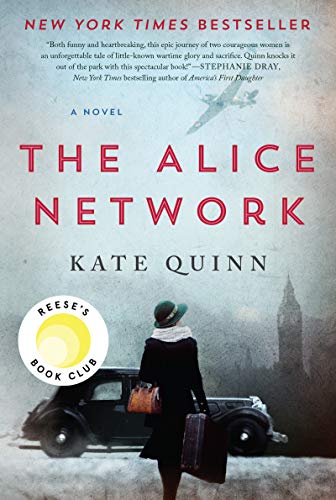 The Alice NetworkKate Quinn
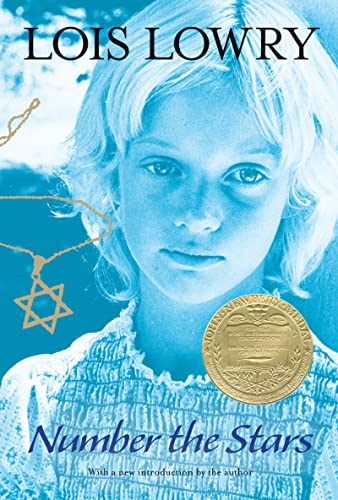 Number the StarsLois Lowry
 The SympathizerViet Thanh Nguyen
 City of ThievesDavid Benioff
Trusted by the world's leading brands

Powerful ideas from top nonfiction
Try Blinkist to get the key ideas from 7,500+ bestselling nonfiction titles and podcasts. Listen or read in just 15 minutes.
Get started
Blink 3 of 8 - The 5 AM Club
by Robin Sharma
Children of Dune FAQs
What is the main message of Children of Dune?
The main message of Children of Dune is the complex nature of power and the importance of embracing change.
How long does it take to read Children of Dune?
The reading time for Children of Dune varies depending on the reader's speed. However, you can read the Blinkist summary in a matter of minutes.
Is Children of Dune a good book? Is it worth reading?
Children of Dune is definitely worth reading. It offers a captivating story with intriguing characters and explores deep philosophical themes.
Who is the author of Children of Dune?
Frank Herbert is the author of Children of Dune.