Better than a summary
Apocalypse Never summary
Michael Shellenberger
No credit card required · Cancel anytime
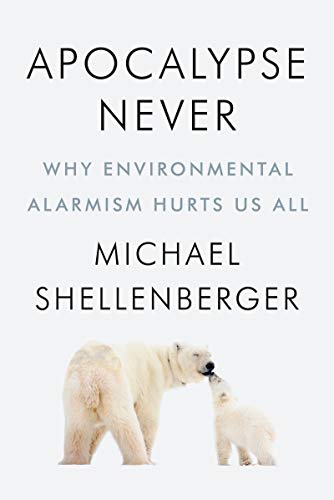
Apocalypse Never by Michael Shellenberger challenges popular environmental alarmism and offers a hopeful and pragmatic approach to solving the world's environmental problems.
Apocalypse Never
Summary of key ideas
Reassessing Environmental Catastrophes
In Apocalypse Never, Michael Shellenberger, a renowned environmental activist, challenges the popular narrative of an impending environmental apocalypse. He begins by recounting his journey as an environmentalist, from his early days as an activist to his realization that the mainstream environmental movement is often based on fear-mongering and misinformation.
Shellenberger argues that the current environmental discourse is dominated by exaggerated claims and doomsday scenarios. He points out that while climate change is a real and pressing issue, the situation is not as dire as it is often portrayed. He presents data to show that the world is making significant progress in reducing carbon emissions and that many environmental indicators, such as air and water quality, are improving.
Revisiting Nuclear Energy
One of the most controversial topics Shellenberger addresses in Apocalypse Never is nuclear energy. He argues that nuclear power is a safe, reliable, and low-carbon energy source that has been unfairly demonized by the environmental movement. Shellenberger presents evidence to counter common misconceptions about nuclear energy, such as its high cost, safety risks, and waste disposal issues.
He also highlights the role of nuclear power in reducing carbon emissions and argues that it should be a key component of any serious climate change mitigation strategy. Shellenberger's advocacy for nuclear energy is based on his belief that it is a pragmatic and effective solution to the climate crisis.
Challenging Renewable Energy Myths
Shellenberger also takes a critical look at renewable energy sources, such as wind and solar power. While acknowledging their potential, he argues that these technologies have significant limitations, including their intermittent nature and high costs. He points out that the transition to 100% renewable energy, as advocated by some environmentalists, is neither feasible nor practical.
Instead, Shellenberger advocates for a balanced energy approach that includes a mix of nuclear, hydroelectric, and renewable energy sources. He believes that this approach can provide reliable and affordable energy while minimizing environmental impacts.
Environmental Justice and Human Well-being
Throughout Apocalypse Never, Shellenberger emphasizes the importance of considering human well-being in environmental decision-making. He argues that many environmental policies, such as bans on DDT and genetically modified organisms (GMOs), have had negative consequences for the world's poorest people.
Shellenberger also criticizes the environmental movement for its focus on wealthy, developed countries, often at the expense of the world's most vulnerable populations. He believes that a more balanced approach to environmentalism, one that considers both human and environmental well-being, is essential for addressing global challenges.
Concluding Thoughts
In conclusion, Apocalypse Never presents a thought-provoking critique of mainstream environmentalism. Shellenberger argues that the current environmental narrative is often based on fear and misinformation, leading to misguided policies and ineffective solutions. He advocates for a more rational, evidence-based approach to environmental issues, one that prioritizes human well-being alongside environmental protection.
More knowledge in less time

Read or listen
Get the key ideas from nonfiction bestsellers in minutes, not hours.

Find your next read
Get book lists curated by experts and personalized recommendations.

Shortcasts
We've teamed up with podcast creators to bring you key insights from podcasts.
What is Apocalypse Never about?
Apocalypse Never challenges the prevailing narrative on climate change and environmental issues. Author Michael Shellenberger argues that many of our fears about the environment are exaggerated and based on misinformation. He presents evidence to show that the world is not on the brink of an environmental apocalypse and offers alternative solutions to address real environmental challenges.
Apocalypse Never Review
Apocalypse Never (2020) delves into environmental concerns and explores why many popular beliefs about climate change are misleading. Here's why this book is worth reading:
- Offers data-driven arguments challenging common narratives, providing a fresh perspective on environmental issues.
- Through in-depth research and compelling examples, it encourages critical thinking and reevaluation of established beliefs.
- Keeps readers engaged with its provocative insights and thought-provoking analysis, ensuring the topic remains anything but dull.
Who should read Apocalypse Never?
- Individuals concerned about the climate crisis and looking for a different perspective
- Readers interested in understanding the complexities of environmental issues
- Those who want to critically evaluate alarmist narratives and explore evidence-based solutions
Categories with Apocalypse Never
Book summaries like Apocalypse Never
 Where Good Ideas Come FromSteven JohnsonThe Natural History of Innovation4.1
 God is not greatChristopher HitchensHow Religion Poisons Everything3.9
 A Brief History of Time Stephen HawkingFrom the Big Bang to Black Holes4.4
 The Selfish GeneRichard DawkinsA landmark work in the field of biology and evolution4.4
 AntifragileNassim Nicholas TalebThings That Gain from Disorder4.5
 Physics of the futureMichio KakuHow Science Will Shape Human Destiny and Our Daily Lives by the Year 21004.1
 MusicophiliaOliver SacksTales of Music and the Brain, Revised and Expanded Edition4.3
 How Music Works David ByrneHow circumstance and creativity collide in tune4.4
 The Sports GeneDavid EpsteinInside the Science of Extraordinary Athletic Performance4.3
 On intelligence Jeff Hawkins, Sandra BlakesleeHow a New Understanding of the Brain Will Lead to the Creation of Truly Intelligent Machines3.9
 Nutrition and Physical DegenerationWeston Andrew PriceA Comparison of Primitive and Modern Diets and their Effects4.2
 GutGiulia EndersThe Inside Story of Our Body’s Most Underrated Organ4.3
 Bad ScienceBen GoldacreA behind-the-scenes look at the bogus science used to mislead us every day.4.4
 Moonwalking with EinsteinJoshua FoerThe Art and Science of Remembering Everything4.2
 Do No Harm Henry MarshStories of Life, Death, and Brain Surgery4.2
People ❤️ Blinkist
Become a member of our community of 44 million people

96k ratings

73k ratings
Laura H.
When I saw Blinkist had produced an infographic style Blink for the Rich Dad, Poor Dad book, it was a good reminder of the concepts I loved.
Sven O.
It's highly addictive to get core insights on personally relevant topics without repetition or triviality. Added to that the apps ability to suggest kindred interests opens up a foundation of knowledge.
Guillem B.
Life changing. The concept of being able to grasp a book's main point in such a short time truly opens multiple opportunities to grow every area of your life at a faster rate.
People also liked these summaries
 Fluent ForeverGabriel WynerHow to Learn Any Language Fast and Never Forget It4.3
 Life at the Speed of Light J. Craig VenterFrom the Double Helix to the Dawn of Digital Life4.3
 The Language InstinctSteven PinkerHow the Mind Creates Language4.0
 A mind for numbersBarbara OakleyHow to Excel at Math and Science (Even If You Flunked Algebra)4.3
 The Structure of Scientific RevolutionsThomas S. KuhnA groundbreaking study in how science progresses4.3
 SmarterDan HurleyThe New Science of Building Brain Power3.6
 An Astronaut’s Guide to Life on EarthChris HadfieldWhat Going to Space Taught Me About Ingenuity, Determination, and Being Prepared for Anything3.9
 The Demon-Haunted WorldCarl SaganScience as a Candle in the Dark4.3
 Moore’s LawArnold Thackray, David Brock and Rachel JonesThe Life of Gordon Moore, Silicon Valley’s Quiet Revolutionary4.3
 Grain BrainDavid PerlmutterThe Surprising Truth about Wheat, Carbs, and Sugar4.3
 What If?Randall MunroeSerious Scientific Answers to Absurd Hypothetical Questions3.4
 On ImmunityEula BissAn Inoculation3.3
 Sonic BoomJoel Beckerman (Autor), Tyler GrayHow Sound Transforms the Way We Think, Feel, and Buy3.4
 Consider the ForkBee WilsonHow Technology Transforms the Way We Cook and Eat3.8
 Driven Paul Lawrence & Nitin NohriaHow Human Nature Shapes our Choices3.6
Trusted by the world's leading brands

Powerful ideas from top nonfiction
Try Blinkist to get the key ideas from 7,500+ bestselling nonfiction titles and podcasts. Listen or read in just 15 minutes.
Get started
Blink 3 of 8 - The 5 AM Club
by Robin Sharma
Apocalypse Never FAQs
What is the main message of Apocalypse Never ?
Acknowledging environmental challenges while advocating for pragmatic solutions and dispelling common myths.
How long does it take to read Apocalypse Never ?
Reading Apocalypse Never takes a few hours, while the Blinkist summary needs only 15 minutes.
Is Apocalypse Never a good book? Is it worth reading?
Apocalypse Never offers a fresh perspective on environmental issues, compelling readers to rethink common narratives in an engaging manner.
Who is the author of Apocalypse Never ?
The author of Apocalypse Never is Michael Shellenberger.