Better than a summary
Three Revolutions summary
Daniel Sperling
No credit card required · Cancel anytime
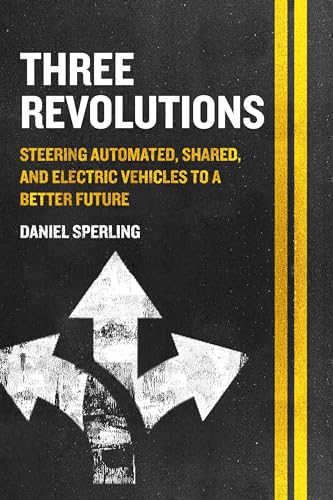
Three Revolutions by Daniel Sperling explores the future of transportation, focusing on the convergence of automated vehicles, electrification, and shared mobility. It offers a vision for a more sustainable and accessible transportation system.
Topics
Three Revolutions
Summary of key ideas
Understanding the Three Transportation Revolutions
In Three Revolutions by Daniel Sperling, we are introduced to three major revolutions that are reshaping the transportation sector. The first revolution is vehicle electrification, the second is shared mobility, and the third is vehicle automation. The author explains that these transformations are interconnected and have the potential to significantly impact the environment, energy consumption, and urban development.
Sperling delves into the first revolution, vehicle electrification, discussing the rapid advancements in electric vehicle (EV) technology and the potential environmental benefits. He also highlights the challenges associated with EV adoption, such as battery costs and charging infrastructure. The author then moves on to the second revolution, shared mobility, discussing the rise of car-sharing services, ride-hailing apps, and the potential of these services to reduce the overall number of vehicles on the road.
Exploring Shared Mobility and Its Impacts
Continuing with the second revolution, Sperling explores the potential benefits and drawbacks of shared mobility. He discusses how shared mobility can lead to reduced congestion, parking demand, and emissions, but also raises concerns about increased vehicle miles traveled and the potential for these services to worsen urban sprawl. The author emphasizes the need for effective policies to maximize the positive impacts of shared mobility while minimizing the negative ones.
Next, Sperling moves on to the third revolution, vehicle automation. He explains the different levels of automation, from advanced driver-assistance systems to fully autonomous vehicles, and the potential impacts on safety, energy consumption, and urban design. The author also discusses the challenges and uncertainties associated with the widespread adoption of autonomous vehicles, including regulatory issues, cybersecurity concerns, and public acceptance.
Considering the Implications and Policy Recommendations
As we progress through Three Revolutions, Sperling emphasizes the importance of considering the implications of these revolutions collectively, rather than in isolation. He argues that the convergence of vehicle electrification, shared mobility, and vehicle automation presents both opportunities and challenges, and that policymakers need to adopt a holistic approach to guide these transformations towards more sustainable, equitable, and efficient transportation systems.
The book concludes with a series of policy recommendations aimed at steering the three revolutions towards positive outcomes. Sperling suggests strategies such as promoting electric and shared mobility, encouraging public transportation, and implementing policies to manage the potential negative impacts of automation. He also emphasizes the need for public engagement and adaptive governance to navigate the uncertainties associated with these rapid transformations.
Final Thoughts on the Future of Transportation
In conclusion, Three Revolutions offers a comprehensive exploration of the interconnected transformations reshaping the transportation sector. Sperling provides a balanced assessment of the potential benefits and challenges associated with vehicle electrification, shared mobility, and vehicle automation, and emphasizes the critical role of policy in shaping their outcomes. The book serves as a call to action for policymakers, industry leaders, and citizens to work together in guiding these revolutions towards a more sustainable and equitable future of transportation.
More knowledge in less time

Read or listen
Get the key ideas from nonfiction bestsellers in minutes, not hours.

Find your next read
Get book lists curated by experts and personalized recommendations.

Shortcasts
We've teamed up with podcast creators to bring you key insights from podcasts.
What is Three Revolutions about?
Three Revolutions by Daniel Sperling explores the future of transportation through three major revolutions: vehicle electrification, shared mobility, and autonomous vehicles. It delves into the potential benefits and challenges of these revolutions and offers insights into how they could reshape our cities and the way we travel. Sperling also discusses the policy changes and societal shifts that will be necessary to navigate these transformative changes.
Three Revolutions Review
- Explores the intersection of technology, policy, and behavior change, offering a comprehensive view of the challenges and opportunities in the transportation sector.
- Provides insights on how autonomous vehicles, electrification, and shared mobility are reshaping the way we move, making it a timely and relevant read.
- The author's engaging storytelling and in-depth analysis make complex concepts accessible and compelling, ensuring that readers stay captivated throughout.
Who should read Three Revolutions?
Individuals interested in the future of transportation and its impact on society
Policy makers and urban planners seeking insights into sustainable and equitable mobility solutions
Professionals in the automotive, technology, and energy industries looking to understand the challenges and opportunities of the transportation revolution
Categories with Three Revolutions
Book summaries like Three Revolutions
 Where Good Ideas Come FromSteven JohnsonThe Natural History of Innovation4.1
 God is not greatChristopher HitchensHow Religion Poisons Everything3.9
 A Brief History of Time Stephen HawkingFrom the Big Bang to Black Holes4.4
 The Selfish GeneRichard DawkinsA landmark work in the field of biology and evolution4.4
 AntifragileNassim Nicholas TalebThings That Gain from Disorder4.5
 Physics of the futureMichio KakuHow Science Will Shape Human Destiny and Our Daily Lives by the Year 21004.1
 MusicophiliaOliver SacksTales of Music and the Brain, Revised and Expanded Edition4.3
 How Music Works David ByrneHow circumstance and creativity collide in tune4.4
 The Sports GeneDavid EpsteinInside the Science of Extraordinary Athletic Performance4.3
 On intelligence Jeff Hawkins, Sandra BlakesleeHow a New Understanding of the Brain Will Lead to the Creation of Truly Intelligent Machines3.9
 Nutrition and Physical DegenerationWeston Andrew PriceA Comparison of Primitive and Modern Diets and their Effects4.2
 GutGiulia EndersThe Inside Story of Our Body’s Most Underrated Organ4.3
 Bad ScienceBen GoldacreA behind-the-scenes look at the bogus science used to mislead us every day.4.4
 Moonwalking with EinsteinJoshua FoerThe Art and Science of Remembering Everything4.2
 Do No Harm Henry MarshStories of Life, Death, and Brain Surgery4.2
People ❤️ Blinkist
Become a member of our community of 44 million people

96k ratings

73k ratings
Jonathan A.
Clearly communicates the value proposition of the most popular book summaries and offers a relatable, tangible template that I can use immediately.
Thi Viet Quynh N.
Great app. Good selection of book summaries you can read or listen to while commuting. Instead of scrolling through your social media news feed, this is a much better way to spend your spare time in my opinion.
Sven O.
It's highly addictive to get core insights on personally relevant topics without repetition or triviality. Added to that the apps ability to suggest kindred interests opens up a foundation of knowledge.
People also liked these summaries
 Fluent ForeverGabriel WynerHow to Learn Any Language Fast and Never Forget It4.3
 Life at the Speed of Light J. Craig VenterFrom the Double Helix to the Dawn of Digital Life4.3
 The Language InstinctSteven PinkerHow the Mind Creates Language4.0
 A mind for numbersBarbara OakleyHow to Excel at Math and Science (Even If You Flunked Algebra)4.3
 The Structure of Scientific RevolutionsThomas S. KuhnA groundbreaking study in how science progresses4.3
 SmarterDan HurleyThe New Science of Building Brain Power3.6
 An Astronaut’s Guide to Life on EarthChris HadfieldWhat Going to Space Taught Me About Ingenuity, Determination, and Being Prepared for Anything3.9
 The Demon-Haunted WorldCarl SaganScience as a Candle in the Dark4.3
 Moore’s LawArnold Thackray, David Brock and Rachel JonesThe Life of Gordon Moore, Silicon Valley’s Quiet Revolutionary4.3
 Grain BrainDavid PerlmutterThe Surprising Truth about Wheat, Carbs, and Sugar4.3
 What If?Randall MunroeSerious Scientific Answers to Absurd Hypothetical Questions3.4
 On ImmunityEula BissAn Inoculation3.3
 Sonic BoomJoel Beckerman (Autor), Tyler GrayHow Sound Transforms the Way We Think, Feel, and Buy3.4
 Consider the ForkBee WilsonHow Technology Transforms the Way We Cook and Eat3.8
 Driven Paul Lawrence & Nitin NohriaHow Human Nature Shapes our Choices3.6
Trusted by the world's leading brands

Powerful ideas from top nonfiction
Try Blinkist to get the key ideas from 7,500+ bestselling nonfiction titles and podcasts. Listen or read in just 15 minutes.
Get started
Blink 3 of 8 - The 5 AM Club
by Robin Sharma