Better than a summary
Three Critiques summary
No credit card required · Cancel anytime
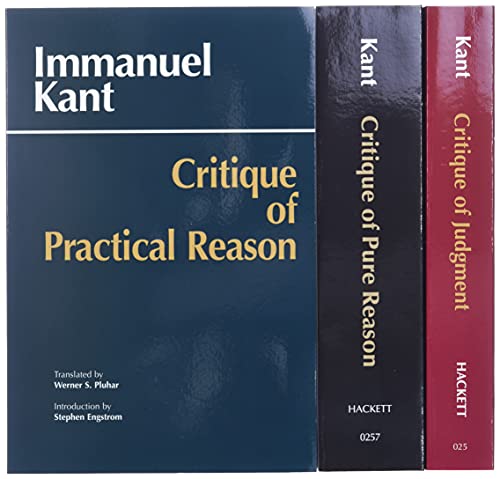
Three Critiques by Immanuel Kant is a philosophical work that includes Critique of Pure Reason , Critique of Practical Reason , and Critique of Judgment . Kant examines the nature of human knowledge, morality, and aesthetic experience.
Topics
Three Critiques
Summary of key ideas
Understanding the Critiques of Pure Reason
In Three Critiques, Immanuel Kant, a German philosopher of the late 18th century, presents his three major works of critical philosophy: The Critique of Pure Reason, The Critique of Practical Reason, and The Critique of Judgment. In The Critique of Pure Reason, Kant explores the nature of human knowledge, arguing that our understanding of the world is shaped by both our sensory experiences and our innate mental structures.
Kant begins by distinguishing between two types of knowledge: a posteriori, which is based on experience, and a priori, which is independent of experience. He contends that while empirical knowledge is derived from sensory data, a priori knowledge is grounded in universal concepts and principles that are inherent to the human mind. Kant calls these innate mental structures 'categories' and argues that they are necessary for organizing and making sense of our sensory experiences.
Understanding the Critiques of Practical Reason
In The Critique of Practical Reason, Kant shifts his focus from the nature of human knowledge to the nature of human action. Here, he explores the concept of morality and the role of reason in guiding our ethical decisions. Kant argues that the moral law, which he calls the 'categorical imperative', is a universal principle that commands us to act according to duty, independent of our desires or inclinations.
According to Kant, our ability to recognize and follow the moral law is evidence of our rational nature. He asserts that it is through our capacity for reason that we can understand and adhere to our moral duties. Kant also introduces the concept of the 'summum bonum', or the highest good, which he argues is the harmonious combination of moral virtue and happiness.
Understanding the Critiques of Judgment
In the final work, The Critique of Judgment, Kant explores the role of aesthetic and teleological judgments in human cognition. Aesthetic judgments, concerning the beautiful and the sublime, are subjective and based on individual experiences, while teleological judgments, concerning the purpose and design of natural objects, are objective and based on reason.
One of the key concepts introduced by Kant in this work is the idea of 'purposiveness without purpose', which refers to the apparent design and organization found in nature. Kant argues that while we cannot prove the existence of a divine creator, we are justified in assuming a teleological perspective in our understanding of the natural world.
Conclusion
In Three Critiques, Kant presents a comprehensive framework for understanding the nature of human knowledge, morality, and aesthetic appreciation. His critical philosophy has had a profound impact on the development of modern philosophy, influencing thinkers across various disciplines. While Kant's ideas have been the subject of intense debate and criticism, his works continue to be studied and revered for their depth, complexity, and enduring relevance.
More knowledge in less time

Read or listen
Get the key ideas from nonfiction bestsellers in minutes, not hours.

Find your next read
Get book lists curated by experts and personalized recommendations.

Shortcasts
We've teamed up with podcast creators to bring you key insights from podcasts.
What is Three Critiques about?
Three Critiques is a seminal work by Immanuel Kant that delves into the realms of metaphysics, epistemology, and ethics. Through his critiques of pure reason, practical reason, and judgment, Kant challenges traditional philosophical thought and lays the groundwork for his categorical imperative. This thought-provoking book continues to influence and shape philosophical discourse.
Three Critiques Review
- Offers profound insights into human reason and the nature of knowledge, challenging readers to reflect on their understanding of reality.
- Examines the foundations of morality and the concept of duty, sparking deep contemplation on ethical principles and human behavior.
- Engages with the concept of beauty and art, providing a thought-provoking analysis of aesthetic judgment and creativity in our perceptions.
Who should read Three Critiques?
Philosophy enthusiasts seeking a deep understanding of Kant's critical philosophy
Students and scholars of metaphysics, epistemology, and ethics
Readers interested in exploring the nature of human knowledge and reason
Categories with Three Critiques
Book summaries like Three Critiques
 Fast Food NationEric SchlosserThe Dark Side of the All-American Meal 4.2
 Eating AnimalsJonathan Safran FoerThe (a)morality of our eating habits and traditions4.3
 HappinessRichard LayardLessons from a New Science4.0
 The Wisdom of CrowdsJames SurowieckiWhy the Many Are Smarter Than the Few4.4
 The Omnivore's DilemmaMichael PollanA Natural History of Four Meals4.4
 Trust Me, I’m LyingRyan HolidayConfessions of a Media Manipulator4.0
 The World Without Us Alan WeismanIf humankind were to vanish, what would be left?4.2
 The Paradox of ChoiceBarry SchwartzWhy More Is Less4.5
 The Confidence CodeKatty Kay and Claire ShipmanThe Science and Art of Self-Assurance: What Women Should Know3.9
 Behind the Beautiful ForeversKatherine BooLife, Death, and Hope in a Mumbai Undercity4.3
 AffluenzaJohn de Graaf, David WannHow Overconsumption is Killing Us – and How to Fight Back4.5
 Alone togetherSherry TurkleWhy We Expect More from Technology and Less from Each Other3.7
 Future CrimesMarc GoodmanEverything Is Connected, Everyone Is Vulnerable and What We Can Do About It4.0
 So You’ve Been Publicly ShamedJon RonsonHow Our Mistakes Are Costlier And More Public Than Ever3.8
 Rational RitualMichael Suk-Young ChweCulture, Coordination, and Common Knowledge3.9
People ❤️ Blinkist
Become a member of our community of 44 million people

96k ratings

73k ratings
Jonathan A.
Clearly communicates the value proposition of the most popular book summaries and offers a relatable, tangible template that I can use immediately.
Sven O.
It's highly addictive to get core insights on personally relevant topics without repetition or triviality. Added to that the apps ability to suggest kindred interests opens up a foundation of knowledge.
Guillem B.
Life changing. The concept of being able to grasp a book's main point in such a short time truly opens multiple opportunities to grow every area of your life at a faster rate.
People also liked these summaries
 Cradle to CradleWilliam McDonough, Michael BraungartRe-making the way we make things4.3
 The Social AnimalDavid BrooksThe Hidden Sources of Love, Character, and Achievement4.3
 The Road to Character David BrooksLearn how to make yourself whole3.8
 Should We Eat Meat? Vaclav SmilEvolution and Consequences of Modern Carnivory3.3
 The Power of Myth Joseph Campbell, Bill MoyersTeaser: From ancient myths to Han Solo4.2
 Consider the ForkBee WilsonHow Technology Transforms the Way We Cook and Eat3.8
 Stuffocation James WallmanWhy We've Had Enough of Stuff and Need Experience More Than Ever4.2
 Unfair Adam BenforadoThe New Science of Criminal Injustice4.1
 Ghettoside Jill LeovyA True Story of Murder in America3.6
 Just MercyBryan StevensonA Story of Justice and RedemPDion4.1
 The True BelieverEric HofferThoughts on the Nature of Mass Movements3.9
 How Music Got FreeStephen WittWhat happens when an entire generation commits the same crime?4.7
 One Of UsAsne Seierstad, Sarah DeathThe Story of Anders Breivik and the Massacre in Norway 4.5
 Present ShockDouglas RushkoffWhen Everything Happens Now Reprint3.6
 Why Information GrowsCesar Hidalgo The Evolution of Order, from Atoms to Economies4.1
Trusted by the world's leading brands

Powerful ideas from top nonfiction
Try Blinkist to get the key ideas from 7,500+ bestselling nonfiction titles and podcasts. Listen or read in just 15 minutes.
Get started
Blink 3 of 8 - The 5 AM Club
by Robin Sharma