Better than a summary
The Oxford Dictionary of English Etymology summary
C.T. Onions
No credit card required · Cancel anytime
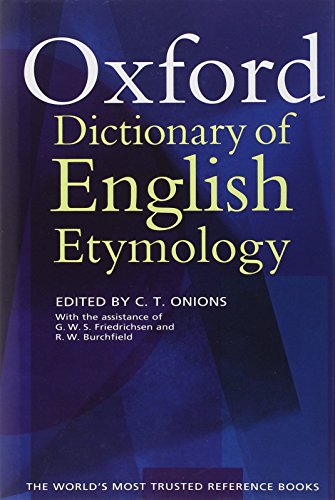
The Oxford Dictionary of English Etymology by C.T. Onions is a comprehensive reference work that delves into the origins and development of over 38,000 English words. It provides valuable insights into the history and evolution of the English language.
Topics
Table of Contents
- The Oxford Dictionary of English Etymology: summary of key ideas
- What is The Oxford Dictionary of English Etymology about?
- The Oxford Dictionary of English Etymology Review
- Who should read The Oxford Dictionary of English Etymology?
- About the author
- Book summaries like The Oxford Dictionary of English Etymology
- People also liked these summaries
- The Oxford Dictionary of English Etymology FAQs
The Oxford Dictionary of English Etymology
Summary of key ideas
Unraveling the Roots of English Words
In The Oxford Dictionary of English Etymology by C.T. Onions, we embark on a fascinating journey to unravel the history and origins of English words. Etymology, the study of word origins, is an engaging field that reveals the rich tapestry of human culture and history woven into the language we use daily.
Onions begins by introducing the reader to the basic principles of etymology, explaining how words evolve over time, often through the amalgamation of different languages and cultures. He emphasizes that understanding the etymology of a word can help us grasp its true meaning and usage.
Tracing the Evolution of English Vocabulary
With this foundation laid, Onions delves into the heart of his dictionary, providing detailed explanations of the origins and development of thousands of English words. He organizes his entries alphabetically, making it easy for readers to look up specific words or explore related terms.
For instance, we learn that the word 'etymology' itself comes from the Greek word 'etumologia,' meaning 'true sense of a word.' We trace the evolution of words like 'love' from its Indo-European roots to its modern usage, and we uncover the fascinating history behind everyday terms like 'cupboard' and 'window.'
Language as a Reflection of History and Culture
As we progress through the dictionary, we begin to see how language acts as a mirror to history and culture. We learn that the word 'assassin' has its origins in the Arabic term 'hashishiyun,' referring to a group of warriors who supposedly used hashish to carry out their deadly missions. Similarly, the word 'alcohol' has its roots in Arabic, originally referring to a fine metallic powder, before evolving to denote the intoxicating substance we know today.
Onions also highlights the impact of historical events on language. For instance, the Norman Conquest of England in 1066 introduced a significant number of French words into the English language, leading to the coexistence of two linguistic traditions within English vocabulary.
Exploring the Influence of Diverse Cultures
Onions further explores the influence of diverse cultures on the English language. He points out that English is a 'borrowing' language, absorbing words from various sources, including Latin, French, German, and many others. We see how words like 'café' and 'chocolate' from French and Spanish respectively, have seamlessly integrated into the English lexicon.
Moreover, Onions highlights the impact of technological advancements and global exploration on language. He discusses the influx of scientific and technical terms from Greek and Latin, as well as the introduction of words from indigenous languages following European colonization.
The Enduring Value of Etymology
In conclusion, The Oxford Dictionary of English Etymology provides us with a deep appreciation for the intricate history and evolution of the English language. Onions' meticulous research and clear explanations make this dictionary an invaluable resource for students, scholars, and language enthusiasts alike. By understanding the roots of our words, we gain a richer understanding of our shared human experience and the interconnectedness of global cultures.
More knowledge in less time

Read or listen
Get the key ideas from nonfiction bestsellers in minutes, not hours.

Find your next read
Get book lists curated by experts and personalized recommendations.

Shortcasts
We've teamed up with podcast creators to bring you key insights from podcasts.
What is The Oxford Dictionary of English Etymology about?
The Oxford Dictionary of English Etymology by C.T. Onions is a comprehensive reference work that explores the origins and development of over 38,000 English words. It delves into the history of words, tracing their roots back to different languages and time periods, and provides valuable insights into the evolution of the English language.
The Oxford Dictionary of English Etymology Review
- Unravels the intriguing history behind words we use daily, shedding light on their evolution and connections.
- Provides a fascinating glimpse into the rich tapestry of the English language, enhancing our understanding of its development.
- Its engaging exploration of etymology uncovers surprising connections between words, ensuring an enriching reading experience.
Who should read The Oxford Dictionary of English Etymology?
Language enthusiasts who want to explore the history and evolution of words
Writers and editors looking to deepen their understanding of etymology
Students and academics studying the English language and its roots
Categories with The Oxford Dictionary of English Etymology
Book summaries like The Oxford Dictionary of English Etymology
 The Wisdom of CrowdsJames SurowieckiWhy the Many Are Smarter Than the Few4.4
 MasteryRobert GreeneMyths about genius and what it really means to be great4.3
 BounceMatthew SyedThe myth of talent and the power of practice 4.5
 Don’t Go Back to SchoolKio StarkA Handbook for Learning Anything3.7
 I Am MalalaMalala YousafzaiThe Girl Who Stood Up for Education and Was Shot by the Taliban 4.5
 The Education of a Value InvestorGuy SpierMy Transformative Quest for Wealth, Wisdom and Enlightenment4.3
 Ungifted: Intelligence RedefinedScott Barry KaufmanThe Truth About Talent, Practice, Creativity and the Many Paths to Greatness4.3
 The Master AlgorithmPedro DomingosHow The Quest For The Ultimate Learning Machine Will Remake Our World4.4
 Seven Brief Lessons on PhysicsCarlo RovelliTeaser: A mind-bending introduction to modern physics4.4
 Creative SuperpowersLaura Jordan Bambach, Mark Earls, Daniele Fiandaca, Scott Morrison (Ed.)Equip Yourself for the Age of Creativity4.4
 Bloody Brilliant WomenCathy NewmanThe Pioneers, Revolutionaries and Geniuses Your History Teacher Forgot to Mention4.2
 What They Don’t Teach You at Harvard Business SchoolMark H. McCormackNotes From a Street-Smart Executive3.9
 Why Don’t Students Like School?Daniel T. WillinghamA Cognitive Scientist Answers Questions About How the Mind Works and What It Means for the Classroom4.3
 The Personality BrokersMerve EmreThe Strange History of Myers-Briggs and the Birth of Personality Testing3.9
 MicromasteryRobert TwiggerLearn Small, Learn Fast, and Unlock Your Potential to Achieve Anything3.2
People ❤️ Blinkist
Become a member of our community of 44 million people

96k ratings

73k ratings
Guillem B.
Life changing. The concept of being able to grasp a book's main point in such a short time truly opens multiple opportunities to grow every area of your life at a faster rate.
Laura H.
When I saw Blinkist had produced an infographic style Blink for the Rich Dad, Poor Dad book, it was a good reminder of the concepts I loved.
Jonathan A.
Clearly communicates the value proposition of the most popular book summaries and offers a relatable, tangible template that I can use immediately.
People also liked these summaries
 #NeverAgainDavid Hogg, Lauren HoggA New Generation Draws the Line3.4
 Where You Go Is Not Who You'll BeFrank BruniAn Antidote to the College Admissions Mania4.3
 MythologyEdith HamiltonTimeless Tales of Gods and Heroes4.5
 RangeDavid EpsteinWhy Generalists Triumph in a Specialized World4.3
 The Call of the Wild and FreeAinsley ArmentReclaiming Wonder in Your Child's Education4.5
 OnwardElena AguilarCultivating Emotional Resilience in Educators4.4
 The PolymathWaqas AhmedUnlocking the Power of Human Versatility4.4
 Reader, Come HomeMaryanne WolfThe Reading Brain in a Digital World4.6
 UltralearningScott H. YoungMaster Hard Skills, Outsmart the Competition, and Accelerate Your Career4.5
 Why “A” Students Work For “C” Students And “B” Students Work For The GovernmentRobert T. KiyosakiRich Dad's Guide to Financial Education for Parents4.3
 Better TogetherTom Vander Ark, Lydia DobynsHow to Leverage School Networks For Smarter Personalized and Project Based Learning4.4
 The Coddling of the American MindGreg Lukianoff and Jonathan HaidtHow Good Intentions and Bad Ideas Are Setting Up a Generation for Failure4.4
 The Case Against EducationBryan CaplanWhy the Education System Is a Waste of Time and Money3.8
 Why Are All the Black Kids Sitting Together in the Cafeteria?Beverly Daniel TatumAnd Other Conversations About Race4.4
 The Little Book of TalentDaniel Coyle52 Tips for Improving Your Skills4.4
Trusted by the world's leading brands

Powerful ideas from top nonfiction
Try Blinkist to get the key ideas from 7,500+ bestselling nonfiction titles and podcasts. Listen or read in just 15 minutes.
Get started
Blink 3 of 8 - The 5 AM Club
by Robin Sharma