Better than a summary
The Fall of Jerusalem summary
Flavius Josephus
No credit card required · Cancel anytime
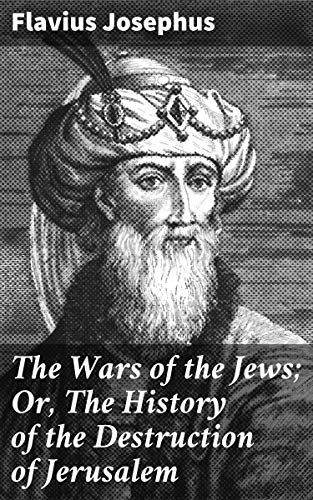
The Fall of Jerusalem by Flavius Josephus is a historical account of the Roman siege and destruction of Jerusalem in 70 CE. It provides a detailed and firsthand perspective on the events that led to the city's downfall.
Topics
The Fall of Jerusalem
Summary of key ideas
The Struggle for Jerusalem
In The Fall of Jerusalem, Flavius Josephus, a Jewish historian and a former military leader, recounts the struggle between the Jewish rebels and the Roman Empire, culminating in the destruction of Jerusalem in 70 CE. He starts by describing the initial stages of the Jewish revolt against the Roman rule, which began in 66 CE due to the oppressive policies of the Roman governors and the religious zeal of the Jewish population.
Josephus, who initially led the Jewish forces in Galilee, provides a detailed account of the early battles and the eventual Roman siege of Jotapata, his hometown. Despite his valiant efforts, Josephus was captured by the Romans and, in a surprising turn of events, he switched sides and began working as an advisor to the Roman general Vespasian, who later became the emperor.
The Siege of Jerusalem
As the story progresses, Josephus sheds light on the internal conflicts within the Jewish factions in Jerusalem, which significantly weakened their resistance against the Romans. The city was divided into different factions, each with its own leader, and they fought amongst themselves even as the Roman legions surrounded the city walls. The division among the Jewish rebels was a critical factor contributing to their defeat.
Meanwhile, Vespasian was called back to Rome to assume the imperial throne, leaving his son Titus in charge of the siege. Titus, a skilled military commander, intensified the siege, leading to severe famine and infighting within the city. The Jews, despite their dire situation, refused to surrender, believing in the divine protection of their city and its temple.
The Destruction of the Temple
Josephus vividly describes the final assault on Jerusalem, which resulted in the breach of its walls and the subsequent sacking of the city by the Roman forces. The destruction was brutal, with widespread slaughter and enslavement of the Jewish population. The climax of the tragedy was the burning of the Second Temple, the holiest site in Judaism, which was a devastating blow to the Jewish people. The temple's destruction marked the end of the Jewish state and the beginning of the Jewish diaspora.
Josephus, who was present during the siege, vividly captures the horror and despair that engulfed the city during its fall. He also reports some miraculous events, such as the appearance of celestial signs, which he interprets as divine warnings of the impending disaster. However, these portents did not deter the unfolding tragedy.
The Aftermath and Josephus's Survival
Following the destruction of Jerusalem, Josephus continued his service under the Roman patronage. He accompanied Titus to Rome and witnessed the grand triumphal procession celebrating the victory over the Jews. Despite his cooperation with the Romans, Josephus remained proud of his Jewish heritage and sought to preserve and promote Jewish history and culture through his writings.
In conclusion, The Fall of Jerusalem provides a detailed and firsthand account of a pivotal moment in Jewish history. It offers valuable insights into the causes and consequences of the Jewish-Roman conflict and sheds light on the tragic fate of Jerusalem. Josephus's work serves as an important historical source, allowing us to understand the complex dynamics of ancient warfare and the enduring significance of Jerusalem in world history.
More knowledge in less time

Read or listen
Get the key ideas from nonfiction bestsellers in minutes, not hours.

Find your next read
Get book lists curated by experts and personalized recommendations.

Shortcasts
We've teamed up with podcast creators to bring you key insights from podcasts.
What is The Fall of Jerusalem about?
The Fall of Jerusalem by Flavius Josephus is a first-hand account of the Roman siege and destruction of Jerusalem in 70 CE. Josephus, a Jewish historian who defected to the Roman side, provides a detailed chronicle of the events leading up to the fall of the city, including the internal strife among the Jewish factions. This book offers valuable insights into the political and religious climate of the time, as well as the devastating consequences of the war.
The Fall of Jerusalem Review
- Brings forth eye-opening accounts of the siege and fall of Jerusalem, offering a unique perspective on ancient history.
- Provides insightful analysis of the political intrigues, religious fervor, and human drama that unfolded during this pivotal period.
- Keeps readers engaged with its detailed descriptions of the key players and events, ensuring a compelling and informative read from start to finish.
Who should read The Fall of Jerusalem?
Readers interested in ancient history and the fall of empires
Those who want to understand the events leading up to the destruction of Jerusalem in 70 A.D.
People who enjoy non-fiction narratives that offer a unique perspective on historical events
Categories with The Fall of Jerusalem
Book summaries like The Fall of Jerusalem
 Fast Food NationEric SchlosserThe Dark Side of the All-American Meal 4.2
 Eating AnimalsJonathan Safran FoerThe (a)morality of our eating habits and traditions4.3
 HappinessRichard LayardLessons from a New Science4.0
 The Wisdom of CrowdsJames SurowieckiWhy the Many Are Smarter Than the Few4.4
 The Omnivore's DilemmaMichael PollanA Natural History of Four Meals4.4
 Trust Me, I’m LyingRyan HolidayConfessions of a Media Manipulator4.0
 The World Without Us Alan WeismanIf humankind were to vanish, what would be left?4.2
 The Paradox of ChoiceBarry SchwartzWhy More Is Less4.5
 The Confidence CodeKatty Kay and Claire ShipmanThe Science and Art of Self-Assurance: What Women Should Know3.9
 Behind the Beautiful ForeversKatherine BooLife, Death, and Hope in a Mumbai Undercity4.3
 AffluenzaJohn de Graaf, David WannHow Overconsumption is Killing Us – and How to Fight Back4.5
 Alone togetherSherry TurkleWhy We Expect More from Technology and Less from Each Other3.7
 Future CrimesMarc GoodmanEverything Is Connected, Everyone Is Vulnerable and What We Can Do About It4.0
 So You’ve Been Publicly ShamedJon RonsonHow Our Mistakes Are Costlier And More Public Than Ever3.8
 Rational RitualMichael Suk-Young ChweCulture, Coordination, and Common Knowledge3.9
People ❤️ Blinkist
Become a member of our community of 44 million people

96k ratings

73k ratings
Thi Viet Quynh N.
Great app. Good selection of book summaries you can read or listen to while commuting. Instead of scrolling through your social media news feed, this is a much better way to spend your spare time in my opinion.
Guillem B.
Life changing. The concept of being able to grasp a book's main point in such a short time truly opens multiple opportunities to grow every area of your life at a faster rate.
Renee D.
I'm absolutely thrilled that Blinkist now offers infographics! I can't get enough of them—they're such a fun and effective way to grasp and remember key points.
People also liked these summaries
 Cradle to CradleWilliam McDonough, Michael BraungartRe-making the way we make things4.3
 The Social AnimalDavid BrooksThe Hidden Sources of Love, Character, and Achievement4.3
 The Road to Character David BrooksLearn how to make yourself whole3.8
 Should We Eat Meat? Vaclav SmilEvolution and Consequences of Modern Carnivory3.3
 The Power of Myth Joseph Campbell, Bill MoyersTeaser: From ancient myths to Han Solo4.2
 Consider the ForkBee WilsonHow Technology Transforms the Way We Cook and Eat3.8
 Stuffocation James WallmanWhy We've Had Enough of Stuff and Need Experience More Than Ever4.2
 Unfair Adam BenforadoThe New Science of Criminal Injustice4.1
 Ghettoside Jill LeovyA True Story of Murder in America3.6
 Just MercyBryan StevensonA Story of Justice and RedemPDion4.1
 The True BelieverEric HofferThoughts on the Nature of Mass Movements3.9
 How Music Got FreeStephen WittWhat happens when an entire generation commits the same crime?4.7
 One Of UsAsne Seierstad, Sarah DeathThe Story of Anders Breivik and the Massacre in Norway 4.5
 Present ShockDouglas RushkoffWhen Everything Happens Now Reprint3.6
 Why Information GrowsCesar Hidalgo The Evolution of Order, from Atoms to Economies4.1
Trusted by the world's leading brands

Powerful ideas from top nonfiction
Try Blinkist to get the key ideas from 7,500+ bestselling nonfiction titles and podcasts. Listen or read in just 15 minutes.
Get started
Blink 3 of 8 - The 5 AM Club
by Robin Sharma