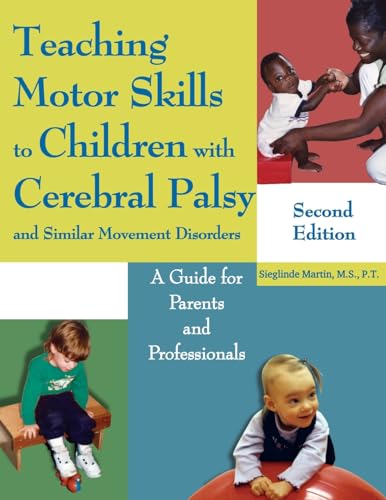
Better than a summary
Teaching Motor Skills to Children with Cerebral Palsy and Similar Movement Disorders summary
Sieglinde Martin
No credit card required · Cancel anytime
Teaching Motor Skills to Children with Cerebral Palsy and Similar Movement Disorders by Sieglinde Martin provides practical strategies and activities to help children with motor challenges develop essential skills for daily living.
Topics
Table of Contents
- Teaching Motor Skills to Children with Cerebral Palsy and Similar Movement Disorders: summary of key ideas
- What is Teaching Motor Skills to Children with Cerebral Palsy and Similar Movement Disorders about?
- Teaching Motor Skills to Children with Cerebral Palsy and Similar Movement Disorders Review
- Who should read Teaching Motor Skills to Children with Cerebral Palsy and Similar Movement Disorders?
- About the author
- Book summaries like Teaching Motor Skills to Children with Cerebral Palsy and Similar Movement Disorders
- People also liked these summaries
- Teaching Motor Skills to Children with Cerebral Palsy and Similar Movement Disorders FAQs
Teaching Motor Skills to Children with Cerebral Palsy and Similar Movement Disorders
Summary of key ideas
Understanding Motor Skills in Children with Cerebral Palsy
In Teaching Motor Skills to Children with Cerebral Palsy and Similar Movement Disorders by Sieglinde Martin, we begin with a comprehensive understanding of cerebral palsy (CP) and its impact on motor skills. The author takes us through the different types of CP, the role of the brain in controlling movement, and the challenges children with CP face in developing motor skills.
Martin explains that children with CP often have difficulty coordinating and controlling their muscles, leading to limitations in movement and posture. As a result, they may experience challenges in activities such as sitting, walking, and playing. It is important for parents and caregivers to understand the unique motor challenges their child faces, which is key to helping them improve their motor skills.
Early Intervention and Motor Development
The book then delves into the concept of early intervention, emphasizing the importance of starting motor skill training as early as possible. Martin explains that the brain's plasticity, or its ability to adapt and reorganize, is highest in early childhood. Therefore, early and consistent motor skill training can significantly improve a child's motor abilities.
We learn about the sequence in which children typically acquire gross motor skills, such as head control, rolling, sitting, crawling, standing, and walking. The author provides detailed descriptions and illustrations of exercises and activities that can be used to promote each of these skills. She emphasizes that these exercises should be tailored to the child's individual abilities and needs, and should be performed in a playful and enjoyable manner.
Practical Techniques for Motor Skill Development
In the next section, Martin introduces various practical techniques for motor skill development. She discusses the importance of proper positioning and handling, as well as the use of supportive aids and equipment. The author also highlights the significance of muscle stretching and strengthening exercises, which can help improve muscle tone and flexibility.
Furthermore, Martin introduces the concept of neurodevelopmental treatment (NDT), a holistic approach to treating individuals with motor disorders. NDT aims to promote normal movement patterns and postures by facilitating the child's ability to control their muscles. The author provides examples of NDT-based activities and exercises that can be incorporated into a child's daily routine.
Collaboration with Therapists and Caregivers
Throughout the book, Martin emphasizes the importance of collaboration between therapists, parents, and caregivers. She explains that therapists play a crucial role in designing and monitoring a child's motor skill training program. However, parents and caregivers are also essential in implementing these exercises consistently and providing a supportive environment for the child's motor development.
The author provides guidance on how to effectively communicate and work with therapists, as well as how to integrate motor skill training into daily activities. She also addresses common challenges and concerns that parents may face, offering practical solutions and strategies.
Looking Towards the Future
In the final chapters of Teaching Motor Skills to Children with Cerebral Palsy and Similar Movement Disorders, Martin discusses long-term goals and strategies for promoting independence and mobility in children with CP. She explains that while the primary focus is on improving motor skills, it is equally important to foster the child's confidence, self-esteem, and social integration.
In conclusion, Martin's book serves as a comprehensive guide for parents and caregivers of children with CP, offering valuable insights and practical techniques for promoting motor skill development. By understanding the unique challenges and needs of their child, and by implementing appropriate exercises and activities, parents can play a significant role in helping their child achieve their full motor potential.
More knowledge in less time

Read or listen
Get the key ideas from nonfiction bestsellers in minutes, not hours.

Find your next read
Get book lists curated by experts and personalized recommendations.

Shortcasts
We've teamed up with podcast creators to bring you key insights from podcasts.
What is Teaching Motor Skills to Children with Cerebral Palsy and Similar Movement Disorders about?
Teaching Motor Skills to Children with Cerebral Palsy and Similar Movement Disorders by Sieglinde Martin is a comprehensive guide that provides practical strategies and exercises to help children with cerebral palsy improve their motor skills. It offers valuable insights into the challenges these children face and equips parents and educators with the knowledge to support their development. With clear explanations and helpful tips, this book is an essential resource for anyone involved in the care of children with movement disorders.
Teaching Motor Skills to Children with Cerebral Palsy and Similar Movement Disorders Review
- Offers practical strategies and exercises to help children improve their motor skills and enhance their overall quality of life.
- Provides insightful guidance based on research and experience to assist parents, educators, and therapists in navigating the complexities of motor skill development.
- Presents information in a clear, accessible manner that keeps readers engaged and motivated to apply the knowledge effectively.
Who should read Teaching Motor Skills to Children with Cerebral Palsy and Similar Movement Disorders?
Parents and caregivers of children with cerebral palsy or similar movement disorders
Physical therapists and healthcare professionals working with children with motor challenges
Educators and special education professionals seeking to support students with motor skill difficulties
Categories with Teaching Motor Skills to Children with Cerebral Palsy and Similar Movement Disorders
Book summaries like Teaching Motor Skills to Children with Cerebral Palsy and Similar Movement Disorders
 Eating AnimalsJonathan Safran FoerThe (a)morality of our eating habits and traditions4.3
 The Omnivore's DilemmaMichael PollanA Natural History of Four Meals4.4
 SavorHanh & CheungMindful Eating, Mindful Life4.0
 Eat to LiveJoel FuhrmanThe Amazing Nutrient-Rich Program for Fast and Sustained Weight Loss4.2
 Nutrition and Physical DegenerationWeston Andrew PriceA Comparison of Primitive and Modern Diets and their Effects4.2
 Salt Sugar FatMichael MossHow the Food Giants Hooked Us4.2
 Mindless EatingBrian WansinkWhy We Eat More Than We Think4.2
 The Twenty-Four Hour MindRosalind D. CartwrightThe Role of Sleep and Dreaming in Our Emotional Lives3.8
 GutGiulia EndersThe Inside Story of Our Body’s Most Underrated Organ4.3
 The Happiness of PursuitChris GuillebeauFinding the Quest That Will Bring Purpose to Your Life4.5
 Grain BrainDavid PerlmutterThe Surprising Truth about Wheat, Carbs, and Sugar4.3
 The Easy Way to Stop SmokingAllen CarrJoin the Millions Who Have Become Non-Smokers Using Allen Carr's Easyway Method4.1
 The Bulletproof DietDave AspreyLose up to a Pound a Day, Reclaim Energy and Focus, Upgrade Your Life4.3
 Get Some HeadspaceAndy Puddicombe10 Minutes Can Make All the Difference4.4
 In Defense of FoodMichael PollanAn Eaters Manifesto4.5
People ❤️ Blinkist
Become a member of our community of 44 million people

96k ratings

73k ratings
Jonathan A.
Clearly communicates the value proposition of the most popular book summaries and offers a relatable, tangible template that I can use immediately.
Guillem B.
Life changing. The concept of being able to grasp a book's main point in such a short time truly opens multiple opportunities to grow every area of your life at a faster rate.
Renee D.
I'm absolutely thrilled that Blinkist now offers infographics! I can't get enough of them—they're such a fun and effective way to grasp and remember key points.
People also liked these summaries
 Do You Believe in Magic?Paul A. OffitVitamins, Supplements, and All Things Natural: A Look Behind the Curtain 2.7
 Brain MakerDavid PerlmutterThe Power of Gut Microbes to Heal and Protect Your Brain4.3
 The Blue ZonesDan Buettner9 Lessons for Living Longer From the People Who've Lived the Longest4.4
 The Third PlateDan BarberField Notes on the Future of Food 4.2
 The China StudyThomas Campbell and T. Colin CampbellThe Most Comprehensive Study of Nutrition Ever Conducted And the Startling Implications for Diet, Weight Loss, And Long-term Health4.1
 Missing MicrobesMartin J. BlaserHow the Overuse of Antibiotics Is Fueling Our Modern Plagues4.2
 The Paleo ManifestoJohn DurantAncient Wisdom for Lifelong Health4.2
 What The Fork Are you Eating?Stefanie SacksAn Action Plan for Your Pantry and Plate4.0
 The Boys in the BoatDaniel James BrownNine Americans and Their Epic Quest for Gold at the 1936 Berlin Olympics4.3
 I Can Hear You WhisperLydia DenworthAn Intimate Journey through the Science of Sound and Language3.9
 ImmunityWilliam E. PaulTeaser: The importance of our immune system4.2
 Ending AgingAubrey de Grey, Michael RaeThe Rejuvenation Breakthroughs That Could Reverse Human Aging in Our Lifetime3.4
 Eat, Move, SleepTom RathHow Small Choices Lead to Big Changes4.0
 Too Much of a Good Thing Lee GoldmanHow Four Key Survival Traits Are Now Killing Us
3.8
Too Much of a Good Thing Lee GoldmanHow Four Key Survival Traits Are Now Killing Us
3.8 EradicationNancy Leys StepanRidding the World of Diseases Forever3.7
Trusted by the world's leading brands

Powerful ideas from top nonfiction
Try Blinkist to get the key ideas from 7,500+ bestselling nonfiction titles and podcasts. Listen or read in just 15 minutes.
Get started
Blink 3 of 8 - The 5 AM Club
by Robin Sharma