
Better than a summary
Stand on Zanzibar summary
John Brunner
No credit card required · Cancel anytime
Stand on Zanzibar by John Brunner is a dystopian science fiction novel set in a future world where overpopulation and societal chaos reign. It offers a thought-provoking commentary on the potential consequences of unchecked population growth.
Topics
Stand on Zanzibar
Summary of key ideas
The World of Overpopulation and Information Overload
In Stand on Zanzibar by John Brunner, we are introduced to a future world where overpopulation and information overload are the norm. The story is set in 2010, a time when the world population has reached 7 billion, and people live in crowded, chaotic megacities. The narrative is structured in a unique way, with interwoven storylines and fragments of media reports, creating a collage that mirrors the information-saturated society it depicts.
One of the central characters, Norman House, is a high-ranking executive at General Technics, a powerful multinational corporation. His life is a whirlwind of business deals, social events, and power plays. In stark contrast, Donald Hogan, a secret agent for a government organization, lives a life of subterfuge, working undercover as a scientist at General Technics, tasked with uncovering their latest breakthrough in genetic engineering.
Technological Advancements and Societal Implications
Amidst this backdrop of overpopulation and mega-corporations, Brunner explores various technological advancements and their societal implications. For instance, there's the development of 'Pandora', a device that can influence people's thoughts and behaviors, and the emergence of 'Shiggurat', a drug that induces temporary telepathy. These innovations, along with others, further blur the lines between reality and virtuality, raising ethical and moral questions about their usage.
Simultaneously, the societal fabric is strained by the sheer number of people. Racial tensions, economic disparities, and social unrest are rife. As the narrative progresses, we see how these issues manifest in the characters' lives. For instance, House's relationship with an African-American woman, and Hogan's experiences as a white man in an African nation, reflect the racial complexities of their world.
Unveiling the Truth and Its Consequences
The plot of Stand on Zanzibar thickens as Hogan discovers the corporation's secret genetic project, which has the potential to solve the world's overpopulation crisis. However, the revelation comes with a sinister twist. The corporation plans to use the discovery as a tool for mass genocide, a chilling solution to the overpopulation problem. Hogan, horrified by this plan, sets out to expose it, putting his life in grave danger.
Meanwhile, House finds himself embroiled in complex corporate politics and personal dilemmas. His journey mirrors the dehumanizing effects of the corporate world, as he navigates a maze of power struggles, manipulations, and moral compromises. His interactions with a variety of characters, each representing a different facet of society, further highlight the novel's exploration of human nature within a rapidly changing world.
The Final Stand on Zanzibar
As the story hurtles towards its conclusion, the tension escalates. Hogan's mission to thwart the corporation's genocidal plan becomes increasingly perilous. House, on the other hand, is confronted with a personal crisis that forces him to reevaluate his life and his role in the world. The novel's title, Stand on Zanzibar, is a metaphor for the crowded Earth, emphasizing the planet's limited resources and the need for collective action.
In the end, the novel doesn't offer easy solutions. Instead, it serves as a cautionary tale, warning us of the potential consequences of overpopulation, unchecked technological progress, and corporate power. With its thought-provoking narrative and complex characters, Stand on Zanzibar remains a prescient and compelling exploration of a future that feels uncomfortably close to our present.
More knowledge in less time

Read or listen
Get the key ideas from nonfiction bestsellers in minutes, not hours.

Find your next read
Get book lists curated by experts and personalized recommendations.

Shortcasts
We've teamed up with podcast creators to bring you key insights from podcasts.
What is Stand on Zanzibar about?
Stand on Zanzibar is a thought-provoking science fiction novel by John Brunner. Set in a future world where overpopulation and social issues have reached critical levels, the story weaves together multiple plotlines to explore themes of identity, technology, and the consequences of human behavior. It challenges readers to consider the potential outcomes of our current societal trajectory.
Stand on Zanzibar Review
- Featuring multifaceted characters living in a crowded world, the story offers a profound reflection on human nature and societal structures.
- Through its innovative narrative style integrating advertisements, news snippets, and unconventional storytelling techniques, the book creates a unique and immersive reading experience.
- The vivid depiction of a chaotic yet eerily plausible future captivates readers, ensuring an engaging and thought-provoking journey.
Who should read Stand on Zanzibar?
Readers who enjoy thought-provoking and socially relevant science fiction
Those interested in exploring complex and interconnected narratives
Individuals who appreciate speculative fiction that offers insights into the future of society
Categories with Stand on Zanzibar
Book summaries like Stand on Zanzibar
 A Canticle for LeibowitzWalter M. Miller
 The Boy in the Striped PajamasJohn BoyneTeaser: Heartbreaking Truths Unfold in a Tale of Friendship and Innocence4.9
 Little House in the Big WoodsLaura Ingalls Wilder
 Wide Sargasso SeaJean Rhys, Judith L. Raiskin
 Just After SunsetStephen King
 WhereaboutsJhumpa Lahiri
 Hearts in DarknessLaura Kaye
 Every Heart a DoorwaySeanan McGuire
 The Curious Case of Benjamin ButtonF. Scott Fitzgerald, Nunzio DeFilippis
 Side JobsJim Butcher
 Brokeback MountainAnnie Proulx
 A Single ManChristopher Isherwood
 And Every Morning the Way Home Gets Longer and LongerFredrik Backman, Alice Menzies
 Burning ChromeWilliam Gibson
 Hearts in AtlantisStephen King
People ❤️ Blinkist
Become a member of our community of 44 million people

96k ratings

73k ratings
Thi Viet Quynh N.
Great app. Good selection of book summaries you can read or listen to while commuting. Instead of scrolling through your social media news feed, this is a much better way to spend your spare time in my opinion.
Guillem B.
Life changing. The concept of being able to grasp a book's main point in such a short time truly opens multiple opportunities to grow every area of your life at a faster rate.
Jonathan A.
Clearly communicates the value proposition of the most popular book summaries and offers a relatable, tangible template that I can use immediately.
People also liked these summaries
 Bonjour TristesseFrancoise Sagan
 Chronicle of a Death ForetoldGabriel García Márquez, Gregory Rabassa
 For Whom the Bell TollsErnest Hemingway
 The Last QuestionIsaac Asimov
 The 5th WaveRick Yancey
 The Killer AngelsMichael Shaara
 The Martian ChroniclesRay Bradbury
 Cloud AtlasDavid Mitchell
 The Forever WarJoe Haldeman
 I, RobotIsaac Asimov
 Kill SwitchPenelope Douglas
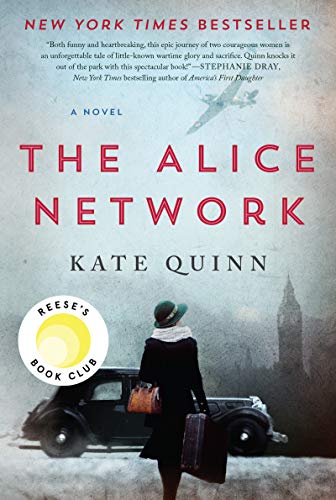 The Alice NetworkKate Quinn
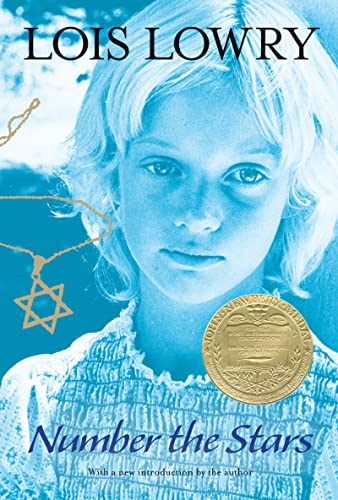 Number the StarsLois Lowry
 The SympathizerViet Thanh Nguyen
 City of ThievesDavid Benioff
Trusted by the world's leading brands

Powerful ideas from top nonfiction
Try Blinkist to get the key ideas from 7,500+ bestselling nonfiction titles and podcasts. Listen or read in just 15 minutes.
Get started
Blink 3 of 8 - The 5 AM Club
by Robin Sharma