Better than a summary
Spying on Whales summary
Nick Pyenson
No credit card required · Cancel anytime
Spying on Whales by Nick Pyenson is a captivating exploration of the world of whales. It delves into their evolutionary history, their remarkable adaptations, and the urgent need for their conservation.
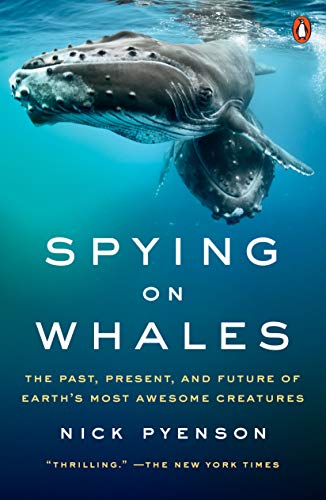
Spying on Whales
Summary of key ideas
Exploring the Evolution of Whales
In Spying on Whales by Nick Pyenson, we embark on a fascinating journey through the evolutionary history of whales. Pyenson, a paleobiologist at the Smithsonian Institution, begins by taking us back to the Eocene epoch, about 50 million years ago, when the first whales emerged from land-dwelling mammals. He describes these early whales, such as the Pakicetus, as wolf-sized creatures that lived near the water but still had legs and walked on land.
Pyenson then introduces us to the Ambulocetus, a species that was more adapted to aquatic life, with webbed feet and a long tail for swimming. He explains how over millions of years, whales evolved into the diverse range of species we see today, each uniquely adapted to its oceanic environment. This section of the book provides a captivating look at the process of evolution and the incredible adaptations it can produce.
Understanding the Lives of Modern Whales
Having explored the distant past, Pyenson then shifts his focus to the present, delving into the lives of modern whales. He discusses their remarkable abilities, such as their sophisticated communication systems, their deep-diving capabilities, and their enormous size. He also highlights the challenges that whales face in the modern world, including climate change, pollution, and human interference.
Pyenson's discussion of whale feeding strategies is particularly intriguing. He explains how baleen whales, such as the blue whale, use their baleen plates to filter tiny organisms from the water, while toothed whales, like the sperm whale, hunt larger prey at great depths. He also explores the social structures of whales, their migratory patterns, and the role they play in their respective ecosystems.
Uncovering Whales Through Fossils
One of the most captivating aspects of Spying on Whales is Pyenson's work with whale fossils. He describes his expeditions to remote locations, such as the Atacama Desert in Chile, where he and his team discovered an extraordinary concentration of whale fossils. These fossils provide valuable insights into the evolutionary history of whales and the environmental changes that have shaped their development.
Pyenson also discusses the use of modern technology, such as drones and CT scans, to study whale fossils in new ways. These methods allow scientists to uncover details about ancient whales' anatomy, behavior, and ecology that were previously inaccessible. The combination of traditional paleontology and cutting-edge technology provides a comprehensive understanding of whales' past and present.
Whales in a Changing World
In the final section of the book, Pyenson addresses the challenges that whales face in the modern world. He emphasizes the impact of human activities on whale populations, including commercial whaling, ship strikes, and ocean noise pollution. He also discusses the potential consequences of climate change on whales and their habitats.
Despite these challenges, Pyenson remains cautiously optimistic about the future of whales. He highlights the successes of conservation efforts, such as the recovery of certain whale populations following the ban on commercial whaling. He also emphasizes the importance of continued research and conservation initiatives to ensure the survival of these remarkable creatures.
In Conclusion
In Spying on Whales, Nick Pyenson offers a comprehensive and engaging exploration of these enigmatic creatures. He seamlessly weaves together paleontology, biology, and ecology to provide a deep understanding of whales' past, present, and future. Through his work, Pyenson not only sheds light on the evolutionary history of whales but also underscores the urgent need to protect them in the face of increasing human impact on the oceans.
More knowledge in less time

Read or listen
Get the key ideas from nonfiction bestsellers in minutes, not hours.

Find your next read
Get book lists curated by experts and personalized recommendations.

Shortcasts
We've teamed up with podcast creators to bring you key insights from podcasts.
What is Spying on Whales about?
Spying on Whales takes readers on a fascinating journey into the world of these magnificent creatures. Through a combination of scientific research and personal anecdotes, marine biologist Nick Pyenson explores the history, biology, and future of whales. From their evolutionary origins to their role in the ecosystem, this book offers a compelling look at the hidden lives of these incredible animals.
Spying on Whales Review
Spying on Whales (2018) is an intriguing exploration of the world of these magnificent creatures and the insights they offer into the history and future of our planet. Here's what makes this book stand out:
- With fascinating discoveries and incredible anecdotes, it brings to light the remarkable lives of whales and their role in the ecosystem.
- Through detailed scientific research and personal experiences, it provides a comprehensive view of the challenges whales face in a changing environment.
- The book's accessible storytelling and eye-opening revelations about the secrets of the deep sea captivate readers, making it an enthralling and thought-provoking read.
Who should read Spying on Whales?
- Enthusiasts of marine biology and oceanography
- Curious individuals who want to learn about the evolutionary history of whales
- Environmentalists and conservationists who are passionate about protecting marine life
Categories with Spying on Whales
Book summaries like Spying on Whales
 Where Good Ideas Come FromSteven JohnsonThe Natural History of Innovation4.1
 God is not greatChristopher HitchensHow Religion Poisons Everything3.9
 A Brief History of Time Stephen HawkingFrom the Big Bang to Black Holes4.4
 The Selfish GeneRichard DawkinsA landmark work in the field of biology and evolution4.4
 AntifragileNassim Nicholas TalebThings That Gain from Disorder4.5
 Physics of the futureMichio KakuHow Science Will Shape Human Destiny and Our Daily Lives by the Year 21004.1
 MusicophiliaOliver SacksTales of Music and the Brain, Revised and Expanded Edition4.3
 How Music Works David ByrneHow circumstance and creativity collide in tune4.4
 The Sports GeneDavid EpsteinInside the Science of Extraordinary Athletic Performance4.3
 On intelligence Jeff Hawkins, Sandra BlakesleeHow a New Understanding of the Brain Will Lead to the Creation of Truly Intelligent Machines3.9
 Nutrition and Physical DegenerationWeston Andrew PriceA Comparison of Primitive and Modern Diets and their Effects4.2
 GutGiulia EndersThe Inside Story of Our Body’s Most Underrated Organ4.3
 Bad ScienceBen GoldacreA behind-the-scenes look at the bogus science used to mislead us every day.4.4
 Moonwalking with EinsteinJoshua FoerThe Art and Science of Remembering Everything4.2
 Do No Harm Henry MarshStories of Life, Death, and Brain Surgery4.2
People ❤️ Blinkist
Become a member of our community of 44 million people

96k ratings

73k ratings
Laura H.
When I saw Blinkist had produced an infographic style Blink for the Rich Dad, Poor Dad book, it was a good reminder of the concepts I loved.
Sven O.
It's highly addictive to get core insights on personally relevant topics without repetition or triviality. Added to that the apps ability to suggest kindred interests opens up a foundation of knowledge.
Jonathan A.
Clearly communicates the value proposition of the most popular book summaries and offers a relatable, tangible template that I can use immediately.
People also liked these summaries
 Fluent ForeverGabriel WynerHow to Learn Any Language Fast and Never Forget It4.3
 Life at the Speed of Light J. Craig VenterFrom the Double Helix to the Dawn of Digital Life4.3
 The Language InstinctSteven PinkerHow the Mind Creates Language4.0
 A mind for numbersBarbara OakleyHow to Excel at Math and Science (Even If You Flunked Algebra)4.3
 The Structure of Scientific RevolutionsThomas S. KuhnA groundbreaking study in how science progresses4.3
 SmarterDan HurleyThe New Science of Building Brain Power3.6
 An Astronaut’s Guide to Life on EarthChris HadfieldWhat Going to Space Taught Me About Ingenuity, Determination, and Being Prepared for Anything3.9
 The Demon-Haunted WorldCarl SaganScience as a Candle in the Dark4.3
 Moore’s LawArnold Thackray, David Brock and Rachel JonesThe Life of Gordon Moore, Silicon Valley’s Quiet Revolutionary4.3
 Grain BrainDavid PerlmutterThe Surprising Truth about Wheat, Carbs, and Sugar4.3
 What If?Randall MunroeSerious Scientific Answers to Absurd Hypothetical Questions3.4
 On ImmunityEula BissAn Inoculation3.3
 Sonic BoomJoel Beckerman (Autor), Tyler GrayHow Sound Transforms the Way We Think, Feel, and Buy3.4
 Consider the ForkBee WilsonHow Technology Transforms the Way We Cook and Eat3.8
 Driven Paul Lawrence & Nitin NohriaHow Human Nature Shapes our Choices3.6
Trusted by the world's leading brands

Powerful ideas from top nonfiction
Try Blinkist to get the key ideas from 7,500+ bestselling nonfiction titles and podcasts. Listen or read in just 15 minutes.
Get started
Blink 3 of 8 - The 5 AM Club
by Robin Sharma
Spying on Whales FAQs
What is the main message of Spying on Whales?
The main message of Spying on Whales is that whales have a fascinating evolutionary history and play a crucial role in our planet's ecosystem.
How long does it take to read Spying on Whales?
The reading time for Spying on Whales varies depending on the reader's speed. On average, it takes a few hours. The Blinkist summary can be read in just 15 minutes.
Is Spying on Whales a good book? Is it worth reading?
Spying on Whales is a captivating read for anyone interested in marine life and the wonders of nature. It provides insightful discoveries and highlights the importance of understanding these majestic creatures.
Who is the author of Spying on Whales?
The author of Spying on Whales is Nick Pyenson.