Better than a summary
Purple Hibiscus summary
No credit card required · Cancel anytime
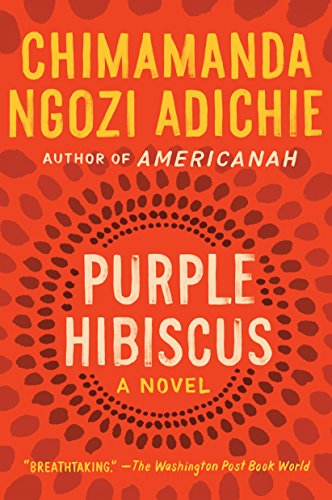
Purple Hibiscus is a compelling novel by Chimamanda Ngozi Adichie that tells the story of a young Nigerian girl, Kambili, and her family's struggle in the face of oppression and abuse. It offers a powerful portrayal of the complexities of family dynamics and the quest for freedom.
Topics
Purple Hibiscus
Summary of key ideas
Family, Faith, and Freedom in Purple Hibiscus
In Purple Hibiscus by Chimamanda Ngozi Adichie, we are introduced to Kambili, a fifteen-year-old girl living in Nigeria. Kambili's father, Eugene, is a wealthy and respected man in the community, known for his devout Catholic faith and his successful newspaper. However, behind closed doors, Eugene is a tyrant, ruling his household with an iron fist and subjecting his family to his extreme religious beliefs.
Despite the oppressive atmosphere at home, Kambili and her brother Jaja have been conditioned to fear and respect their father. They adhere strictly to his rules, which include daily prayer sessions, strict schedules, and severe punishment for any perceived disobedience. Kambili's mother, Beatrice, is a silent and submissive figure, bearing the physical and emotional scars of her husband's abuse.
Escape and Awakening
The family's rigid routine is disrupted when Kambili and Jaja visit their Aunt Ifeoma and her children, Amaka and Obiora. In contrast to their own home, Ifeoma's house is filled with laughter, freedom, and intellectual stimulation. The children are encouraged to question and think for themselves, and Kambili begins to experience a sense of liberation she has never known before.
During their stay, Kambili and Jaja witness the political and social unrest in Nigeria, which mirrors the turmoil within their own family. They also learn about their father's role in the tragic events of their family's past, which further shatters their idealized image of him. These experiences prompt Kambili and Jaja to question their father's authority and the suffocating religious fervor that has dominated their lives.
Rebellion and Reconciliation
Upon their return home, Kambili and Jaja's newfound independence and defiance of their father's rules lead to a series of dramatic events. Eugene's extreme religious beliefs drive him to commit an unspeakable act of violence, resulting in his arrest and the family's public disgrace. In the aftermath, Kambili and her family are forced to confront the harsh realities of their lives and the consequences of their silence.
Despite the trauma and upheaval, Kambili begins to find her voice and assert her own beliefs. She forms a deeper connection with her mother, who finally breaks her silence and reveals the truth about their family's past. Kambili also learns to forgive her father, recognizing the complexity of his character and the love he had for his family, despite his abusive behavior.
Hope and Healing
In the novel's poignant conclusion, Kambili and her family start to rebuild their lives. They move to a new home, symbolizing a fresh start and a break from their painful past. Kambili, now more confident and independent, looks forward to a future where she can make her own choices and live on her own terms.
Purple Hibiscus is a powerful exploration of family, faith, and freedom. Through Kambili's journey, we witness the devastating effects of domestic abuse and religious extremism, but we also see the resilience of the human spirit and the possibility of healing and growth. Adichie's compelling narrative and vivid characters make this novel a moving and thought-provoking read.
More knowledge in less time

Read or listen
Get the key ideas from nonfiction bestsellers in minutes, not hours.

Find your next read
Get book lists curated by experts and personalized recommendations.

Shortcasts
We've teamed up with podcast creators to bring you key insights from podcasts.
What is Purple Hibiscus about?
Purple Hibiscus is a compelling novel by Chimamanda Ngozi Adichie that delves into the complexities of family, religion, and politics in Nigeria. Through the eyes of 15-year-old Kambili, the story explores the effects of an abusive father and the liberation that comes with finding one's own voice. It is a thought-provoking and beautifully written book that offers a glimpse into a country in turmoil and the resilience of the human spirit.
Purple Hibiscus Review
Purple Hibiscus (2003) is a compelling novel that explores themes of family, religion, and personal growth in post-colonial Nigeria. Here are three reasons why this book is worth reading:
- With its vivid portrayal of Nigerian society, the book provides a captivating glimpse into the country's culture and history.
- The complex characters, including the protagonist Kambili, undergo profound transformations, making the story emotionally engaging and thought-provoking.
- Adichie's skillful storytelling and evocative language create a rich atmosphere that transports readers into the heart of the narrative, ensuring a captivating reading experience.
Who should read Purple Hibiscus?
- Readers who enjoy coming-of-age stories
- Individuals interested in exploring themes of family dynamics and personal growth
- Those who appreciate richly drawn characters and vivid settings
Categories with Purple Hibiscus
Book summaries like Purple Hibiscus
 Fast Food NationEric SchlosserThe Dark Side of the All-American Meal 4.2
 Eating AnimalsJonathan Safran FoerThe (a)morality of our eating habits and traditions4.3
 HappinessRichard LayardLessons from a New Science4.0
 The Wisdom of CrowdsJames SurowieckiWhy the Many Are Smarter Than the Few4.4
 The Omnivore's DilemmaMichael PollanA Natural History of Four Meals4.4
 Trust Me, I’m LyingRyan HolidayConfessions of a Media Manipulator4.0
 The World Without Us Alan WeismanIf humankind were to vanish, what would be left?4.2
 The Paradox of ChoiceBarry SchwartzWhy More Is Less4.5
 The Confidence CodeKatty Kay and Claire ShipmanThe Science and Art of Self-Assurance: What Women Should Know3.9
 Behind the Beautiful ForeversKatherine BooLife, Death, and Hope in a Mumbai Undercity4.3
 AffluenzaJohn de Graaf, David WannHow Overconsumption is Killing Us – and How to Fight Back4.5
 Alone togetherSherry TurkleWhy We Expect More from Technology and Less from Each Other3.7
 Future CrimesMarc GoodmanEverything Is Connected, Everyone Is Vulnerable and What We Can Do About It4.0
 So You’ve Been Publicly ShamedJon RonsonHow Our Mistakes Are Costlier And More Public Than Ever3.8
 Rational RitualMichael Suk-Young ChweCulture, Coordination, and Common Knowledge3.9
People ❤️ Blinkist
Become a member of our community of 44 million people

96k ratings

73k ratings
Jonathan A.
Clearly communicates the value proposition of the most popular book summaries and offers a relatable, tangible template that I can use immediately.
Guillem B.
Life changing. The concept of being able to grasp a book's main point in such a short time truly opens multiple opportunities to grow every area of your life at a faster rate.
Renee D.
I'm absolutely thrilled that Blinkist now offers infographics! I can't get enough of them—they're such a fun and effective way to grasp and remember key points.
People also liked these summaries
 Cradle to CradleWilliam McDonough, Michael BraungartRe-making the way we make things4.3
 The Social AnimalDavid BrooksThe Hidden Sources of Love, Character, and Achievement4.3
 The Road to Character David BrooksLearn how to make yourself whole3.8
 Should We Eat Meat? Vaclav SmilEvolution and Consequences of Modern Carnivory3.3
 The Power of Myth Joseph Campbell, Bill MoyersTeaser: From ancient myths to Han Solo4.2
 Consider the ForkBee WilsonHow Technology Transforms the Way We Cook and Eat3.8
 Stuffocation James WallmanWhy We've Had Enough of Stuff and Need Experience More Than Ever4.2
 Unfair Adam BenforadoThe New Science of Criminal Injustice4.1
 Ghettoside Jill LeovyA True Story of Murder in America3.6
 Just MercyBryan StevensonA Story of Justice and RedemPDion4.1
 The True BelieverEric HofferThoughts on the Nature of Mass Movements3.9
 How Music Got FreeStephen WittWhat happens when an entire generation commits the same crime?4.7
 One Of UsAsne Seierstad, Sarah DeathThe Story of Anders Breivik and the Massacre in Norway 4.5
 Present ShockDouglas RushkoffWhen Everything Happens Now Reprint3.6
 Why Information GrowsCesar Hidalgo The Evolution of Order, from Atoms to Economies4.1
Trusted by the world's leading brands

Powerful ideas from top nonfiction
Try Blinkist to get the key ideas from 7,500+ bestselling nonfiction titles and podcasts. Listen or read in just 15 minutes.
Get started
Blink 3 of 8 - The 5 AM Club
by Robin Sharma
Purple Hibiscus FAQs
What is the main message of Purple Hibiscus?
The main message of Purple Hibiscus is the transformational power of personal freedom and self-expression.
How long does it take to read Purple Hibiscus?
The reading time for Purple Hibiscus varies depending on the reader, but it typically takes several hours. However, the Blinkist summary can be read in just 15 minutes.
Is Purple Hibiscus a good book? Is it worth reading?
Purple Hibiscus is a captivating read that explores family dynamics, personal growth, and the complexities of post-colonial Nigeria. It is definitely worth reading.
Who is the author of Purple Hibiscus?
The author of Purple Hibiscus is Chimamanda Ngozi Adichie.