Better than a summary
Monolith to Microservices summary
No credit card required · Cancel anytime
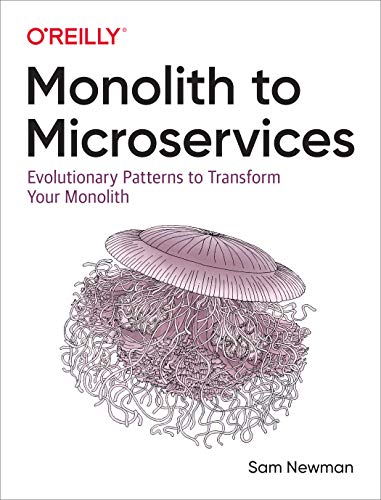
Monolith to Microservices by Sam Newman is a comprehensive guide that explores the process of breaking down a monolithic application into microservices. It provides practical strategies and best practices for this architectural transformation.
Table of Contents
Monolith to Microservices
Summary of key ideas
Understanding the Monolith to Microservices Transition
In Monolith to Microservices, Sam Newman offers a comprehensive guide on transitioning from a monolithic architecture to a microservices-based one. He begins by explaining the limitations of monolithic systems, which include a lack of agility, scalability, and the ability to work with modern development practices like continuous delivery. Newman then introduces the concept of microservices, explaining how they can address these limitations.
Microservices are small, independent services that work together to form a cohesive application. They are independently deployable, allowing for more frequent releases and reducing the risk of changes. However, Newman acknowledges that transitioning from a monolith to microservices is a complex and challenging task that requires careful planning and execution.
Planning the Transition
Newman then delves into the planning phase of the transition. He emphasizes the importance of understanding the business goals and technical requirements before embarking on the migration. This involves identifying the boundaries of the monolith and determining the initial scope of the microservices. He also discusses the cultural and organizational changes that may be required to support the new architecture.
One of the key concepts Newman introduces in this phase is the Strangler Fig Application pattern. This pattern involves gradually replacing parts of the monolith with microservices until the entire system is migrated. He explains the benefits of this approach, such as reduced risk and the ability to deliver value early in the migration process.
Decomposing the Monolith
The next phase of the transition involves decomposing the monolith into microservices. Newman provides a detailed exploration of different decomposition strategies, such as domain-driven design, componentization, and database decomposition. He also discusses the challenges and trade-offs associated with each strategy, helping readers make informed decisions based on their specific context.
Throughout this section, Newman stresses the importance of maintaining the integrity and consistency of the data during the transition. He offers practical advice on managing data dependencies, ensuring data consistency, and handling transactional boundaries in a microservices environment.
Implementing Microservices
With the decomposition plan in place, Newman moves on to the implementation phase. He discusses various technical considerations, such as service communication, deployment strategies, monitoring, and testing. He emphasizes the need for robust service-to-service communication mechanisms, fault-tolerant deployments, and comprehensive monitoring to ensure the reliability and performance of the microservices.
Furthermore, Newman addresses the operational aspects of microservices, including logging, tracing, and security. He highlights the importance of DevOps practices and automation in managing the complexity of a microservices-based system.
Managing the Transition
In the final section of Monolith to Microservices, Newman focuses on managing the transition and ensuring the long-term success of the microservices architecture. He discusses the challenges of maintaining consistency across distributed systems, managing cross-cutting concerns, and evolving the architecture over time.
Newman also emphasizes the need for continuous improvement and learning throughout the transition process. He encourages organizations to adopt a culture of experimentation, feedback, and adaptation to navigate the complexities of microservices successfully.
Conclusion
In conclusion, Monolith to Microservices provides a comprehensive roadmap for migrating from a monolithic architecture to a microservices-based one. Sam Newman’s practical insights, real-world examples, and actionable advice make this book an invaluable resource for organizations looking to embrace the benefits of microservices while managing the challenges of the transition.
More knowledge in less time

Read or listen
Get the key ideas from nonfiction bestsellers in minutes, not hours.

Find your next read
Get book lists curated by experts and personalized recommendations.

Shortcasts
We've teamed up with podcast creators to bring you key insights from podcasts.
What is Monolith to Microservices about?
Monolith to Microservices by Sam Newman explores the journey of breaking down large, complex software systems into smaller, independent services. It provides practical guidance on the challenges and benefits of transitioning from a monolithic architecture to a microservices-based approach. With real-world examples and insightful advice, this book is essential for anyone looking to modernize their software infrastructure.
Monolith to Microservices Review
- It provides a comprehensive overview of microservices architecture, detailing the benefits and challenges of transitioning from monoliths to microservices.
- Practical implementation strategies are outlined, guiding readers through the process of breaking down complex systems into more manageable components.
- The book ensures that the topic of software architecture remains dynamic and engaging by incorporating industry best practices and real-world examples.
Who should read Monolith to Microservices?
Software architects and developers looking to transition from monolithic to microservices architecture
Enterprise IT leaders and decision-makers seeking to modernize their technology infrastructure
Teams responsible for maintaining and evolving large, complex software systems
Categories with Monolith to Microservices
Book summaries like Monolith to Microservices
 Big DataMayer-Schonberger, CukierA Revolution That Will Transform How We Live, Work and Think4.3
 On intelligence Jeff Hawkins, Sandra BlakesleeHow a New Understanding of the Brain Will Lead to the Creation of Truly Intelligent Machines3.9
 The Signal and the NoiseNate SilverWhy So Many Predictions Fail — but Some Don't4.2
 You Are Not a GadgetJaron LanierA Manifesto3.9
 The Future of the MindMichio KakuThe Scientific Quest to Understand, Enhance, and Empower the Mind4.4
 Too Big to IgnorePhil SimonThe Business Case for Big Data4.1
 The Intel TrinityMichael S. MaloneHow Robert Noyce, Gordon Moore and Andy Grove Built the World’s Most Important Company4.2
 BreakpointJeff StibelWhy the Web will Implode, Search will be Obsolete, and Everything Else you Need to Know about Technology is in Your Brain4.0
 Information Doesn’t Want to Be FreeCory DoctorowLaws for the Internet Age3.6
 The Master AlgorithmPedro DomingosHow The Quest For The Ultimate Learning Machine Will Remake Our World4.4
 The InevitableKevin KellyUnderstanding the 12 Technological Forces That Will Shape Our Future4.2
 StretchKarie Willyerd and Barbara MistickHow to Future-Proof Yourself for Tomorrow’s Workplace3.8
 The Filter BubbleEli PariserWhat the Internet is Hiding From You4.0
 IrresistibleAdam AlterThe Rise of Addictive Technology and the Business of Keeping Us Hooked4.2
 The Innovator’s HypothesisMichael SchrageHow Cheap Experiments Are Worth More than Good Ideas3.8
People ❤️ Blinkist
Become a member of our community of 44 million people

96k ratings

73k ratings
Guillem B.
Life changing. The concept of being able to grasp a book's main point in such a short time truly opens multiple opportunities to grow every area of your life at a faster rate.
Renee D.
I'm absolutely thrilled that Blinkist now offers infographics! I can't get enough of them—they're such a fun and effective way to grasp and remember key points.
Jonathan A.
Clearly communicates the value proposition of the most popular book summaries and offers a relatable, tangible template that I can use immediately.
People also liked these summaries
 Age of DiscoveryIan Goldin (Author), Chris KutarnaNavigating the Risks and Rewards of Our New Renaissance 4.3
 Sensemakingby Christian MadsbjergWhat Makes Human Intelligence Essential in the Age of the Algorithm4.0
 UX StrategyJaime LevyHow to Devise Innovative Digital Products That People Want 4.1
 Weapons of Math DestructionCathy O'NeilHow Big Data Increases Inequality and Threatens Democracy4.1
 VaporizedRobert TercekSolid Strategies For Success in a Dematerialized World4.4
 The Dark NetJamie BartlettInside the Digital Underworld3.1
 Changing the SubjectSven BirkertsArt and Attention in the Internet Age4.1
 Streaming, Sharing, StealingMichael D. Smith and Rahul TelangBig Data and the Future of Entertainment3.5
 The Distracted MindAdam Gazzaley, Larry D. RosenAncient Brains in a High-Tech World4.1
 Life 3.0Max TegmarkBeing Human in the Age of Artificial Intelligence 4.3
 The Age of Spiritual MachinesRay KurzweilWhen Computers Exceed Human Intelligence4.3
 Bad BloodJohn CarreyrouSecrets and Lies in a Silicon Valley Startup4.2
 The One DeviceBrian MerchantThe Secret History of the iPhone3.6
 BuiltRoma AgrawalThe Hidden Stories Behind our Structures4.6
 Ghost in the WiresKevin D. Mitnick, William L. Simon, Steve WozniakMy Adventures as the World's Most Wanted Hacker4.5
Trusted by the world's leading brands

Powerful ideas from top nonfiction
Try Blinkist to get the key ideas from 7,500+ bestselling nonfiction titles and podcasts. Listen or read in just 15 minutes.
Get started
Blink 3 of 8 - The 5 AM Club
by Robin Sharma