Better than a summary
Misquoting Jesus summary
No credit card required · Cancel anytime
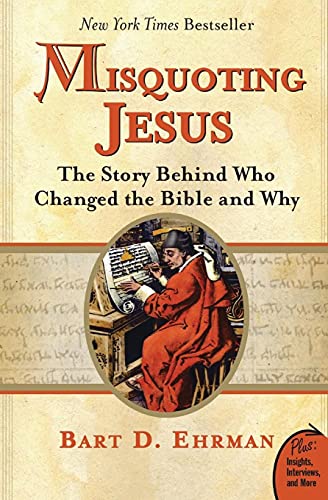
Misquoting Jesus by Bart D. Ehrman delves into the history of the Bible, revealing how scribes altered the texts over time and raising important questions about the accuracy and reliability of the modern Bible.
Misquoting Jesus
Summary of key ideas
Challenging the Inerrancy of the Bible
In Misquoting Jesus, Bart D. Ehrman, a distinguished biblical scholar, takes us on an enlightening journey into the world of the New Testament and the process of its transmission. He begins by challenging the popular belief in the inerrancy of the Bible, suggesting that the original manuscripts of the New Testament were not error-free, and that the copies we have today were subject to alterations and modifications.
Ehrman explains that the earliest Christian writings were not considered scripture, and prior to the canonization of the New Testament, numerous versions of the Gospels and other texts were in circulation, each with its own variations. These variations, Ehrman contends, were not simply the result of accidental errors, but also deliberate changes made by scribes who sought to clarify, harmonize, or expand the texts they were copying.
Exploring the Work of Scribes
The author then delves into the work of the scribes, who were responsible for copying and preserving the New Testament manuscripts. He explains that these scribes, who were often untrained and working under difficult conditions, made a variety of mistakes, such as misspellings, omissions, and word substitutions. Ehrman also highlights the scribes' tendency to alter the text in ways that reflected their theological beliefs or to resolve perceived discrepancies.
One of the most intriguing aspects of Misquoting Jesus is Ehrman's discussion of textual criticism, the scholarly discipline devoted to establishing the most accurate version of the original text. He explains the methods used by textual critics to compare and evaluate the thousands of existing manuscripts and how they attempt to reconstruct the 'autograph' or original text of the New Testament.
Impact of Scribal Changes
Ehrman then explores the theological implications of the scribal changes he has identified in the New Testament. He argues that these alterations have had a significant impact on Christian doctrine and practice, pointing out that some of the most important beliefs, such as the doctrine of the Trinity or the divinity of Jesus, are based on verses that were added to the New Testament at a later stage.
Furthermore, he suggests that the traditional view of the Bible as the inspired and infallible word of God is problematic in light of the extensive changes made to the text over the centuries. Ehrman's conclusion is that we should embrace the New Testament not as a perfect, unchanging document, but as a collection of diverse and evolving texts that reflect the beliefs and practices of the early Christian communities.
Reassessing the Authority of the Bible
In the final section of Misquoting Jesus, Ehrman reflects on the implications of his research for the authority of the Bible. He argues that we should approach the New Testament with a critical and historically informed perspective, acknowledging its human origins and recognizing the role of interpretation in shaping its meaning.
Despite his critical stance, Ehrman retains a deep respect for the New Testament and its enduring influence. He concludes that understanding the complex history of the text can deepen our appreciation for its message and help us engage with it more thoughtfully and responsibly.
In conclusion, Misquoting Jesus provides a thought-provoking exploration of the New Testament and its transmission, challenging us to reconsider our assumptions about the Bible and encouraging us to engage with it in a more nuanced and historically informed manner.
More knowledge in less time

Read or listen
Get the key ideas from nonfiction bestsellers in minutes, not hours.

Find your next read
Get book lists curated by experts and personalized recommendations.

Shortcasts
We've teamed up with podcast creators to bring you key insights from podcasts.
What is Misquoting Jesus about?
Misquoting Jesus by Bart D. Ehrman explores the history of the Bible and the process of its transmission over the centuries. Ehrman delves into the world of ancient scribes and the challenges they faced in copying and preserving the texts, revealing how errors and intentional changes have shaped the biblical manuscripts we have today. Through engaging storytelling and scholarly analysis, the book sheds light on the complexities of biblical interpretation and the impact of textual variations on our understanding of Christianity.
Misquoting Jesus Review
- Unveils the challenges of biblical interpretation by examining the evolution of the Bible's words, shedding light on the complexities and controversies involved.
- Offers fascinating insights into the early Christian scribes and the process of copying and transmitting biblical manuscripts, revealing surprising details about the text's accuracy.
- Provokes deep thought about the reliability of scripture and the implications of textual variations, challenging readers to reconsider their perspectives on the Bible's authenticity.
Who should read Misquoting Jesus?
Readers who are interested in the history and textual criticism of the Bible
Individuals who want to understand the complexities of translating and interpreting ancient religious texts
Those who are open to challenging their preconceived notions about the accuracy and reliability of biblical scriptures
Categories with Misquoting Jesus
Book summaries like Misquoting Jesus
 The Art of HappinessDalai LamaA Handbook for Living4.5
 Buddha’s BrainRick HansonHappiness, Love and Wisdom4.3
 The Demon-Haunted WorldCarl SaganScience as a Candle in the Dark4.3
 Buddhism – Plain and SimpleSteve HagenThe Practice of Being Aware, Right Now, Every Day4.2
 The Brain’s Way of HealingNorman DoidgeStories of Remarkable Recoveries and Discoveries4.4
 Zen Mind, Beginner’s MindShunryu SuzukiInformal Talks on Zen Meditation and Practice4.4
 The Monk Who Sold His FerrariRobin SharmaA guide to using ancient practices to improve your quality of life and achieve your goals4.5
 A Return to LoveMarianne WilliamsonReflections on the Principles of a Course in Miracles4.3
 Hallelujah AnywayAnne LamottRediscovering Mercy4.4
 CivilizationsMary BeardHow Do We Look / The Eye of Faith4.1
 A History of GodKaren ArmstrongThe 4,000-Year Quest of Judaism, Christianity and Islam4.2
 The Road Back to YouIan Morgan Cron, Suzanne StabileAn Enneagram Journey to Self-Discovery4.3
 Everybody, AlwaysBob GoffBecoming Love in a World Full of Setbacks and Difficult People4.5
 The Right Side of HistoryBen ShapiroHow Reason and Moral Purpose Made the West Great3.7
 Girl, Wash Your FaceRachel HollisStop Believing the Lies About Who You Are so You Can Become Who You Were Meant to Be3.8
People ❤️ Blinkist
Become a member of our community of 44 million people

96k ratings

73k ratings
Thi Viet Quynh N.
Great app. Good selection of book summaries you can read or listen to while commuting. Instead of scrolling through your social media news feed, this is a much better way to spend your spare time in my opinion.
Laura H.
When I saw Blinkist had produced an infographic style Blink for the Rich Dad, Poor Dad book, it was a good reminder of the concepts I loved.
Renee D.
I'm absolutely thrilled that Blinkist now offers infographics! I can't get enough of them—they're such a fun and effective way to grasp and remember key points.
People also liked these summaries
 Who Will Cry When You Die?Robin SharmaLife Lessons from the Monk Who Sold His Ferrari4.4
 The Next Right ThingEmily P. FreemanA Simple, Soulful Practice for Making Life Decisions4.1
 The Second MountainDavid BrooksThe Quest for a Moral Life4.4
 Why Religion?Elaine PagelsA Personal Story3.9
 Why I Am a HinduShashi TharoorTeaser: An insider’s guide to the history of Hinduism3.4
 MythologyEdith HamiltonTimeless Tales of Gods and Heroes4.5
 Advice Not GivenMark Epstein M.D.A Guide to Getting Over Yourself4.2
 The Miracle EquationHal ElrodThe Two Decisions That Move Your Biggest Goals from Possible, to Probable, to Inevitable4.3
 MetahumanDeepak Chopra M.D.Unleashing Your Infinite Potential4.4
 Outgrowing GodRichard DawkinsA Beginner’s Guide4.1
 The Path Made ClearOprah WinfreyDiscovering Your Life's Direction and Purpose4.4
 The Ruthless Elimination of HurryJohn Mark ComerHow to Stay Emotionally Healthy and Spiritually Alive in the Chaos of the Modern World4.4
 The More of LessJoshua BeckerFinding the Life You Want Under Everything You Own4.5
 Touching the RockJohn M. HullAn Experience of Blindness4.4
 Get Out of Your HeadJennie AllenStopping the Spiral of Toxic Thoughts3.8
Trusted by the world's leading brands

Powerful ideas from top nonfiction
Try Blinkist to get the key ideas from 7,500+ bestselling nonfiction titles and podcasts. Listen or read in just 15 minutes.
Get started
Blink 3 of 8 - The 5 AM Club
by Robin Sharma