Better than a summary
Designing for Behavior Change summary
Stephen Wendel
No credit card required · Cancel anytime
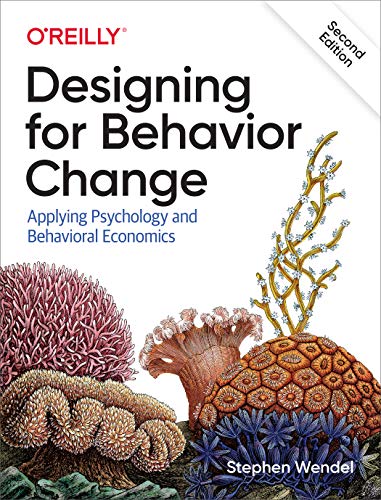
Designing for Behavior Change by Stephen Wendel provides a comprehensive guide on how to create products and services that encourage positive behavior. It offers practical insights and strategies for designers and product managers to effectively influence user behavior.
Topics
Table of Contents
- Designing for Behavior Change: summary of key ideas
- What is Designing for Behavior Change about?
- Designing for Behavior Change Review
- Who should read Designing for Behavior Change?
- About the author
- Book summaries like Designing for Behavior Change
- People also liked these summaries
- Designing for Behavior Change FAQs
Designing for Behavior Change
Summary of key ideas
Understanding Human Behavior and Designing for Change
In Designing for Behavior Change by Stephen Wendel, we are introduced to the concept of behavior change and its significance in product design. Wendel begins by explaining the importance of understanding human behavior and the role it plays in the success of a product. He emphasizes that successful products are those that effectively influence user behavior.
Wendel then delves into the science of behavior change, introducing us to the Fogg Behavior Model, which states that for a behavior to occur, three elements must converge: motivation, ability, and a trigger. He explains how this model can be used to design products that encourage specific behaviors, such as exercising or saving money.
Applying Behavioral Science to Product Design
Next, Designing for Behavior Change explores the application of behavioral science in product design. Wendel introduces us to the concept of 'nudging', a method of influencing behavior without restricting choice. He explains how nudges can be used to guide users towards desired actions, such as opting for healthier food choices or saving energy.
Wendel then discusses the importance of understanding user motivations and how they can be leveraged to drive behavior change. He introduces the concept of 'motivational design', which involves designing products that tap into users' intrinsic motivations, making the desired behavior more appealing and rewarding.
Designing for Behavior Change: A Step-by-Step Approach
In the latter part of the book, Wendel presents a step-by-step approach to designing for behavior change. He outlines a systematic process that begins with identifying the target behavior and understanding the user's context. He then explains how to use this information to design interventions that influence behavior, such as creating triggers and removing barriers.
Wendel also emphasizes the importance of testing and iterating designs. He introduces the concept of A/B testing, where different versions of a product are compared to determine which one is more effective in driving the desired behavior. He also discusses the use of data analytics to measure the impact of behavior change interventions.
Behavior Change in Action: Real-World Examples
To illustrate the concepts discussed, Designing for Behavior Change provides several real-world examples of successful behavior change interventions. Wendel discusses how companies like Google, Fitbit, and Opower have effectively used behavioral science to design products that encourage positive behaviors, such as saving energy and promoting physical activity.
He also highlights some common pitfalls in behavior change design, such as over-reliance on extrinsic rewards and failing to consider the user's context. Wendel emphasizes the need for a deep understanding of human behavior and continuous testing and iteration to create effective behavior change interventions.
Conclusion: The Power of Behavioral Design
In conclusion, Designing for Behavior Change by Stephen Wendel provides a comprehensive guide to leveraging behavioral science in product design. The book emphasizes the power of understanding human behavior and using this knowledge to design products that drive positive behavior change.
Wendel's step-by-step approach, supported by real-world examples, offers valuable insights for product designers, marketers, and anyone interested in understanding and influencing human behavior. By applying the principles outlined in this book, we can create products that not only meet user needs but also help them achieve their goals and lead healthier, more fulfilling lives.
More knowledge in less time

Read or listen
Get the key ideas from nonfiction bestsellers in minutes, not hours.

Find your next read
Get book lists curated by experts and personalized recommendations.

Shortcasts
We've teamed up with podcast creators to bring you key insights from podcasts.
What is Designing for Behavior Change about?
Designing for Behavior Change by Stephen Wendel explores how to create products and services that influence positive behavior. Drawing on behavioral economics and psychology, Wendel provides practical strategies and examples to help designers and businesses understand and leverage human behavior to drive meaningful change.
Designing for Behavior Change Review
Designing for Behavior Change (2020) by Stephen Wendel is a book that explores the science behind making positive changes in behavior and provides practical strategies for implementing them. Here's why this book is worth reading:
- With its data-driven approach and evidence-based insights, it offers a reliable framework for designing interventions that effectively influence behavior.
- By discussing real-world examples and case studies, the book demonstrates how behavioral design can be applied to different areas, from health to finance, making it relevant and applicable.
- Through its engaging writing style and concrete recommendations, it manages to make a potentially complex subject accessible and interesting, ensuring that readers stay hooked throughout.
Who should read Designing for Behavior Change?
- Designers and product managers looking to create products that drive behavior change
- Professionals in marketing, user experience, and psychology interested in understanding human behavior
- Entrepreneurs and innovators seeking to create solutions that address real-world challenges
Categories with Designing for Behavior Change
Book summaries like Designing for Behavior Change
 The Road to SerfdomF.H. HayekTeaser: Van Hayek's classic text on Freedom4.4
 AntifragileNassim Nicholas TalebThings That Gain from Disorder4.5
 The Origin of WealthEric D. BeinhockerThe Radical Remaking of Economics and What It Means for Business And Society3.9
 23 Things They Don’t Tell You About CapitalismHa-Joon ChangWhy capitalism is not what you think it is.3.8
 The Undercover EconomistTim HarfordThe economics behind everyday decisions3.8
 How the Mighty FallJim CollinsAnd Why Some Companies Never Give In4.5
 Business AdventuresJohn BrooksTwelve Classic Tales from the World of Wall Street4.3
 Economics: The User’s GuideHa-Joon ChangEverything you need to know about economics.4.3
 The Misbehavior of MarketsBenoit Mandelbrot and Richard L. HudsonA Fractal View of Risk, Ruin and Reward4.3
 The Wealth of NationsAdam SmithThe most influential economic book of all time4.3
 Treasure IslandsNicholas ShaxsonTax Havens And The Men Who Stole The World4.4
 Fault LinesRaghuram G. RajanHow Hidden Fractures Still Threaten the World Economy4.5
 The Age of CryptocurrencyPaul Vigna and Michael J. CaseyHow Bitcoin and Digital Money Are Challenging the Global Economic Order4.1
 The Zero Marginal Cost SocietyJeremy RifkinThe Internet of Things, the Collaborative Commons, and the Eclipse of Capitalism4.2
 The Failure of Risk ManagementDouglas W. HubbardWhy It’s Broken and How to Fix It4.2
People ❤️ Blinkist
Become a member of our community of 44 million people

96k ratings

73k ratings
Laura H.
When I saw Blinkist had produced an infographic style Blink for the Rich Dad, Poor Dad book, it was a good reminder of the concepts I loved.
Guillem B.
Life changing. The concept of being able to grasp a book's main point in such a short time truly opens multiple opportunities to grow every area of your life at a faster rate.
Jonathan A.
Clearly communicates the value proposition of the most popular book summaries and offers a relatable, tangible template that I can use immediately.
People also liked these summaries
 Dealing with ChinaHenry M. PaulsonAn Insider Unmasks the New Economic Superpower4.1
 Alibaba’s WorldPorter ErismanHow a Remarkable Chinese Company Is Changing the Face of Global Business3.8
 When to Rob a BankSteven D. Levitt (Author), Stephen J. Dubner (Author)...And 131 More Warped Suggestions and Well-Intended Rants 3.9
 CoinedKabir SehgalThe Rich Life of Money and How Its History Has Shaped Us3.5
 SuperFreakonomicsSteven D. Levitt, Stephen J. DubnerGlobal Cooling, Patriotic Prostitutes, and Why Suicide Bombers Should Buy Life Insurance 4.1
 Don’t Buy ItAnat Shenker-OsorioThe Trouble with Talking Nonsense About the Economy3.8
 Who Gets What – and WhyAlvin RothThe New Economics of Matchmaking and Market Design 3.5
 ExodusPaul CollierHow Migration Is Changing Our World3.9
 The Happiness IndustryWilliam DaviesHow the Government and Big Business Sold us Well-Being4.0
 No Ordinary DisruptionRichard Dobbs, James Manyika, Jonathan WoetzelThe Four Global Forces Breaking All the Trends 3.9
 Phishing for PhoolsGeorge AkerlofThe Economics of Manipulation and DecePDion3.9
 Small Is BeautifulErnst F. SchumacherEconomics as if People Mattered4.0
 Why Information GrowsCesar Hidalgo The Evolution of Order, from Atoms to Economies4.1
 The Great EscapeAngus DeatonHealth, Wealth, and the Origins of Inequality3.9
 The BoxMarc LevinsonHow the Shipping Container Made the World Smaller and the World Economy Bigger 4.4
Trusted by the world's leading brands

Powerful ideas from top nonfiction
Try Blinkist to get the key ideas from 7,500+ bestselling nonfiction titles and podcasts. Listen or read in just 15 minutes.
Get started
Blink 3 of 8 - The 5 AM Club
by Robin Sharma
Designing for Behavior Change FAQs
What is the main message of Designing for Behavior Change?
The main message of Designing for Behavior Change is to understand how people make decisions and use that knowledge to design products and systems that promote positive behavior change.
How long does it take to read Designing for Behavior Change?
The reading time for Designing for Behavior Change varies depending on the reader's speed, but it typically takes several hours. However, the Blinkist summary can be read in just 15 minutes.
Is Designing for Behavior Change a good book? Is it worth reading?
Designing for Behavior Change is a valuable read for anyone interested in understanding human behavior and applying that understanding to design products that drive positive change.
Who is the author of Designing for Behavior Change?
The author of Designing for Behavior Change is Stephen Wendel.